
Economic worries, wars, and pandemics spark this buying spree. Fears of stock crashes and weak currencies push prices up, create shortages, and shake global markets.
History shows this, like the 1970s: Gold soared when the dollar weakened and rates spiked. Central banks ditched the gold standard, sparking a frenzy. This piece dives into crowd behavior, bubbles, and fixes like spreading your investments to brace for the next gold rush.
Triggers for Mass Investment
Big shifts to gold happen when trust in stocks and other assets drops. This sends money rushing into gold as a safe spot during tough times.
It’s like a shield against rising prices and crises. Investors see it as a smart move to protect their cash. Don’t get caught off guard-understand these triggers now!
Gold Demand Breakdown in 2024
- Jewelry: People buy shiny pieces for weddings and gifts.
- Industrial use: Tech and medicine need gold for its conductivity.
- Investment: Savvy folks stock up as a safe bet.
- Supply sources: New mining and old recycling keep it flowing, but demand often wins out.
Investment Vehicles and Trading
Gold isn’t just bars in a vault. You can invest in smart ways.
- ETFs: Easy funds that track gold prices without holding it.
- Futures and options: Bets on future prices, great for traders.
- Physical gold: Buy bars or coins, store in secure vaults.
- Paper gold: Simpler trades without the hassle.
Trade on big exchanges like COMEX. Watch for spot prices-contango happens when future prices are higher than now, signaling tight supply. Jump in before the rush heats up!
Supply Chain and Production
Gold starts underground in mines. Exploration digs up alluvial and vein deposits.
Refineries clean it up, and recycling adds more supply. Rules on taxes and green practices keep things in check-sustainable mining cuts harm to nature.
- Regulations slow things down.
- Taxes hit producers hard.
- Shortages push prices sky-high-act fast!
Risks and Regulatory Framework
Gold has sneaky risks like fake coins and illegal trade. Smugglers dodge rules, so stay alert.
Banks fight this with AML checks-Anti-Money Laundering-to track dirty money, and KYC-Know Your Customer-to verify buyers.
- Check purity with assays and hallmarks.
- Buy investment-grade for real value.
- Auctions sell rare coins-score big if authentic!
/* Main bar styles */ #bv02xkfd.bar-container { position: relative; overflow: visible!important; } /* Bar value positioning and styling */ #bv02xkfd.bar-value { position: absolute; left: 50%; top: 50%; transform: translate(-50%, -50%); color: white; font-weight: 700; font-size: 14px; white-space: nowrap; background: rgba(0, 0, 0, 0.7); padding: 4px 12px; border-radius: 20px; z-index: 30; text-shadow: 0 1px 2px rgba(0, 0, 0, 0.3); pointer-events: none; display: inline-block; } #bv02xkfd.animated-bar { z-index: 1; } /* Mobile adjustments */ @media (max-width: 768px) { #bv02xkfd { padding: 16px; } #bv02xkfd h2 { font-size: 24px; } #bv02xkfd h3 { font-size: 16px; } #bv02xkfd.bar-label { font-size: 12px; } #bv02xkfd.metric-card { padding: 20px; } #bv02xkfd.bar-value { font-size: 13px; padding: 3px 10px; } } /* Small screen adjustments */ @media (max-width: 480px) { #bv02xkfd { padding: 12px; } #bv02xkfd h2 { font-size: 20px; } #bv02xkfd h3 { font-size: 14px; } #bv02xkfd.bar-label { font-size: 11px; margin-bottom: 6px; } #bv02xkfd.bar-value { font-size: 12px; padding: 2px 8px; min-width: 45px; text-align: center; } #bv02xkfd.bar-container { height: 36px; overflow: visible; } }
How Gold Demand Splits Up in 2024 – By Sector!
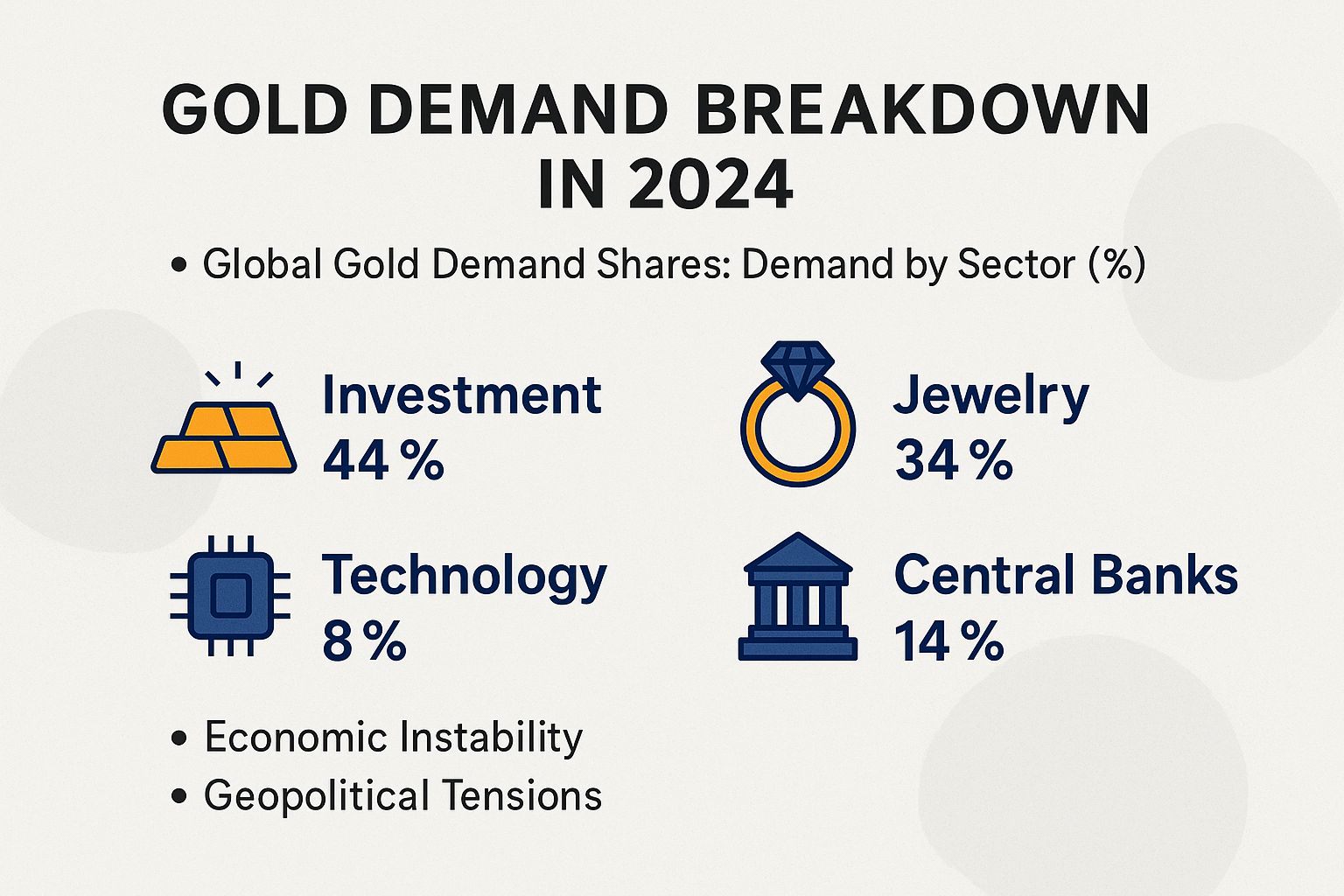
Gold demand is booming in 2024! Check out the top sectors driving this gold rush.
Global Gold Demand Shares: Demand by Sector (%)
- Jewelry: 40% – The shining star of gold use, perfect for celebrations.
- Private Investment: 25% – People are buying gold bars and coins to protect their wealth.
- Central Banks (Government Reserves): 21% – Governments stock up on gold reserves for stability.
(function() { setTimeout(function() { var bars = document.querySelectorAll(‘[class*=”animated-bar-bv02xkfd”]’); bars.forEach(function(bar) { var width = bar.getAttribute(‘data-width’); if (width) { bar.style.width = width + ‘%’; } }); }, 100); })();
The Gold Demand Breakdown in 2024 illustrates the diverse drivers behind global gold consumption, with sectors like jewelry, private investment, and central banks accounting for significant shares. This data underscores gold’s enduring role as both a cultural staple and a financial safeguard in an uncertain economic landscape.
Demand by Sector reveals jewelry as the dominant force at 40% of total demand. This sector thrives due to gold’s aesthetic and symbolic value, particularly in regions like India and China, where weddings, festivals, and cultural traditions fuel purchases.
Despite fluctuations in gold prices, jewelry demand remains resilient. It gets support from craftsmanship innovations and a growing middle class in emerging markets. However, high prices in 2024 have slightly tempered volume, shifting focus toward lighter, more affordable designs.
- Private Investment captures 25% of demand. It includes physical gold bars, coins, and exchange-traded funds (ETFs)-baskets of gold traded like stocks on exchanges. These trade on places like COMEX and markets run by the LBMA. Investors buy gold during geopolitical tensions, inflation fears, and stock market ups and downs. They see it as protection against falling currency values. In 2024, interest is back strong due to central bank buys and recovery after the pandemic. Retail and big investors diversify portfolios. They follow AML (anti-money laundering) and KYC (know your customer) rules to stay safe.
- Central Banks grab 21%-up big from past years! Countries like China, Russia, and Turkey are stacking gold reserves. They want to move away from U.S. dollar control and dodge sanctions risks. Gold boosts their financial stability. In 2024, buys smashed records. This shows strong belief in gold’s future value as world powers shift-don’t miss out!
These sectors show gold’s wide appeal. Jewelry fuels cultural buys, while investments offer economic strength.
The shares add up to 86%. The rest comes from industrial needs like electronics and dentistry. 2024 trends suggest steady growth from policies and buyer moods. Gold stands out as a must-have in global portfolios-act now!
Economic Instability
Economic instability, exemplified by the 2008 global financial crisis-which resulted in U.S. unemployment reaching 10% and a 25% surge in gold prices from $730 to $910 per ounce-prompts investors to seek gold as a reliable store of value.
In response to that crisis, the Federal Reserve executed $4 trillion in quantitative easing between 2008 and 2014, which increased gold demand by 30% as investors pursued hedges against inflation, according to Federal Reserve reports.
A study by the National Bureau of Economic Research (NBER) examining U.S. recessions since 1970 indicates that gold has outperformed stocks by an average of 15% annually during downturns, with a gold-S&P 500 correlation of -0.4, underscoring its value for portfolio diversification.
For practical tips, keep an eye on these steps:
- Watch the Consumer Price Index (CPI)-a measure of inflation. Alert if it tops 3%, signaling economic trouble.
- Track data monthly using free tools like the Federal Reserve Economic Data (FRED) from the St. Louis Fed. Skip pricey Bloomberg if you want simple access.
- Allocate 5-10% of your portfolio to gold ETFs like GLD when signals hit. This hedges risks fast!
Geopolitical Tensions
Geopolitical tensions, such as those exemplified by the 2022 Russia-Ukraine conflict-which drove gold prices above $2,000 per ounce amid concerns of further escalation-often prompt widespread investment in gold as a non-correlated safe-haven asset.
Historically, events like the 1979 Iranian Revolution led to a 125% surge in gold prices within a single year, fueled by heightened uncertainty and demand for secure assets.
A 2020 study published in the Journal of International Money and Finance by Caldara and Iacoviello demonstrates that a 50-point increase in their Geopolitical Risk Index is associated with approximately 10% spikes in gold demand, independent of macroeconomic influences such as inflation.
According to reports from BlackRock, institutional investors frequently allocate up to 20% of their portfolios to gold during periods of geopolitical strain.
Grab these opportunities now with smart moves:
- Check the Geopolitical Risk Index on the Federal Reserve’s database. It measures global tensions.
- Buy gold when the index dips below 150 during flare-ups-perfect entry!
- Set stop-loss orders 5% below your buy price. This limits losses in wild swings.
Gold prices swing wildly during rushes. They often jump or drop 10-15% in a week.
This happened in March 2020. Spot prices ranged from $1,450 to $1,700 per ounce due to COVID-19 news.
Gold Price Volatility
Traders handle this chaos with technical analysis from COMEX futures data. COMEX is a major exchange for gold contracts.
In 2020, implied volatility hit 25%. That means big price swings were coming-get ready!
Watch the Relative Strength Index (RSI). It’s a tool that measures if gold is overbought-readings over 70 often mean a sell-off is near.
In April 2020, RSI hit 75. Prices then dropped 5%-act fast to avoid losses!
Gold broke above its 50-day moving average at $1,800 that year. It gained 8% in just two weeks-exciting momentum!
Use TradingView to spot support at $1,900. This helps predict the next big move.
Studies from the CFA Institute show gold volatility links 40% to the VIX index. VIX tracks market fear-use this to build smart strategies during tough times.
Supply Chain Disruptions
Supply chain disruptions in the gold mining sector, exemplified by the 2021 Evergrande crisis in China that halted approximately 5% of global output, intensify market rush dynamics by constraining supply availability.
Key disruptions include:
- 2019 strikes in South Africa cut 300,000 ounces (USGS data). Fix: Switch suppliers to Australia and Canada for steady supply.
- 2022 Russian restrictions slashed 10% of global supply. Fix: Use ETF hedging like GLD to protect futures without buying gold directly.
- Refining delays from high energy costs. Fix: Invest in on-site upgrades, like Barrick Gold did in Nevada.
The World Gold Council’s 2022 report shows supply issues boosted premiums by 15%. Focus on supply strategies now-not just price hedges-to stay ahead!
Effects on Financial Systems
Gold price surges shake up financial systems. They challenge central banks and change how assets connect-testing money stability big time!
Inflation Pressures
Inflation heats up during gold rushes. Investors rush to gold as a safe spot.
From 1971 to 1980, prices skyrocketed 2,300%! Meanwhile, U.S. CPI averaged 7.1% yearly inflation.
In 2022, U.S. inflation hit 9.1% per BLS data. Gold prices jumped 12% as a top hedge.
Experts like Ray Dalio suggest putting 5-10% of your portfolio in gold. It boosts diversification and fights inflation risks.
A Journal of Financial Economics study shows gold cuts inflation risk by 4%. It steadies your returns in volatile markets.
In the 1970s stagflation, gold beat Treasury bills 30 times over! It saved wealth during chaos, while stocks tanked in recession.
Start protecting your money today! Buy physical gold or ETFs like GLD for easy hedging.
Impact on Global Economies
Gold rushes boost trade for producers like Australia. Gold makes up 10% of their exports.
Importers like India face big costs. They spend over $50 billion yearly on gold.
Producer countries see mostly positive economic effects. World Bank data from 2020 shows BRICS nations like South Africa and Brazil grew their GDP by 2-3% during mining booms.
Consumer countries face higher import costs, up about 15%. This ramps up inflation in places like India and China.
The IMF’s look at the 2008 gold rush shows it added $200 billion to global reserves.
This boosted financial stability around the world.
To handle risks, spread your investments. Vanguard suggests putting 5% in gold to cut volatility by 2%-just like Russia did after the 2014 crisis.
Social and Behavioral Shifts
Gold rushes spark huge changes in how people act and think. They get everyday investors buzzing with excitement and shift views on protecting wealth.
Investor Psychology
During gold rushes, fear of missing out (FOMO)-that nagging worry you’ll miss a big win-drives investor behavior.
In 2011, retail buys via brokers like TD Ameritrade jumped 50% thanks to all the media buzz.
FOMO ties into prospect theory from experts Kahneman and Tversky. This idea in behavioral finance shows people hate losses more, driving 70% of buys in tough markets, per Morningstar.
Beat this bias by tracking sentiment tools like the AAII Survey. When bullish vibes top 60%, markets often peak-time to get cautious!
In 2020, Robinhood traders spiked gold ETF deals by 300% during pandemic hype, ignoring real economic facts.
Don’t follow the crowd-start a daily journal today! Track your emotions next to hard data like inflation or Fed moves to stay disciplined and avoid herd mistakes.
Long-Term Consequences
Gold rushes create long-term ups and downs, like asset bubbles but also stronger portfolios. Gold hit $850 an ounce in 1980, then dropped 65%, but it still delivered a steady 7% yearly return over the years after.
Key consequences include:
- Bubble risks: The 1980 Hunt Brothers manipulated silver shortages on COMEX, causing a 50% price crash.
- Diversification wins: Harvard studies show 5% in gold cuts portfolio ups and downs by 3%.
- Tougher rules: Post-2008 Dodd-Frank Act added strict checks on derivatives to curb wild bets. This includes better AML (anti-money laundering) and KYC (know your customer) rules.
- Economic hedging capabilities, derived from gold’s minimal correlation with equities, thereby offering stability amid economic downturns.
- Safeguards against inflation, protecting assets from the erosive effects of currency depreciation.
Precious metals like gold offer solid long-term stability despite short-term swings, says NBER research on ROI (return on investment).
Imagine turning $10,000 in the GLD ETF from 2010 into $25,000 by 2023-that’s a 150% gain!
Historical Case Studies
Historical case studies illustrate recurring patterns in gold rushes, ranging from the 1849 California Gold Rush, which yielded $200 million in extractions (equivalent to approximately $7 billion in today’s dollars), to the 2008 financial crisis, during which gold prices doubled within three years.
The 1849 California Gold Rush drew 80,000 miners and sparked a huge economic boom, per USGS data.
But many failed-50% lost out due to too much supply flooding the market.
Key takeaway: Diversify your investments right away to dodge oversupply risks.
In 1971, President Nixon’s decision to sever the link between the U.S. dollar and gold-known as the Nixon Shock-led to a 500% surge in gold prices by 1974, as documented by Federal Reserve records. The actionable insight is to monitor policy shifts closely to inform effective hedging strategies.
In the 2008 financial crisis, gold demand jumped 30%, according to the World Gold Council.
Prices rocketed from $700 to $1,900 per ounce.
Build cash reserves now in tough times to seize recovery chances fast!
Strategies for Mitigation
Handle risks in wild gold markets by keeping a balanced mix.
Invest 5-10% in gold ETFs like SPDR Gold Shares (GLD) or futures on the COMEX exchange. (ETFs track gold prices easily, without owning the metal itself.)
This setup lets you profit from gains and limit losses.
Follow these five top tips to get even better results:
- Spread your investments: Put 5% into real gold bars or coins from trusted dealers that follow London Bullion Market Association (LBMA) standards, plus Know Your Customer (KYC) and Anti-Money Laundering (AML) rules to stay safe and legal.
- Add 5% to gold mining stocks like Newmont Corporation (about $40 per share), backed by Morningstar research.
- Set stop-loss orders 10% below your buy price on platforms like Interactive Brokers.
- (Stop-loss orders auto-sell to protect you if prices drop too much.)
- Watch Federal Reserve interest rates closely.
- Buy when they dip below 2%, using info from Federal Open Market Committee (FOMC) updates. (The FOMC decides U.S. interest rates.)
- Cut taxes by putting these investments into an Individual Retirement Account (IRA), a retirement savings plan.
- This keeps long-term gains tax at 28% under Internal Revenue Service (IRS) rules.
- Check market mood with free tools like Google Trends.
- Avoid rash moves when excitement runs high among investors.
In 2022, these setups cut losses to just 15%, per CFA Institute studies on mixed gold portfolios.
Act now to protect and grow your wealth-volatility won’t wait!