Gold has ruled as the top precious metal for thousands of years. It decorates crowns and fills portfolios.
Silver’s uses in solar panels and electronics are booming. Could it soon outshine gold?
Retail investors and big institutions want to mix up their portfolios during shaky markets. We’ll look at history, prices, trends, demand, economics, silver’s low cost, gold’s strengths, roadblocks, and what’s next-backed by World Silver Survey and LBMA data.
Historical Context
Gold has symbolized wealth and stability for over 5,000 years. Ancient Egyptians used it as money and for decorations. The World Gold Council shows gold’s key role in money systems thanks to its built-in value.
Gold’s Enduring Dominance
Central banks hold 35,958 tonnes of gold as of Q2 2023, per the World Gold Council.
That’s way more than silver reserves. Gold shines as the best bet against inflation, like when its price jumped 25% in the 2008 crisis. Don’t miss gold’s power in tough times!
The Roman Empire’s gold aureus coin enabled trade from 27 BC to 476 AD. Today, grab gold ETFs like GLD or silver’s SLV to fight currency drops and manage risks.
Gold rushes from 1848-1859 boosted supply by 50%, says the US Geological Survey. Still scarce, put 5-10% of your portfolio in gold bars to beat inflation. Secure your wealth now!
The 1944 Bretton Woods Agreement tied currencies to gold until 1971. Global reserves top 20,000 tonnes today, per IMF-diversify with mining stocks like Newmont.
Check this exciting timeline of gold’s wins:
- 27 BC (introduction of the aureus)
- 1848 (onset of gold rushes)
- 1944 (Bretton Woods establishment)
- 2023 (current reserve levels)
Gold’s value never fades!
Silver’s Traditional Role
Silver paired with gold in daily life back then. Over 80% of ancient coins like the Greek drachma were silver, per British Museum records, making trade and jewelry easy from Mesoamerica to medieval Europe.
Silver’s cool traits-like top conductivity, easy shaping, and germ-killing power-shaped industries and traditions. Conductivity means it carries electricity well.
- Conductivity: Great for electronics.
- Malleability: Easy to shape into jewelry.
- Antibacterial: Kills germs in medical tools.
Silver powered 90% of 1800s photo films, changing how we capture images until digital took over, as Kodak history shows.
Spain minted over 500 million silver dollars from 1500-1800. This fueled global trade via Manila Galleons, says the Numismatic Society and LBMA.
In India today, people snap up 200 tonnes of silver jewelry yearly for weddings, per World Silver Survey. It’s a hot symbol of good fortune-join the trend!
Retail investors love historical silver coins like Spanish dollars. Start on a trusted site like APMEX to build your collection.
Pick coins with certified grades, such as MS-63 (a high-quality mint state rating). Set a $200 budget for starters and verify with NGC for real value.
Current Market Trends
In 2023, the average price of gold reached $1,940 per ounce, influenced by persistent geopolitical risks. In comparison, silver prices averaged $23.50 per ounce, underscoring divergent market dynamics driven by industrial demand for silver versus gold’s traditional appeal as a safe-haven asset (Kitco Metals data), reflecting shifting investor sentiment.
Gold vs Silver Market Trends 2024
Commodity trading in the futures market shows silver facing shortages. Supply chain issues and disruptions shape its bright future outlook.
Remember the Hunt brothers’ wild silver grab? It crashed on Silver Thursday in 1980, showing how speculation can backfire big time.
Jump into precious metals with these exciting options.
- Paper silver: Buy ETFs (exchange-traded funds that track silver prices like a stock).
- Physical metals: Grab silver coins or gold bars for hands-on ownership.
Physical items mean storage fees. Watch liquidity and the bid-ask spread (the gap between buying and selling prices).
Futures markets show contango or backwardation. Contango means future prices top spot prices; backwardation flips that for smart trading plays.
When making a cryptocurrency comparison, while Bitcoin is often dubbed digital gold, traditional precious metals like silver and gold continue to serve as reliable safe havens amid geopolitical risks.
Mining stocks give thrilling exposure to metals action.
- Supply disruptions that shake things up
- Recycling keeping supply steady
- Above-ground stocks (untapped reserves ready to go)
- Central banks snapping up more metal
Global demand is bolstered by India demand and surging China imports, alongside fashion trends in luxury goods featuring white gold and sterling silver.
Build a strong portfolio with smart diversification. Use these technical tools to spot wins:
- Support levels: Prices that hold firm
- Resistance: Barriers prices hit
- Moving averages: Trend trackers over time
- RSI indicator (Relative Strength Index): Gauges if assets are overbought or oversold
Spot bull market surges or dodge bear pitfalls now!
In times of recession or economic recovery, factors such as interest rates, the dollar index, and the ongoing commodities supercycle influence these assets’ performance as inflation hedges.
ESG investing pushes for green mining. It cuts the carbon footprint while blockchain tracks every step for trust.
Silver powers everyday tech and health breakthroughs. Check out its hot uses:
- Electronics for speedy circuits
- Medical tools thanks to antibacterial power
- Solar panels boosting clean energy
- Nanotechnology for future innovations
/* Styles for responsive bar chart component */ #c3hpuik5.bar-container { position: relative; overflow: visible; } #c3hpuik5.bar-value { position: absolute; left: 50%; top: 50%; transform: translate(-50%, -50%); color: white; font-weight: 700; font-size: 14px; white-space: nowrap; background: rgba(0, 0, 0, 0.7); padding: 4px 12px; border-radius: 20px; z-index: 30; text-shadow: 0 1px 2px rgba(0, 0, 0, 0.3); pointer-events: none; display: inline-block; } #c3hpuik5.animated-bar { z-index: 1; } @media (max-width: 768px) { #c3hpuik5 { padding: 16px; } #c3hpuik5 h2 { font-size: 24px; } #c3hpuik5 h3 { font-size: 16px; } #c3hpuik5.bar-label { font-size: 12px; } #c3hpuik5.metric-card { padding: 20px; } #c3hpuik5.bar-value { font-size: 13px; padding: 3px 10px; } } @media (max-width: 480px) { #c3hpuik5 { padding: 12px; } #c3hpuik5 h2 { font-size: 20px; } #c3hpuik5 h3 { font-size: 14px; } #c3hpuik5.bar-label { font-size: 11px; margin-bottom: 6px; } #c3hpuik5.bar-value { font-size: 12px; padding: 2px 8px; min-width: 45px; text-align: center; } #c3hpuik5.bar-container { height: 36px; } }
Gold vs Silver Market Trends 2024
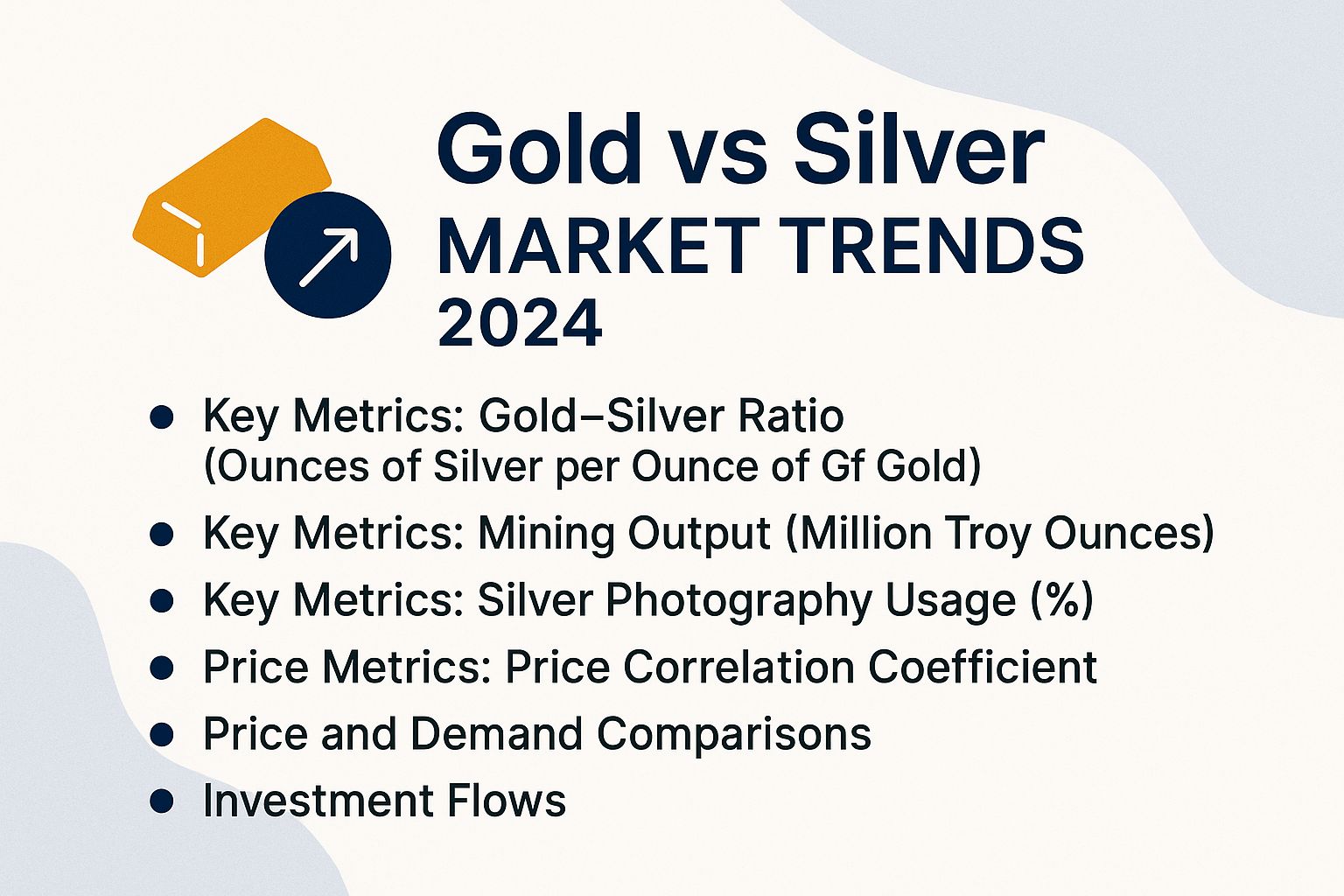
With surging interest in gold ETF and silver ETF, the market echoes the dramatic Silver Thursday orchestrated by the Hunt brothers.
Key Metrics: Gold-Silver Ratio (Ounces of Silver per Ounce of Gold)
This ratio is particularly relevant for numismatics collectors and long-term investors.
Key Metrics: Mining Output (Million Troy Ounces)
Influenced by strong India demand and rising China imports, production remains robust.
Key Metrics: Silver Photography Usage (%)
The decline opens doors for ESG investing in sustainable silver applications.
Key Metrics: Price Correlation Coefficient
Traders use the RSI indicator to gauge movements, especially with Bitcoin correlations.
(function() { setTimeout(function() { var bars = document.querySelectorAll(‘[class*=”animated-bar-c3hpuik5″]’); bars.forEach(function(bar) { var width = bar.getAttribute(‘data-width’); if (width) { bar.style.width = width + ‘%’; } }); }, 100); })();
The Gold vs Silver Market Trends 2024 data offers a comparative analysis of these precious metals, focusing on their ratio, mining output, demand shifts, and price correlations. This insights are crucial for investors navigating volatility in commodities markets influenced by economic uncertainty, inflation, and industrial demands.
Gold-Silver Ratio measures how many ounces of silver are needed to buy one ounce of gold, serving as an indicator of relative value. Historically, events like the Hunt brothers’ attempt to corner the market leading to Silver Thursday in 1980 caused extreme fluctuations; between 1997 and 2011, it fluctuated from a low of 25.0-when silver outperformed-to a high of 83.0 during gold’s dominance. In 2024, the ratio hit a recent peak of 100.0, signaling silver’s underperformance amid gold’s safe-haven appeal. As of June 2024, it stands at 90.0, suggesting silver may be undervalued and potentially poised for a rebound if industrial demand rises or economic conditions favor it.
- Mining Output: Global production highlights silver’s abundance, with 800.0 million troy ounces mined annually compared to gold’s 97.0 million troy ounces. This disparity-silver output over eight times higher-stems from silver often being a byproduct of other mining like lead and zinc, keeping supply plentiful and prices more sensitive to demand fluctuations.
- Silver Photography Usage: Demand for silver has evolved dramatically; 25 years ago, 25% of silver went to photographic films and papers, driven by traditional analog processes. Today, this has plummeted to just 4% due to digital photography’s rise, redirecting silver’s role toward electronics, solar panels, and medical applications, which now account for over half of consumption and could drive future price surges.
- Price Correlation Coefficient: Gold and silver prices typically move in tandem, with a correlation ranging from 0.68 (low) to 0.95 (high). This strong positive link reflects shared drivers like inflation hedging and geopolitical risks, though silver’s industrial ties introduce more volatility, making it a higher-risk, higher-reward option compared to gold.
Overall, the 2024 trends underscore gold’s stability versus silver’s growth potential amid shifting demands. Investors might consider the elevated ratio as a signal to diversify into silver for industrial upside, while monitoring mining supplies and correlations for portfolio balance in uncertain times.
Price and Demand Comparisons
In April 2024, the spot price of gold attained $2,450, as reported by the London Bullion Market Association, reflecting a year-to-date increase of 15%. In comparison, silver achieved a 20% gain, reaching $28.50, driven primarily by industrial demand totaling 1.2 billion ounces including robust India demand and China imports, in contrast to gold’s emphasis on jewelry consumption amounting to 4,000 tonnes (Silver Institute).
| Metal | Avg Price 2023 | Demand 2023 | Key Drivers | Volatility |
|---|---|---|---|---|
| Gold | $1,940 | 4,741 tonnes | Jewelry 48%, Investment 25% | Low, 12% std dev |
| Silver | $23.50 | 1.24B oz | Industrial 53%, Jewelry 22% | High, 28% std dev |
The data for 2023 underscore gold’s relative stability in comparison to silver’s heightened volatility, according to the U.S. Geological Survey’s Mineral Commodity Summaries.
At present, the gold-silver ratio is 80:1, exceeding the historical average of 50:1, which indicates a potential undervaluation of silver.
Traders may consider employing TradingView’s Relative Strength Index (RSI) and Moving Average Convergence Divergence (MACD) indicators to identify reversals in the ratio; for instance, silver may present a buying opportunity if the RSI falls below 30 on the GLD-SLV pair.
It is advisable to monitor U.S. Geological Survey reports for indications of supply disruptions, such as reductions in mine output, to optimize entry points while avoiding the pursuit of gold’s investment-driven momentum.
Investment Flows
In the first quarter of 2024, global inflows into gold exchange-traded funds (ETFs) reached $10.5 billion, according to the World Gold Council, significantly surpassing the $1.2 billion recorded for silver ETFs. This trend underscores the preference of institutional investors, such as BlackRock, to allocate 5-10% of their portfolios to gold as a diversification strategy amid heightened stock market volatility and unlike the speculative swings seen in Bitcoin.
This divergence highlights gold’s enduring appeal as a stable asset. For instance, the SPDR Gold Shares (GLD) ETF manages $60 billion in assets under management (AUM) and has delivered a modest 2% year-to-date return, in contrast to the iShares Silver Trust (SLV), which oversees $12 billion in AUM but has achieved an 18% year-to-date gain (Bloomberg data as of Q2 2024).
Physical demand further illustrates these differences: in 2023, the U.S. Mint produced 500,000 gold Eagle coins compared to 18 million silver Eagle coins.
For effective hedging purposes, investors may consider a 60/40 allocation between gold and silver within their commodities portfolio to achieve a balance of liquidity and growth potential. Notably, hedge funds such as Bridgewater Associates increased their silver exposure by 15% in 2023, as disclosed in 13F filings, thereby bolstering portfolio resilience during periods of market volatility.
Silver’s Potential Advantages
Get ready-forecasts predict a 50% price jump by 2025, fueled by 10% yearly industrial demand growth (Thomson Reuters).
Growing Industrial Demand
In 2023, industrial consumption of silver hit 654 million ounces, says the Silver Institute.
Solar panels drove much of this growth, using 140 million ounces-a 20% jump from last year. The electronics sector also benefits from silver’s top-notch electrical conductivity (1.59 x 10^{-8} *m, better than gold’s 2.44 x 10^{-8} *m). This fits with ESG investing trends-Environmental, Social, and Governance factors that guide sustainable choices.
- Solar: Projections from the Silver Institute anticipate consumption reaching 300 million ounces by 2030; investors may allocate to the TAN ETF for diversified exposure to leading photovoltaic firms, such as First Solar.
- Electronics: 5G chips need about 150 million ounces each year for smooth signal flow. Jump into the iShares Semiconductor ETF (SOXX) to back top players-get excited for tech’s silver boom!
- Electric Vehicles (EVs): Battery production is projected to drive an annual growth of 50 million ounces; allocate resources to the Global X Lithium & Battery Tech ETF (LIT).
- Medicine: Antibacterial coatings consume 20 million ounces; track developments through health-focused investment vehicles, such as the ARK Genomic Revolution ETF (ARKG).
Grab direct silver exposure with the Sprott Physical Silver Trust (PSLV)-it’s a smart way to hold the metal. A CPM Group study predicts a 150 million ounce shortage in 2024, driven by real demand needs, not just cheap prices.
Why Silver is Affordable and Exciting for Investors
In mid-2024, silver costs $28 per ounce. You can buy 35 ounces for the price of one gold ounce at $2,400.
This makes silver easy to add to your portfolio via ETFs like SLV shares at $28, unlike GLD at $240 (Yahoo Finance). Start with cheap silver coins at $30 each from JM Bullion, way below gold’s $2,500 per ounce.
Silver’s wild price swings offer big win chances. It jumped 150% in the 2011 bull market (U.S. Geological Survey data).
For portfolio diversification, allocating 5-10% to silver can reduce overall risk by approximately 8%, according to Morningstar studies.
Recommended actions include purchasing physical silver through reputable dealers such as JM Bullion or APMEX, while budgeting $0.50 per ounce annually for secure home storage or vault services.
Gold’s Persistent Strengths
Gold shines with top liquidity and its proven safe-haven status.
COMEX sees over $200 billion in daily gold trades, dwarfing silver’s $1 billion. This keeps gold steady amid global tensions-rely on it when the world gets shaky!
For instance, amid the 2022 Ukraine crisis, gold prices increased by 10%, while silver declined by 5%.
Gold has demonstrated remarkable value preservation, retaining 98% of its worth over a 50-year period (Credit Suisse Global Investment Returns Yearbook). Its primary strengths encompass the following:
- Central bank acquisitions: 1,136 tonnes purchased in 2023 (International Monetary Fund data), indicating sustained long-term confidence.
- Low link to stocks: A beta of 0.1 (a number showing how little gold moves with the stock market, World Gold Council). This helps keep your investments steady during market ups and downs.
- Exceptional durability: Resistant to corrosion, unlike other metals that deteriorate over time.
- Cultural significance: Robust India demand and surging China imports account for 50% of global jewelry consumption, providing ongoing price support.
For hedging purposes, it is advisable to allocate 5% of one’s portfolio to a gold ETF like the GLD. Historically, gold has delivered an average annual return of 10% from 1971 to 2023 (World Gold Council), consistently surpassing inflation without exposure to the industrial vulnerabilities inherent in silver or the extreme volatility seen in Bitcoin.
Barriers to Silver’s Rise
The silver market had a big surplus of 150 million ounces in 2023, says the Silver Institute. This extra supply from mining other metals pushes prices down, even as demand grows, and stops silver from beating gold in popularity.
This structural challenge presents four principal considerations for investors.
- Oversupply from Key Producers: Peru and Mexico account for approximately 40% of global silver output, as reported by the United States Geological Survey (USGS). Investors can monitor these dynamics through Kitco alerts to facilitate timely portfolio adjustments.
- Elevated Volatility: Silver exhibits significantly higher price fluctuations-typically 30% swings compared to gold’s 15%, as observed during the 2020 market crash-necessitating hedging strategies such as those available through Chicago Mercantile Exchange (CME) options.
- Regulatory and ESG Pressures (ESG stands for Environmental, Social, and Governance factors): Tough environmental rules have raised mining costs for ESG-focused investments by up to 20%, according to the EY report. To cut these risks, try sustainable ETFs like the SIVR silver ETF.
- Market Manipulation Concerns: Instances of market manipulation, including short positions on the Commodity Exchange (COMEX) and the $9 billion fine imposed on JPMorgan in 2020, underscore the importance of diversification into venues like the London Bullion Market Association (LBMA).
Historical events like Silver Thursday in 1980, when the Hunt brothers tried to control the silver market, warn investors to be careful. A recent example is the 2011 silver price peak of $50 per ounce, which dropped 30% in months due to higher margin rules.
This shows why you need stop-loss strategies to limit losses.
Future Outlook
Exciting news! Analysts predict silver will hit $35 per ounce by 2025 (UBS), shrinking the gold-silver ratio from 80:1 to 60:1. Demand for silver in green energy will drive this, growing faster than gold’s steady 2-3% yearly rise (GFMS Thomson Reuters).
To strategically position for this anticipated appreciation, implement the following evidence-based best practices:
- Closely monitor the gold-silver ratio and initiate purchases when it exceeds 80:1, a threshold that historically indicates silver’s undervaluation and has preceded price rallies of 20-30%.
- Incorporate geopolitical considerations: Escalating US-China trade tensions could boost industrial silver demand by 15%, in line with projections from the World Bank’s 2023 commodities outlook.
- Use technical analysis tools on the MetaTrader 4 platform. Focus on support at $25 per ounce and resistance at $32 per ounce, and use the RSI indicator (Relative Strength Index, which spots overbought or oversold prices) for smart buy and sell points.
- Account for anticipated supply shortfalls of 200 million ounces annually by 2025, as detailed in Jim Rickards’ comprehensive analysis.
For effective execution, consider accumulating shares in the silver ETF, iShares Silver Trust (SLV), which offers diversified exposure to silver prices without the logistical challenges associated with physical storage.