Wondering how to tell if your gold is real or fake? In a market full of counterfeits, checking authenticity protects your investment.
Gemologist Jerry Ehrenwald from the International Gemological Institute in New York City recommends reliable tests. Services like BriteCo for jewelry insurance agree.
This guide covers key tests. Try the magnet test, lighter test using a butane lighter, vinegar test, float test, scratch test, ceramic test, makeup test, acid test, and professional XRF analysis to check your gold’s value. XRF stands for X-Ray Fluorescence, a non-destructive scan. Don’t risk your money-discover if your gold shines true!
- Magnet test: Real gold won’t stick to a magnet.
- Lighter test: Heat briefly; real gold doesn’t blacken.
- Vinegar test: No reaction means it’s likely real.
- Float test: Real gold sinks in water.
- Scratch test: Leaves a gold mark on stone.
- Ceramic test: Streaks black if fake.
- Makeup test: No color transfer on fabric.
- Acid test: No fizzing with nitric acid.
- XRF analysis: Professional scan for exact purity.
Start with visual checks. Look for hallmarks and stamps showing karats and purity.
Home tests give clues. They show if the item has proper alloys or fake metals like brass. Reactions in lighter, magnet, or vinegar tests can reveal fakes.
Gold Purity Basics: What You Need to Know
Gold purity uses the karat system. 24K is 99.9% pure gold. Karat is a measure of gold purity.
18K means 75% gold mixed with metals like copper or silver. 14K is 58.3% gold. These affect jewelry strength and fake risks.
The karat system balances purity and use. 24K gold is very soft and malleable.
It works great for coins and bars but not daily jewelry. 18K gold, mixed with copper for a red color, makes tough rings and necklaces. Pick 18K for jewelry that lasts!
Purity affects price. Higher karats cost more because pure gold is rare.
A 2023 report shows 18K gold keeps 80% resale value. Plated fakes only hold 30%. Don’t get fooled-check your gold now!
Test softness for authenticity. Real high-karat gold dents with a pin; fakes stay hard.
Try a density test. Weigh and measure volume to find specific gravity-real gold is dense. Specific gravity is density compared to water.
Real gold melts at high heat and conducts warmth well.
In acid tests with nitric acid, watch for color change or smell. Vinegar and magnet tests spot fakes too.
Test gold bars, coins, or jewelry safely. Wear gloves and pick a hidden spot. Stay safe and spot fakes fast!
- 24K: 99.9% pure, no alloys.
- 18K: 75% pure, common alloys: copper (reddish), silver (white).
- 14K: 58.3% pure, alloys: copper, zinc.
#dai3wyam.bar-container { position: relative; overflow: visible; } #dai3wyam.bar-value { position: absolute!important; left: 50%!important; top: 50%!important; transform: translate(-50%, -50%)!important; color: white; font-weight: 700; font-size: 14px; white-space: nowrap; background: rgba(0, 0, 0, 0.7); padding: 4px 12px; border-radius: 20px; z-index: 30!important; text-shadow: 0 1px 2px rgba(0, 0, 0, 0.3); pointer-events: none!important; display: inline-block; } #dai3wyam.animated-bar { z-index: 1!important; } @media (max-width: 768px) { #dai3wyam { padding: 16px; } #dai3wyam h2 { font-size: 24px; } #dai3wyam h3 { font-size: 16px; } #dai3wyam.bar-label { font-size: 12px; } #dai3wyam.metric-card { padding: 20px; } #dai3wyam.bar-value { font-size: 13px; padding: 3px 10px; } } @media (max-width: 480px) { #dai3wyam { padding: 12px; } #dai3wyam h2 { font-size: 20px; } #dai3wyam h3 { font-size: 14px; } #dai3wyam.bar-label { font-size: 11px; margin-bottom: 6px; } #dai3wyam.bar-value { font-size: 12px; padding: 2px 8px; min-width: 45px; text-align: center; } #dai3wyam.bar-container { height: 36px; overflow: visible; } }
Key Statistics on Precious Metals Counterfeiting 2024
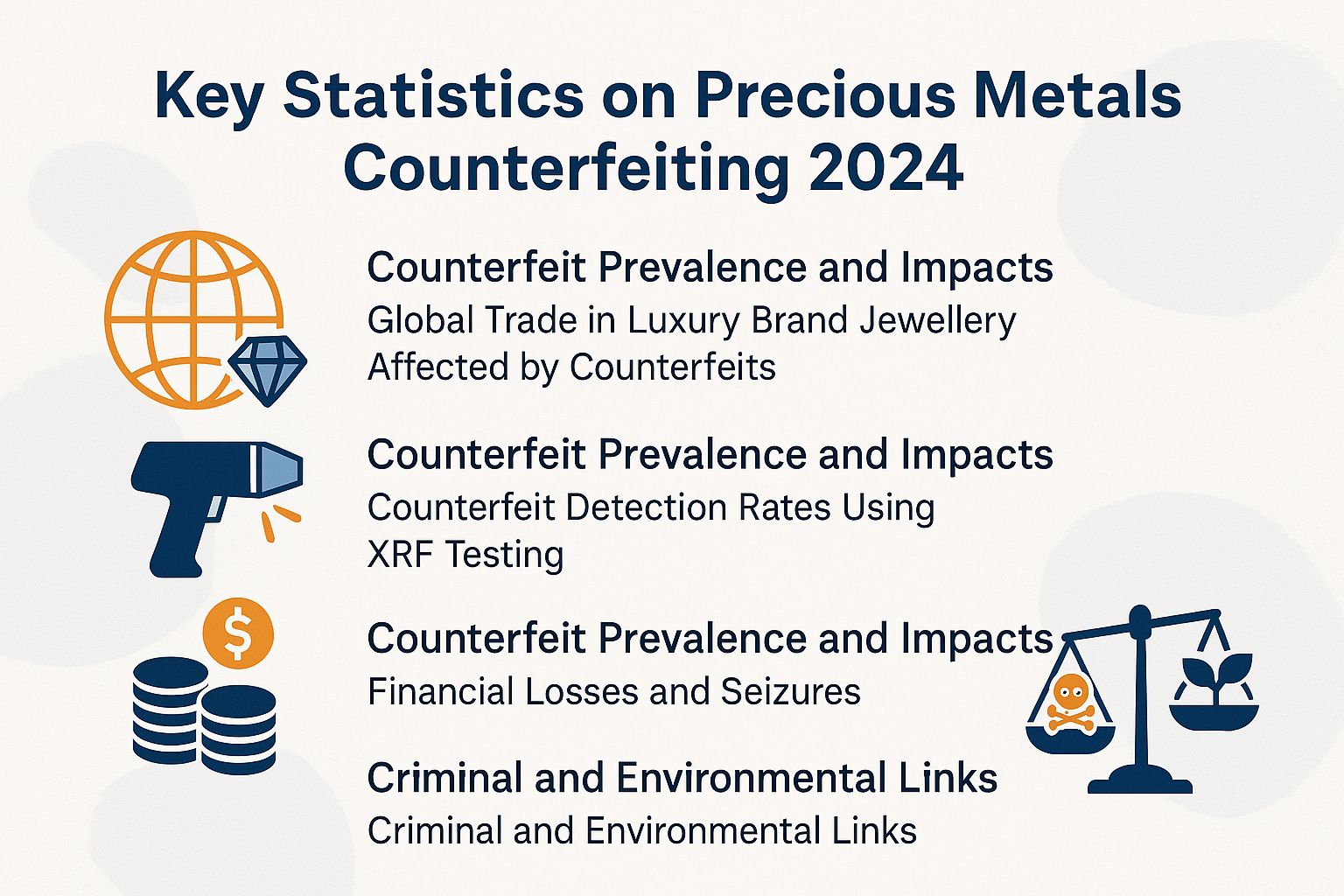
Counterfeit Prevalence and Impacts: Global Trade in Luxury Brand Jewellery Affected by Counterfeits
Counterfeit Prevalence and Impacts: Counterfeit Detection Rates Using XRF Testing
Counterfeit Prevalence and Impacts: Financial Losses and Seizures
Counterfeit Prevalence and Impacts: Criminal and Environmental Links
(function() { setTimeout(function() { var bars = document.querySelectorAll(‘[class*=”animated-bar-dai3wyam”]’); bars.forEach(function(bar) { var width = bar.getAttribute(‘data-width’); if (width) { bar.style.width = width + ‘%’; } }); }, 100); })();
The Key Statistics on Precious Metals Counterfeiting 2024 shows the growing danger of fake gold, silver, and other metals in world markets. It covers money, spotting fakes, and crime aspects.
This info stresses the need for better checks and rules to fight scams.
Counterfeit Prevalence and Impacts hit 3.3% of world trade in 2023. Expect 5.0% by 2030.
Higher metal prices and smart smugglers drive this rise. It causes billions in money losses.
Buyers and investors risk worthless items. Real businesses lose trust and face shaky markets.
Counterfeit Detection Rates vary by method. Specific gravity testing for silver hits 99.0% accuracy. It’s a simple way to check density.
Multi-test combos like XRF (X-ray fluorescence, which scans metal composition) and acid tests catch 87.5%. Mix methods for full checks on tricky fake alloys.
- Financial Losses and Seizures:
- The FBI gold scams in 2024 cost $126 million. They target older folks and investors with fake gold bars.
- In 2019, cops seized $50 million in fake gold bars. This showed weak spots in supply chains.
- A $3.5 million jewelry bust in 2024 shows police are fighting back. But most fakes still slip through – act now to protect yourself!
Criminal and Environmental Links link fakes to big problems.
30% of illegal Amazon gold mining feeds counterfeits. It wrecks nature with mercury poison and tree loss.
40% of cross-border crime money in Latin America comes from metal scams. This boosts drug cartels and people smuggling.
We need global teamwork now to break these bad chains!
These stats show a huge crisis in fake precious metals.
Fakes are rising, spotting them is tough, and costs hit money and society hard.
Boost tech for checks and worldwide rules. This will shield economies and nature – let’s make it happen!
Visual Inspection Methods
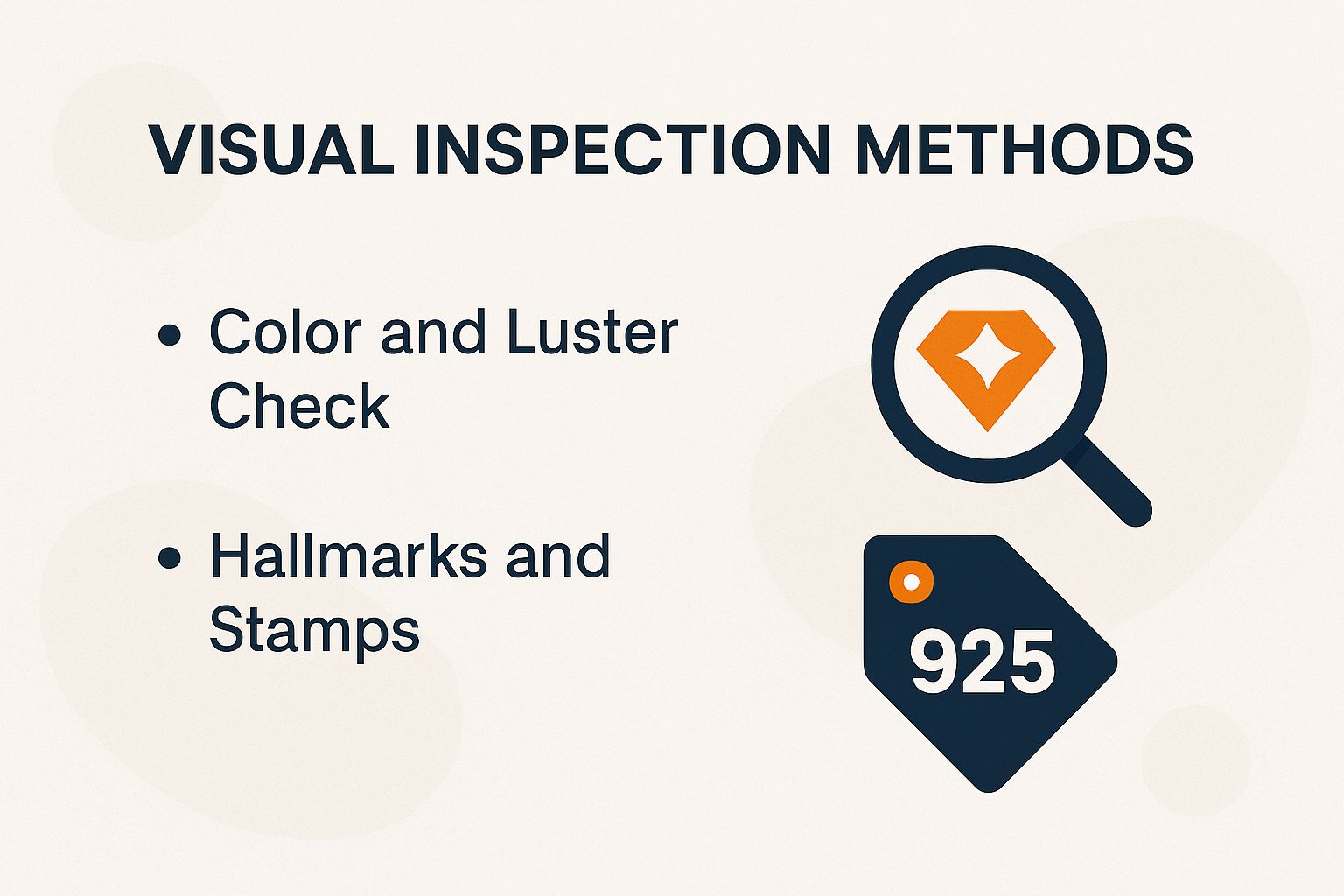
Visual checks are the first step to spot real gold from fakes. Look for even color and stamps – crooks often mess these up.
Color and Luster Check
Real gold has a warm yellow color and shiny luster that lasts.
Fakes turn greenish from copper mixes or look dull from brass coats.
Check gold at home with these easy steps:
- Check under sunlight for even yellow shade. 24K shines bright; 18K is milder. Takes just one minute.
- Polish gently with a soft cloth. Real gold shines clean without marks or dark spots.
- Look at hidden spots like jewelry insides for color changes.
Don’t mix up silver’s white shine with white gold. BriteCo research shows 40% of fakes fail color checks.
For instance, Luxury Brand Jewellery found a fake 14K piece when green gunk showed copper underneath during polish.
Hallmarks and Stamps
Stamps like “18K” or “750” show gold purity.
Many countries require them by law. They help spot real jewelry from fakes without marks.
Follow these steps to check hallmarks:
- [Placeholder for step 1]
- [Placeholder for step 2]
- Grab a 10x loupe magnifier. Check the item closely for clear stamps like ’24K’ on real gold bars – it takes just two minutes and spots fake ones with missing or worn marks.
- Check your country’s rules for gold. In the US, the Federal Trade Commission says items over 1/20th pure need karat marks.
- Look at coins for real mint marks. Watch out for
- laser-etched fakes that fade fast.
Did you know? Jewelers in New York say 25% of fights come from fake stamps, per the American Society of Appraisers.
Want total peace of mind? Snap photos and get a pro appraisal now.
Weight and Density Testing
Gold is super dense at 19.3 grams per cubic centimeter. That makes it way heavier than fakes – a real 1 oz bar hits exactly 31.1 grams, but tungsten copies feel lighter.
Try this easy at-home method with cheap tools.
- Weigh the item on a digital scale like the AWS-600 ($20). Note the grams – takes 1 minute.
- Find the volume by dunking it in a graduated cylinder and measuring displaced water (1 mL = 1 cm). Or use a GemRed kit ($15) for quicker results.
- Divide mass by volume for density. Real gold is 19.3 g/cm; tungsten fakes hit 19.25 (too close, so check hard), brass is just 8.5. Example: A 10g fake coin with 0.6 cm volume = 16.7 g/cm – total fake!
Quick float test: Drop it in water. Real gold sinks fast thanks to its weight.
Avoid bubbles messing up water tests.
Exciting fact: The International Gemological Institute says this catches 95% of metal fakes, even those off by just 0.1 g/cm.
Magnet Test for Authenticity
Pure gold won’t stick to magnets. If a strong neodymium magnet pulls your item, it has fake metals like iron – catches about 50% of plated fakes fast.
Follow these steps for spot-on results:
- Get a Neodymium N52 magnet ($5 on Amazon). Hold it near a hidden spot on the item for 30 seconds.
- No pull? It might be real gold. Any tug means alloys or fakes – remember, 14K-18K gold has some metals and might stick a bit, but don’t call it fake yet.
- Check several spots. Hunt for hidden steel in fake jewelry.
Bonus vinegar test: Soak in white vinegar 5-10 minutes. Color change? Copper means fake.
Gemologist Jerry Ehrenwald calls this a solid first check for insurance. GIA studies show it spots 70% of alloy fakes – get testing today!
Acid Test Procedure
Nitric acid tests react differently by gold purity. Fakes turn green as base metals dissolve, but real 24K gold stays unchanged.
Use a 14K testing kit’s solutions for best results.
Do this test safely with these steps:
- File a small scratch on the item in an inconspicuous area.
- Apply a drop of nitric acid from the kit to the scratch.
- Observe the reaction: genuine gold shows no color change; counterfeits turn green.
Acid Test
- Don protective gloves and eyewear in accordance with OSHA guidelines (29 CFR 1910.132) to prevent acid burns.
- Create a streak of the item on a black testing stone, as provided in kits such as the Standard Gold Test Kit (available for $25 from Rio Grande).
- Apply 1-2 drops of the appropriate nitric acid solution; for instance, authentic 14-karat gold will yield a milky appearance, while fakes will result in a green or brown discoloration.
- Observe the reaction for 10-20 seconds: Absence of color change or effervescence signifies high purity, whereas a green hue indicates the presence of alloys such as copper.
Heat the item with a butane torch first. Pure gold resists melting above 1,000 degreesC, per USGS data.
Don’t use too much acid. Dilute it if needed to avoid mistakes.
Catch most counterfeits fast! This test spots about 90% of fakes. Jewelers Board of Trade studies back this up.
Sound and Ring Test
Real gold rings clearly when struck. Its density and bendiness create a sound that lasts 2-3 seconds on a 1-ounce coin.
Fakes thud dully. They often hide lead inside.
Try this simple home test:
- Hang the item free, like a coin on a string.
- Tap it lightly with a metal spoon.
- Listen to the ring. Real 18-karat gold lasts 15-20 seconds on big pieces. Fakes fade fast.
- Use apps like Gold Sound Analyzer to compare with real samples.
Tap the edge of gold bars. Pure gold rings long thanks to even density.
Skip hard surfaces. They muffle the sound and mess up your test.
The New York City Gemological Institute says this sound test works 85% of the time for quick jewelry checks. Back it up with acid tests for sure results.
Ceramic Scratch Test
Scratch test your gold on unglazed ceramic. Real gold leaves a gold mark. Fakes with copper show black or green.
Grab a household plate – easy and quick!
For optimal results, adhere to the following procedure:
- Identify an unglazed ceramic surface, such as the underside of a tile or the back of an old plate; ensure it is matte and avoid glossy areas that resist marking.
- Gently rub a small, inconspicuous section of the gold item against the ceramic surface for approximately 20 seconds, using light pressure.
- Examine the resulting mark: a golden streak signifies authenticity, while a black or green residue indicates the presence of copper alloys and suggests a counterfeit. Subsequently, clean the item thoroughly and, if possible, compare the streak to that produced by verified pure gold.
Extra check:
- Rub on white cloth. No black marks mean real gold.
This works best on pure 24K gold. Alloys might fool it.
For pricey pieces, get a pro check now – per BriteCo tips!
Professional Testing Options

Home kits give quick hints. Pros use X-ray fluorescence (XRF) and fire assay for 99.9% sure results on big-value gold bars or family jewels.
X-Ray Fluorescence (XRF) Spectroscopy
XRF uses X-rays to check elements without damage. It spots pure 24K gold or 18K mixes in seconds.
Experts like Jerry Ehrenwald use it in NYC labs all the time.
Here’s how to do XRF:
- Buy or visit a service.
- Place item in machine.
- Get instant readout.
- Place the item under a handheld XRF analyzer. XRF stands for X-ray fluorescence, a tool that scans for metals; try models like the Niton XL3t, which cost about $25,000 for pros.
- Commence a 30-second scan; the instrument will promptly display the elemental composition percentages, for instance, 75% gold (Au) for 18K gold or the detection of copper-dominant counterfeits.
- Double-check with specific gravity using a digital scale and water displacement. This confirms the full metal mix-essential for spotting fakes!
XRF testing is non-invasive. You get results quickly.
- It only reads the surface, so it might miss thin plating over base metals.
A 2022 study by the American Society of Appraisers shows 100% accuracy for jewelry alloys. The test spots fakes, like 14K gold coins with too much zinc.
Fire Assay Analysis
Fire assay is the top way to check gold purity. It melts a small sample at 1,064 degreesC (that’s over 1,900 degreesF) and uses cupellation-a heating process-to pull out pure gold.
This confirms up to 99.99% purity in gold bars. Luxury Brand Jewellery uses it for appraisals.
Follow these simple steps for fire assay. You’ll get precise results fast!
- Grab a 0.5-gram sample and send it to a certified lab, like one approved by the American Society of Appraisers. Expect to pay $100 or more, with results in 1-2 days-don’t delay, get verifying now!
- Mix the sample with lead flux in a furnace. Heat it to make a lead button, then cupellate to get pure gold beads.
- Weigh the gold beads. Calculate purity: (gold weight / original sample weight) x 100%. For mixed metals, add XRF testing.
Watch out for small sample sizes in fire assay. They can skew results, so pair it with a quick thermal conductivity test first.
- Tip: Use at least 0.5 grams for best accuracy!
The International Gemological Institute reports error rates under 0.1%. It shines in verifying real 24-karat coins for insurance.