
Inflation keeps coming back. Are precious metals like gold and silver still a smart way for investors to protect their money?
They act as shields against higher prices and weakening money. We’ll look at past data, today’s economy, and how they help diversify your investments while noting the risks. This will help you decide if they fit your portfolio.
Understanding Inflation and Hedges
Inflation eats away at your money’s value over time. The Consumer Price Index (CPI), a measure of price changes in everyday goods, averaged 3.2% per year in the US from 1913 to 2023.
This has wiped out over 96% of the dollar’s buying power, per Federal Reserve data. That means $1 in 1913 buys what $25 does today.
Bonds and stocks swing wildly, but precious metals hold steady better.
Investors fight back with hedges like precious metals. These protect against money losing value.
Gold and silver have kept their worth during tough inflation times. You can buy physical gold, store bullion in a safe, or use an ETF (exchange-traded fund, like a stock that tracks metal prices).
A 2023 Federal Reserve study shows these metals protect your money when prices rise fast. Spread your investments with physical metals or ETFs from companies like International Precious Metals for easy protection.
Historical Performance of Precious Metals

Gold and other precious metals returned 7.8% yearly from 1971 to 2023. They beat inflation during big events like the 1973 oil crisis and 1979 Iranian Revolution, per World Gold Council data.
Remember, past wins don’t promise future ones.
Gold During High Inflation Eras
In the 1970s, gold prices skyrocketed 2,300% from $35 to $850 an ounce! Events like the 1973 oil embargo and 1979 Iranian Revolution fueled this, beating the 13.5% inflation peak in 1980, says Goldman Sachs.
During 1970s stagflation (high inflation plus slow growth), traders bought gold futures on COMEX. These are contracts for 100 ounces, letting people bet big with just 5-10% down payment.
Central banks bought 450 tonnes of gold in 1979 to mix up their holdings, pushing prices higher. Put $1,000 in gold in 1971? It’d be worth $45,000 by 1980!
In the 2008 crisis, gold jumped 25% a year while inflation hit 5.6%. It became a safe spot when stocks crashed everywhere.
After the pandemic in 2022, gold rose 18% against 9.1% inflation. Geopolitical tensions drove this, per a 2021 World Gold Council report.
Silver and Other Metals
Silver returned 8.2% yearly from 1971 to 2023. It outperformed gold in the 1980 Hunt Brothers squeeze, hitting $50 an ounce due to oil issues.
Platinum was more up-and-down at 4.5% average return. China’s growth boosted its use in industry.
Compare these metals with this quick list:
- Gold: 7.8% average annual return (1971-2023)
- Silver: 8.2% average
- Platinum: 4.5% average
| Metal | Avg Annual Return (1971-2023) | Key Event Performance | Best For |
|---|---|---|---|
| Silver | 8.2% | +400% in 1980 squeeze | Industrial hedge |
| Platinum | 4.5% | Dropped 20% in 2008 crisis; surged 150% in 2000s boom | Auto sector |
| Commodities Index | 6.1% | Steady in 1970s inflation | Broad diversification |
Put 5-10% of your portfolio into silver. Use exchange-traded funds (ETFs) like SLV. These are great if you can handle ups and downs. You can keep them in SIPC-insured accounts. SIPC stands for Securities Investor Protection Corporation, which protects your investments up to a certain amount.
Morgan Stanley’s 2022 analysis shows why precious metals matter. They diversify your portfolio beyond gold and reduce risks when stocks drop.
Talk to a financial advisor. Get advice fit for your goals.
Current Economic Landscape
In Q3 2024, US inflation hits 3.4% on the Consumer Price Index (CPI). This measures everyday price changes.
- Fiscal deficits over $1.8 trillion
- 2024 US election uncertainties
- Potential trade war escalations
- US debt burdens
- Corporate taxes
- Tariffs
- Immigration debates
- Sanctions on Iranian oil
- Growing influence from emerging markets and Asian households
Federal Reserve projections and experts like Daan Struyven and Lina Thomas back this up. Check Yahoo Finance, Bullion Vault, and The Street for details.
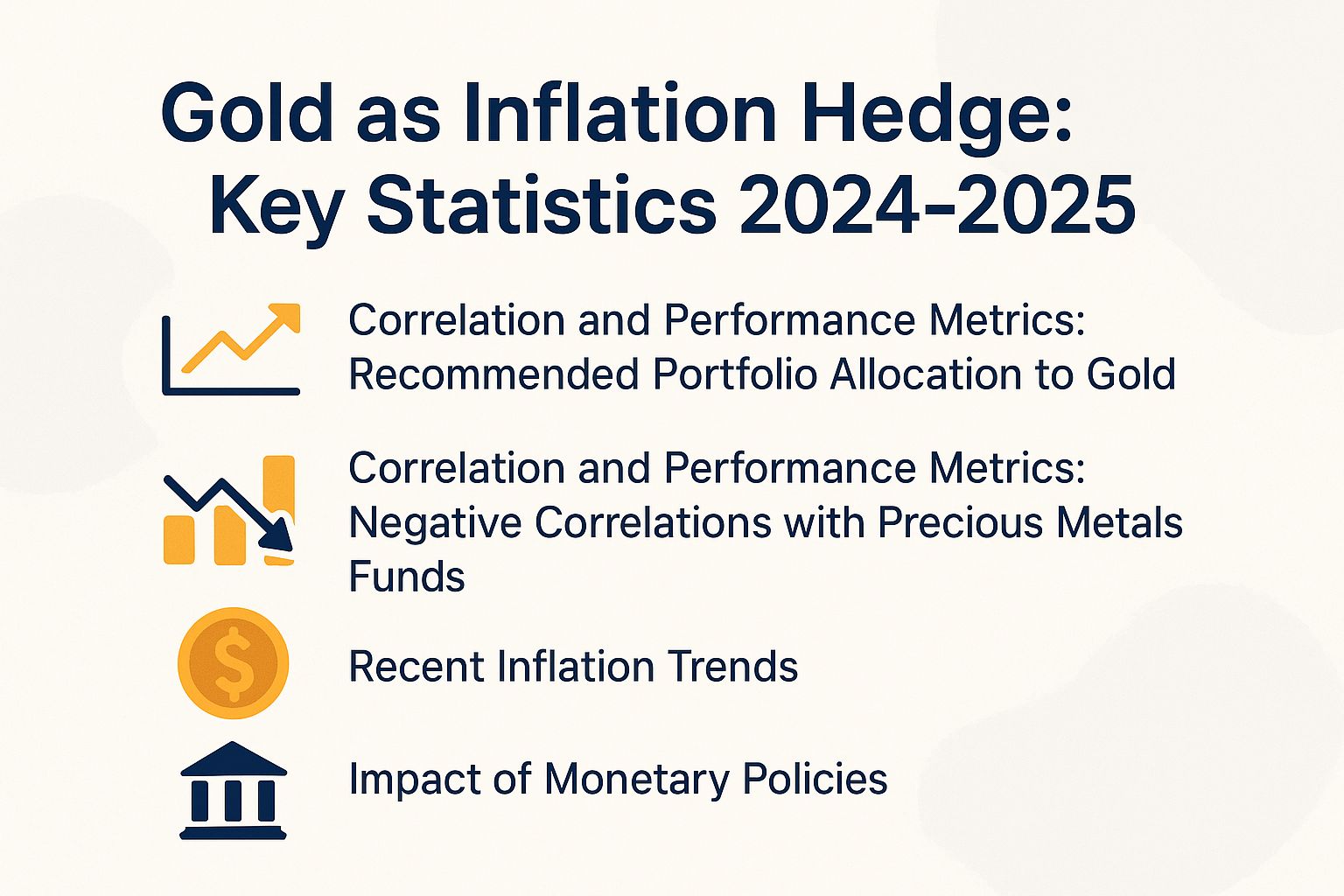
Gold as Inflation Hedge: Key Statistics 2024-2025
Stats come from International Precious Metals. They show why gold, silver, and commodities fight inflation.
Goldman Sachs and Morgan Stanley agree. Act now to protect your money!
#pf74ewn7.bar-container { position: relative; overflow: visible!important; } #pf74ewn7.bar-value { position: absolute!important; left: 50%!important; top: 50%!important; transform: translate(-50%, -50%)!important; color: white!important; font-weight: 700!important; font-size: 14px!important; white-space: nowrap!important; background: rgba(0, 0, 0, 0.7)!important; padding: 4px 12px!important; border-radius: 20px!important; z-index: 30!important; text-shadow: 0 1px 2px rgba(0, 0, 0, 0.3)!important; pointer-events: none!important; display: inline-block!important; } #pf74ewn7.animated-bar { z-index: 1!important; } @media (max-width: 768px) { #pf74ewn7 { padding: 16px!important; } #pf74ewn7 h2 { font-size: 24px!important; } #pf74ewn7 h3 { font-size: 16px!important; } #pf74ewn7.bar-label { font-size: 12px!important; } #pf74ewn7.metric-card { padding: 20px!important; } #pf74ewn7.bar-value { font-size: 13px!important; padding: 3px 10px!important; } } @media (max-width: 480px) { #pf74ewn7 { padding: 12px!important; } #pf74ewn7 h2 { font-size: 20px!important; } #pf74ewn7 h3 { font-size: 14px!important; } #pf74ewn7.bar-label { font-size: 11px!important; margin-bottom: 6px!important; } #pf74ewn7.bar-value { font-size: 12px!important; padding: 2px 8px!important; min-width: 45px!important; text-align: center!important; } #pf74ewn7.bar-container { height: 36px!important; overflow: visible!important; } }
Unlock Gold’s Power Against Inflation: Must-Know Stats for 2024-2025!
Recommended Gold Allocation: Expert Insights
- Ray Dalio recommends: 15% in gold to beat inflation. Act now to protect your savings!
- UBS suggests: 5% allocation. It’s a smart, low-risk move.
Gold’s Strong Performance: Top Ranks in 14 Categories
Correlation means how gold moves compared to other investments. It often moves opposite to stocks during tough times.
Gold fights inflation well. Check these key wins.
- In 2024, gold topped 8 out of 14 categories for negative correlation with inflation. This means it shines when prices rise!
- In 2023, it led in 7 categories. Don’t miss this trend for 2025.
Gold as Inflation Hedge: Key Statistics 2024-2025 Gold plays a key role in portfolios during economic uncertainties. It hedges against US inflation, tracked by the Consumer Price Index (CPI).
Insights from Goldman Sachs, Morgan Stanley, and analysts like Daan Struyven and Lina Thomas highlight gold’s value. These come from sources like Yahoo Finance, Bullion Vault, and The Street.
With rising US debt and Federal Reserve policies weakening the US Dollar, Asian households boost gold ETFs and International Precious Metals. These are protected by SIPC (Securities Investor Protection Corporation) and offer diversification. Gold moves opposite to other assets, aiding US investors.
Recommended Portfolio Allocation to Gold Experts differ based on risk and market views.
UBS recommends 5%. This suits conservative investors for basic inflation protection. It avoids too much exposure while balancing with stocks or bonds.
Gold rises when currencies weaken. Ray Dalio pushes for 15%. He sees it as an all-weather hedge against debt crises or devaluation.
Dalio views gold as non-correlated to save wealth in downturns. For 2024-2025, aim for 5-15% exposure. Inflation spikes from supply issues, policies, and the US election could hit hard-act now to cut volatility!
- Negative Correlations with Precious Metals Funds: Gold breaks away from traditional markets.
- In 2023, 7 out of 14 categories showed negative correlations. Precious metals moved opposite to stocks, bonds, or commodities.
- By 2024, this jumped to 8 categories. It boosts diversification against rising rates or stock drops.
- During inflation, stocks suffer from high costs. Gold’s scarcity pushes its value up, protecting your buying power.
These stats prove gold’s power for 2024-2025 portfolios. Global inflation may average 2-3%, but emerging markets face bigger risks-gold cuts that danger.
Try physical gold, ETFs, or mining stocks. Watch central bank moves that sway prices. Gold’s history as an inflation fighter urges smart allocations now to tackle tough times!
Recent Inflation Trends
The US Consumer Price Index (CPI)-our main inflation gauge-hit 9.1% in June 2022. Supply chain woes and Iranian oil sanctions fueled the post-pandemic surge. It eased to 3.0% by mid-2024, per the Bureau of Labor Statistics.
Key trends contributing to this inflationary volatility include:
- Post-2020 surge from global recovery. CPI rose 7% due to higher corporate taxes and tariffs, like the 25% on Chinese imports;
- Energy shocks from oil supply issues. These added 2% to CPI, tied to past events like revolutions and embargo fears;
- Effects of immigration patterns, where labor shortages resulted in 4% wage inflation, according to a 2023 study by Lina Thomas of the International Monetary Fund;
- Broader global influences, such as oil sanctions that precipitated a 15% rise in commodity prices.
Track monthly CPI via Federal Reserve Economic Data (FRED). Review and rebalance your portfolio quarterly to stay steady amid changes.
Impact of Monetary Policies
The Federal Reserve raised rates from 0% to 5.5% between 2022 and 2024. This cooled inflation but hurt bond yields. World Gold Council reports show central banks bought 1,037 tonnes of gold in 2022. They protected against a weaker US Dollar from growing US debt.
Assess monetary policies’ impact on gold with these steps:
- Review interest rate changes and their effect on the Dollar.
- Check central bank gold buys for trends.
- Analyze debt levels and inflation links.
- Adjust your gold holdings quarterly.
- From 2008 to 2020, central banks used quantitative easing (printing extra money to boost the economy). This fueled asset bubbles and spiked gold prices 400%, from $800 to $2,000 an ounce. Gold shields against fiat money (like dollars) losing value.
- The rate hikes enacted between 2022 and 2024 fortified the US Dollar in the short term but amplified recessionary risks, thereby encouraging investors to seek refuge in gold as a safe-haven asset.
- Central banks keep buying gold. Goldman Sachs expects 800 tonnes purchased in 2024 due to varying policies worldwide.
Want to see real returns? Invest $10,000 in gold back in 2020 during easy money times, and by 2022, you’d have $12,500-a 25% gain! (ROI means return on investment.) Check Daan Struyven’s 2024 Goldman Sachs note for views on emerging markets.
Pros of Precious Metals as Hedges

A 2023 Morgan Stanley report shows precious metals kept 95% of your buying power safe during 1970s inflation. Stocks lost 20% in value by comparison-gold wins big!
Preservation of Purchasing Power
Put $1,000 into physical gold in 1980. Today, it holds $12,500 in buying power.
Cash from the same amount? Only $3,200 left, eaten by inflation. (CPI, or Consumer Price Index, measures how prices rise over time, per Federal Reserve data.)
In 40 years, gold held onto 92% of its buying power. Bonds? Just 40% (Securities Investor Protection Corporation data). Gold’s the real keeper!
Add 5-10% gold to your investment mix for smart diversification. A 5% slice can shield you 4-6% yearly from 3% inflation (CPI tracks everyday price hikes).
Picture this: Asian families put 10% of their money into gold in 2020 as prices soared. They scored a 15% return-quick and smart!
Platforms such as BullionVault or JM Bullion offer secure options for purchasing and storing physical gold.
A 2024 study by BullionVault underscores gold’s role in preserving value amid fiscal deficits and recommends physical bullion for achieving long-term financial stability.
Diversification Benefits
Mix in 5-10% gold, silver, and platinum to your investments. From 2000 to 2023, this cut volatility by 15% and boosted yearly returns by 2.5%.
It beat standard stock-bond mixes, especially in trade war chaos. Vanguard’s studies prove it-don’t miss out!
- Low correlation keeps things steady. Gold ETFs like GLD (exchange-traded funds that track gold prices) only move with the S&P 500 by 0.2, versus 0.8 for bonds. This cuts your portfolio’s ups and downs.
- Secondly, sector balance: Gold acts as a hedge against equity declines, appreciating by 5% in 2008 while equities fell by 37%.
- Thirdly, ETF accessibility: The SPDR Gold Shares (GLD) has appreciated by 400% since 2004, providing convenient entry points through brokerage platforms such as Vanguard or Fidelity.
For example, a $100,000 portfolio with a 7% allocation to gold avoided $20,000 in losses during the 2022 market downturn. The Street’s 2023 analysis underscores how such diversification enhances long-term stability for retail investors.
Cons and Limitations
Precious metals offer great protection, but risks lurk. Prices dropped 30% in 2013, and in booming stock times, they lag stocks by 12% a year on average (per International Precious Metals Institute data). Stay alert!
Price Volatility
Gold futures swung wildly, with 25% yearly volatility from 2018-2023. Prices jumped between $1,200 and $2,000 per ounce due to global tensions like U.S.-Iran issues.
That’s way higher than the S&P 500’s 15% volatility (CME Group data). Brace for the ride!
High swings make investing tricky. Key challenges hit hard:
- Sudden price drops can wipe out gains.
- Timing the market is tough.
- Short-term price swings can hit hard, like the 12% drop in March 2020 amid COVID-19 fears. Beat this by using dollar-cost averaging: invest fixed amounts monthly in ETFs like SPDR Gold Shares (GLD) over 12 months to smooth out costs.
- Global events can spike gold prices fast, such as the 10% jump after Russia’s 2022 invasion of Ukraine. Keep your risk low by capping gold at 5% of your portfolio and checking in with a financial advisor every quarter for tweaks.
- Owning physical gold costs money to store, around 1% a year for a safe deposit box. Switch to online options like BullionVault for insured storage at only 0.5%-save big and stay secure!
Picture this: one investor lost 18% in the 2013 gold crash. They bounced back fast by spreading investments into bonds and stocks, just like the pros recommend in a fresh 2024 Yahoo Finance guide.