The Federal Reserve is signaling rate cuts soon. Investors see gold as a powerhouse asset.
In the past, easing money policy pushed gold prices up. Lower rates cut opportunity costs, spark inflation fears, and weaken the dollar. With inflation sticking around and policy changes, let’s dive into history, drivers, and risks. Gold might shine big in coming months!
Historical Context
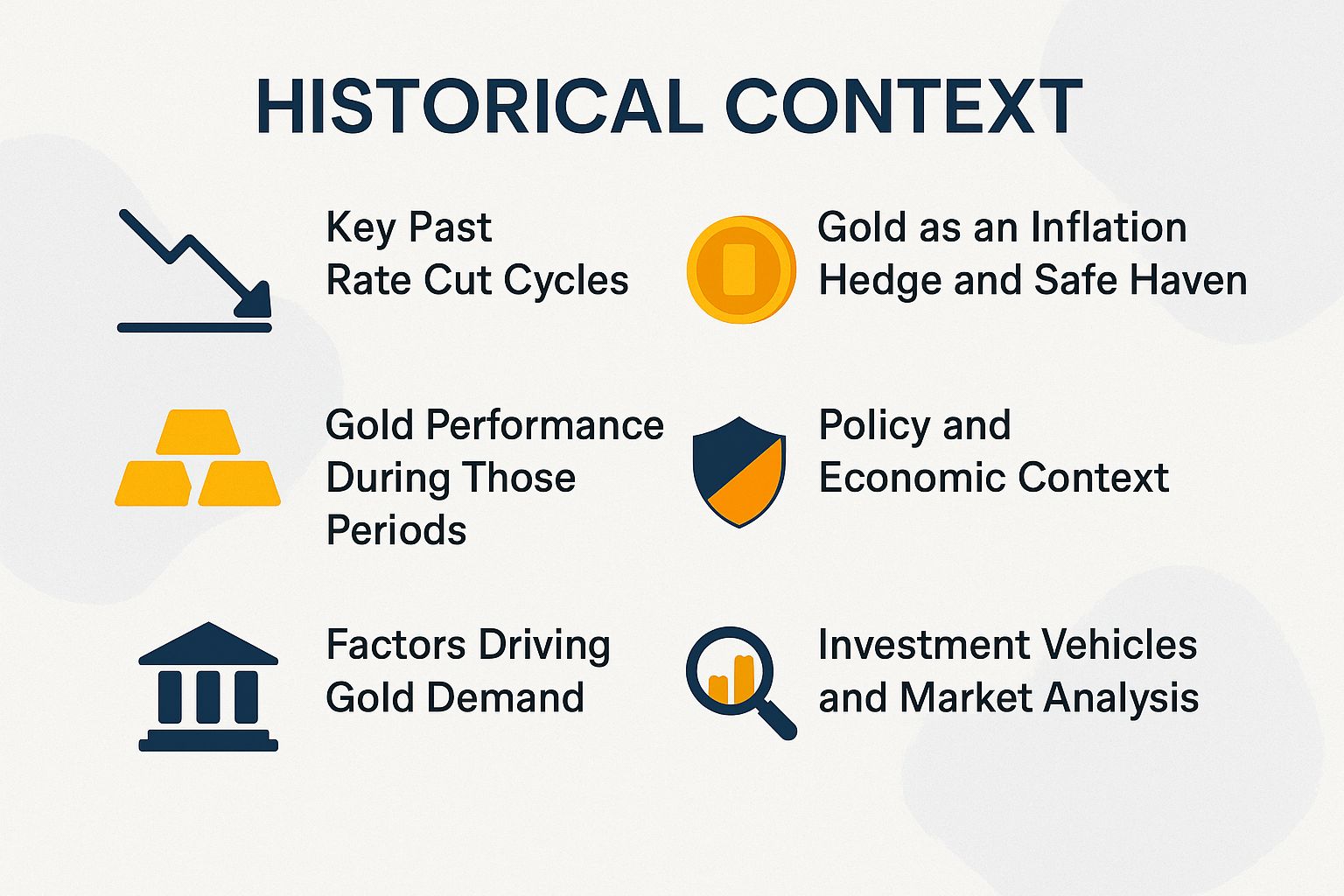
Federal Reserve Economic Data (FRED, the Fed’s key economic database) shows rate cuts since 2000 boosted gold prices. On average, gold rose 25% in the year after the first cut.
Key Past Rate Cut Cycles
In the 2008 crisis, the Fed slashed rates from 5.25% to 0-0.25% from September 2007 to December 2008.
They started quantitative easing-buying bonds to flood the system with cash-pumping $4.5 trillion into markets by 2014. This fought unemployment jumping from 5% to 10%, per Bureau of Labor Statistics. It was a massive move to save the economy!
Comparable monetary policy cycles include the following:
- 2001 dot-com bust: Rates dropped from 6.5% to 1.75% after GDP shrank 0.3% and unemployment hit 6.3%.
- 2020 COVID-19 shock: Rates went to zero as unemployment spiked 3.5 points to 14.8%. The $2.2 trillion CARES Act helped too.
- 2019 trade tensions: Three 0.25% cuts amid U.S.-China issues. FOMC plots hinted at more if growth dipped below 2%.
FOMC is the Fed’s policy committee.
These actions show the Fed’s focus on jobs and steady prices.
Gold Performance During Those Periods
In 2008 cuts, gold fell to $700 per ounce at first.
But it bounced back 25% by 2009 and soared 400% to $1,900 by 2011 as QE grew. What a comeback!
This pattern recurs across Federal Reserve rate cut cycles, with gold prices typically experiencing short-term dips before rallying as real interest rates decline. The following metrics provide a structured analysis:
- 2001: Started with 5% up, then 25% more by 2003 thanks to cash floods in dot-com crisis (London Bullion data).
- 2008: Dropped 30%, but rocketed 150% to 2011 high on QE (World Gold Council).
- 2019: Climbed 18% after cuts during trade wars.
- 2020: Jumped 25% to $2,070 in August from COVID stimulus (Kitco).
Don’t miss these patterns!
JPMorgan research shows gold and real interest rates move opposite, with a -0.65 link. Correlation measures how two things move together; negative means opposite directions. Buy after dips for a balanced portfolio!
Gold Price Trends During Fed Rate Cuts
Gold as an Inflation Hedge and Safe Haven
With uncertainty and recession worries, gold is top for fighting inflation and as a safe spot.
Fed moves affect bond yields and the yield curve, sparking a gold bull run like old gold standard days. Lower rates mean less cost to hold gold!
Inflation hedge: protects buying power. Yield curve: graph of bond rates over time. Bull market: rising prices.
Smart investors add gold ETFs-funds that track gold prices easily-mining stocks, and commodities to mix things up. This spreads risk across markets, including stocks.
Factors Driving Gold Demand
Gold prices follow supply and demand basics.
- Industrial uses, like in tech.
- Jewelry for cultures worldwide.
- Central banks stocking up reserves.
This shines in weak dollars, currency drops, and global tensions. Act now before prices surge!
Gold prices often move opposite to real interest rates. People rush to gold as a safe haven when the economy slows down, making it a top choice right now. Lower interest rates on the horizon could push gold prices even higher-don’t miss out!
What’s Happening with Policies and the Economy?
The Federal Open Market Committee (FOMC), led by Jerome Powell, meets to set interest rates. They often ease policy when consumer spending drops, GDP growth slows, unemployment rises, CPI inflation speeds up, or PPI increases. These changes affect loans, mortgages, car financing, and government bonds.
- Consumer spending weakens
- GDP growth slows
- Unemployment rates rise
- CPI inflation accelerates
- PPI increases
Fiscal policy and stimulus packages work alongside interest rate changes. They fight falling prices but can flood markets with cash, shaking up global interest rates and developing economies.
How to Invest in Gold and Read the Market
Grab gold in simple ways. Try these options:
- Gold futures: Contracts to buy or sell gold later at a set price
- Spot gold: Buy at today’s price per ounce
- Physical bullion: Actual gold bars or coins
- Sovereign gold: Government-backed gold bonds
- Digital platforms: Easy online gold investments
Smart investors use gold to balance portfolios and protect against ups and downs in commodities and markets. It’s essential for hedge funds battling volatility-act now to secure your spot!
Check market mood with technical analysis tools. Watch these key signs:
- Support levels: Prices where gold might stop falling
- Resistance: Prices where gold might stop rising
- RSI: A gauge showing if gold is overbought or oversold
- Moving averages: Trends over time
- VIX index: Measures overall market fear
#yms8zr2g.bar-container { position: relative; overflow: visible!important; } #yms8zr2g.bar-value { position: absolute!important; left: 50%!important; top: 50%!important; transform: translate(-50%, -50%)!important; color: white!important; font-weight: 700!important; font-size: 14px!important; white-space: nowrap!important; background: rgba(0, 0, 0, 0.7)!important; padding: 4px 12px!important; border-radius: 20px!important; z-index: 30!important; text-shadow: 0 1px 2px rgba(0, 0, 0, 0.3)!important; pointer-events: none!important; display: inline-block!important; } #yms8zr2g.animated-bar { z-index: 1!important; } @media (max-width: 768px) { #yms8zr2g { padding: 16px!important; } #yms8zr2g h2 { font-size: 24px!important; } #yms8zr2g h3 { font-size: 16px!important; } #yms8zr2g.bar-label { font-size: 12px!important; } #yms8zr2g.metric-card { padding: 20px!important; } #yms8zr2g.bar-value { font-size: 13px!important; padding: 3px 10px!important; } } @media (max-width: 480px) { #yms8zr2g { padding: 12px!important; } #yms8zr2g h2 { font-size: 20px!important; } #yms8zr2g h3 { font-size: 14px!important; } #yms8zr2g.bar-label { font-size: 11px!important; margin-bottom: 6px!important; } #yms8zr2g.bar-value { font-size: 12px!important; padding: 2px 8px!important; min-width: 45px!important; text-align: center!important; } #yms8zr2g.bar-container { height: 36px!important; overflow: visible!important; } }
Gold Price Trends During Fed Rate Cuts
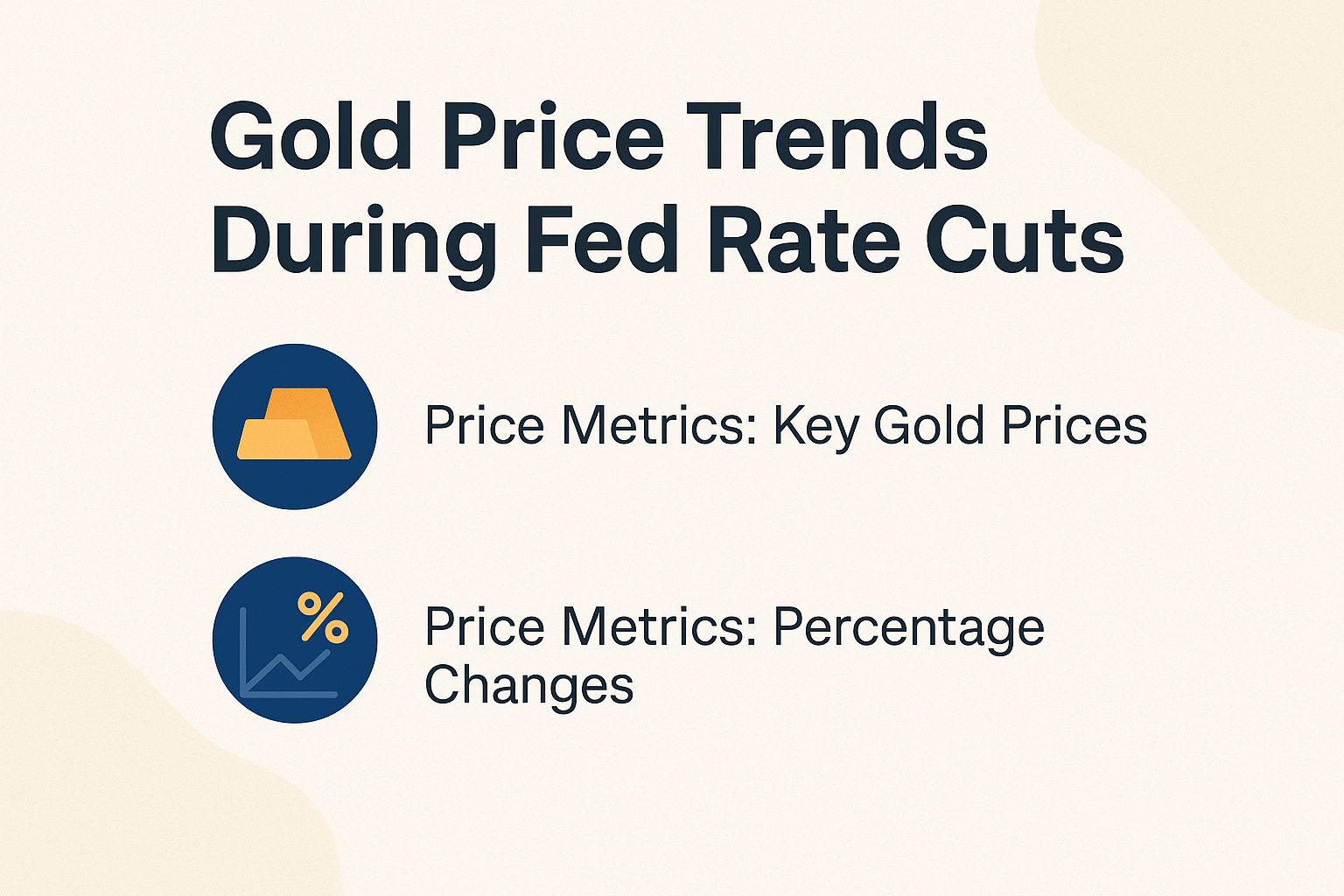
Gold prices during Federal Reserve rate cuts, as guided by Jerome Powell in FOMC meetings, often reflect historical trends tied to CPI inflation, PPI, and GDP growth, while influenced by Treasury bonds, market volatility via VIX, momentum indicators like RSI, and flows into gold ETFs.
Price Metrics: Key Gold Prices
Price Metrics: Percentage Changes
(function() { setTimeout(function() { var bars = document.querySelectorAll(‘[class*=”animated-bar-yms8zr2g”]’); bars.forEach(function(bar) { var width = bar.getAttribute(‘data-width’); if (width) { bar.style.width = width + ‘%’; } }); }, 100); })();
Gold Price Trends During Fed Rate Cuts show how Federal Reserve policies affect gold as a safe investment. Lower rates often make gold more attractive.
This dataset tracks recent highs, dips, recoveries, and future predictions during these economic changes. Watch for volatility when market fear rises, as shown by the VIX index-a measure of expected market swings.
Key Gold Prices show big swings in 2025. Gold hit a record high of $4,300 in October 2025 as investors sought safety amid economic worries.
Rate cuts signal a slowing economy. This boosts gold’s appeal.
Then, gold dipped to $4,000 recently due to profit-taking or brief market optimism. It quickly bounced back to $4,136 on Thursday, showing strong buyer interest.
Investors expect more rate cuts. The 2026 forecast of $4,400 points to growth from inflation and global tensions-making gold better than stocks or bonds right now!
- 50% year-to-date surge in 2025: Gold soared amid fast rate cuts. It beat stocks and bonds easily.
- 6% daily drop on October 21: A quick fix after getting too high. Strong economic news might have caused it-check RSI, a tool that spots overbought markets.
- Expected 10% gain by end of 2026: Long-term outlook looks bright. Get in now before it climbs higher!
- Historical 6% rise in 60 days post-rate cuts: Lower rates weaken the dollar. This always sparks gold demand.
Gold shines as an inflation fighter during Fed rate cuts. Short dips like October’s offer hot buying chances-don’t miss out with a 50% yearly gain already!
History backs this up. Watch Fed moves closely; more cuts could rocket gold to $4,400 and secure your portfolio.
Mechanisms Driving Gold Prices

Gold prices move opposite to real interest rates. For every 1% rate drop, gold jumps about 12% on average (from 1980-2023 IMF data). Real rates are just nominal rates minus inflation-lower ones make gold a steal!
Lower Opportunity Cost
Fed rate cuts lower the cost of holding gold, which pays no interest. For example, 10-year Treasury yields dropping from 4% to 3% often lift gold 10-15% (Fed studies).
The formula is simple: Real rate = Nominal rate – Inflation. Lower rates cut gold’s holding cost, making it beat interest-paying options.
In 2020, Fed cuts sent real yields to -1%. Gold exploded 25%-proving it’s your go-to in tough times (Bloomberg).
Yield curve inversions happen when short-term rates top long-term ones, signaling recessions. The 2019 inversion spiked gold demand-get ready if it happens again!
- TIPS bonds fight inflation but carry credit risk.
- Gold? Pure safe haven, shining in crises like Eurozone troubles (ECB research).
Inflation Expectations
Rate cuts often mean inflation is coming. Gold hedges perfectly-in the 1970s stagflation, it returned 35% yearly while CPI hit 13.5% (NBER). That’s huge protection!
Check TIPS spreads for inflation clues-breakeven rates show expected rises. In 2023, the 5-year rate was 2.3%, above the Fed’s 2% PCE target. Inflation could push gold higher fast!
After 2008, easy money policies sparked worries about rising prices. This pushed gold from $800 to $1,900 an ounce, even though official inflation numbers stayed low.
A University of Chicago study shows gold protects against inflation. It found a strong link, with a correlation score of 0.7.
Keep an eye on signs of future inflation, like the University of Michigan Consumer Sentiment surveys.
These help spot rising price worries and compare them to safer bets like bonds paying 4-5% interest.
Protect your investments now! Put 5-10% into gold ETFs like SPDR Gold Shares (GLD) to shield against market ups and downs.
US Dollar Weakness
When the Fed cuts rates, the US dollar index (DXY) often drops 5-10%. This boosts gold prices by 15-20% in response.
Over 20 years, Reuters data shows a strong opposite link between the dollar and gold, with a score of -0.85. This makes gold a top choice to fight currency ups and downs.
- 2019: DXY down 6% after rate cuts, gold up sharply.
- 2002-2008: Dollar weakened 30%, gold surged 300% from $300 to $1,200.
- Central banks: Russia bought 1.3M ounces in 2022 amid tensions.
IMF data from COFER (a report on global reserve currencies) shows countries slowly moving reserves away from the US dollar. It focuses more on currency swings than on inflation.
Low interest rates make the dollar less appealing. They don’t always mean higher prices for everyday goods.
Jump on tools like TradingView to watch DXY trends now. Use them to smartly position your gold investments before changes hit!
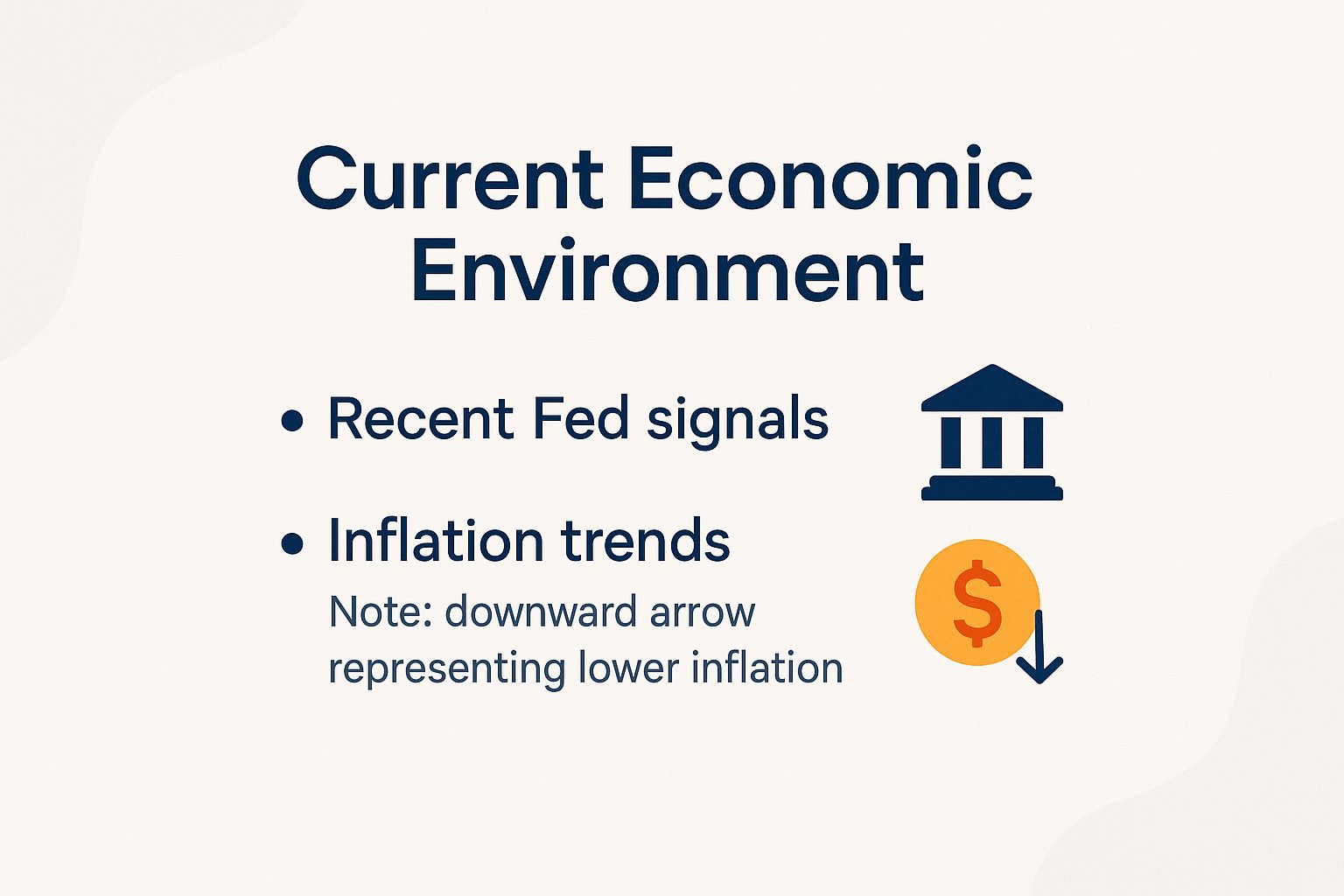
Current Economic Environment
In 2023, the Fed stopped raising rates at 5.25-5.50%. Low unemployment at 3.8% and CPI at 3.1% played a big role.
This break opens the door to cuts in 2024. GDP growth is slowing to 1.6% this quarter, says the Bureau of Economic Analysis.
Recent Fed Signals
At the September 2023 FOMC meeting, Jerome Powell hinted at rate cuts in 2024 if inflation keeps cooling. The dot plot – a Fed forecast chart – sees rates at 4.6% by year-end.
Key events shape this outlook. The Fed paused hikes in July 2023 after 11 straight increases, shifting from tight money policies.
September minutes show big wins against inflation. Core PCE – a key price measure – nears the 2% goal.
On September 20 at Jackson Hole, Powell said the job market is balancing out. JOLTS data shows job openings down 20% to 8.9 million in July from pandemic peaks.
Fed projections expect 2.1% GDP growth and 4.4% unemployment for 2023. Exciting times ahead for the economy!
The CME FedWatch Tool gives a 75% chance of a March 2024 rate cut. Get ready – tweak your portfolio with bonds or rate-sensitive stocks to ride the easing wave!
Inflation Trends
- CPI at 3.1% in 2023.
- Core PCE nearing 2% target.
- Watch for consumer sentiment shifts.
U.S. inflation cooled to 3.7% in September 2023, based on the Consumer Price Index (CPI, which tracks everyday price changes). This is down from a high of 9.1% in June 2022.
The core Personal Consumption Expenditures (PCE) index, focusing on underlying spending, hit 2.7%. Lower energy prices (crude oil at $85 per barrel), cheaper shelter, and easing Producer Price Index (PPI) readings drove this drop, per Bureau of Labor Statistics (BLS) data.
Look at the main CPI parts: food prices rose 0.4% monthly, but energy dropped 2.4%, easing overall price pressures (BLS data). Still, core inflation shows services climbing 5.1%, signaling strong ongoing demand.
- Food: +0.4% monthly
- Energy: -2.4% monthly
- This eases overall pressures
Wages grew 4.2%, according to the Atlanta Fed’s Wage Tracker. This boosts spending but could spark more inflation.
Fed Chair Jerome Powell hints at cutting interest rates soon. Yet, better supply chains-like 30% less port congestion year-over-year-point to lasting price relief.
The IMF’s October 2023 report predicts U.S. CPI inflation at 2.5% by 2024, with solid GDP growth. Investors should watch core services inflation closely-it could signal Fed policy shifts and exciting opportunities ahead!
Potential Risks and Outlook
Expected rate cuts might push gold prices and gold ETFs up to $2,200 by mid-2024, says Goldman Sachs. Get ready for potential gains!
But watch out: inflation over 3% or Middle East flare-ups could spike volatility (VIX levels) and cause a 10% drop in tough times.
Key risks include:
- Sticky inflation: Track PCE, CPI, and PPI (now 2.7%). Oxford Economics sees Fed cuts delayed to Q3 2024.
- Recession signs: Gold often jumps 20% in downturns. Keep an eye on BLS jobs data at 3.8%.
- Dollar rebound to DXY 106 (RSI overbought): This could press gold prices down short-term.
- Ukraine and Israel conflicts: They might boost gold demand 5-10% as a safe haven.
Don’t let risks scare you-the outlook is bright! Rate cuts could lift gold prices 15% to $2,500 versus bonds, backed by World Bank’s 2.6% global growth forecast for 2024.