Can I Lose Money Investing in Gold or Silver?
Economic uncertainty makes gold and silver appealing as inflation hedges and safe havens. Yet, losses are possible for precious metals fans.
Morgan Stanley experts note these assets strengthen your investment mix. But they swing with market changes and price shifts.
This guide reveals main risks, past mistakes, and tips for managing them. Learn about trading commodities and countercyclical investing (investing against the economic trend to balance risks) to protect your money and grow wealth.
Key Risks to Consider
Precious metals investing has upsides but comes with risks. Watch out for high costs and ups and downs. Stay alert to these pitfalls before diving in!
- High transaction costs and storage fees for physical gold or bullion.
- Market volatility affects prices.
- ETFs and similar products: Read the prospectus for fees and cash details.
- SIPC protects brokerage securities, not physical metals.
- Options like covered calls on miners: Consider premiums and risks.
Experts see it differently. Warren Buffett avoided gold as unproductive. Kevin O’Leary likes silver for industry uses. Ray Dalio adds gold to all-weather portfolios against inflation.
Crises in Greece, Argentina, Turkey, Nigeria, and Puerto Rico show gold and silver as safe spots. They work well against economic storms.
Skip physical holding? Try Bullion Vault for easy storage.
Royalty companies like Franco-Nevada and Royal Gold, plus streaming companies such as Wheaton Precious Metals, provide exposure to precious metals through stable cash flows without the operational risks of miners.
Past results don’t predict the future. Talk to a financial advisor first.
Potential Benefits of Investing
Adding gold and silver to your portfolio builds strength against market swings. This fits an all-weather portfolio for keeping wealth safe. Boost your portfolio’s power today and ride the wave of precious metals!
Go for physical gold, bullion, miner shares, or ETFs like GLD, IAU, or SLV. Royalty and streaming companies such as Franco-Nevada, Royal Gold, and Wheaton Precious Metals add steady gains without mining risks.
Morgan Stanley research shows a 10% allocation to metals cut volatility by 15% in the 2008 crisis. Don’t miss this chance to protect your investments now!
Exciting Gold and Silver Price Surges Expected in 2025
Yahoo Finance data points to big jumps from industry needs, tech boosts, and economic growth. Get ready for these potential rises despite some price swings!
- Gold: Up to 20% surge predicted.
- Silver: Possible 25% increase due to industrial demand.
#8u8hrln8.bar-container { position: relative; overflow: visible!important; } #8u8hrln8.bar-value { position: absolute!important; left: 50%!important; top: 50%!important; transform: translate(-50%, -50%)!important; color: white!important; font-weight: 700!important; font-size: 14px; white-space: nowrap!important; background: rgba(0, 0, 0, 0.7)!important; padding: 4px 12px; border-radius: 20px!important; z-index: 30!important; text-shadow: 0 1px 2px rgba(0, 0, 0, 0.3)!important; pointer-events: none!important; display: inline-block!important; } #8u8hrln8.animated-bar { z-index: 1!important; } @media (max-width: 768px) { #8u8hrln8 { padding: 16px; } #8u8hrln8 h2 { font-size: 24px; } #8u8hrln8 h3 { font-size: 16px; } #8u8hrln8.bar-label { font-size: 12px; } #8u8hrln8.metric-card { padding: 20px; } #8u8hrln8.bar-value { font-size: 13px; padding: 3px 10px; } } @media (max-width: 480px) { #8u8hrln8 { padding: 12px; } #8u8hrln8 h2 { font-size: 20px; } #8u8hrln8 h3 { font-size: 14px; } #8u8hrln8.bar-label { font-size: 11px; margin-bottom: 6px!important; } #8u8hrln8.bar-value { font-size: 12px; padding: 2px 8px; min-width: 45px!important; text-align: center!important; } #8u8hrln8.bar-container { height: 36px!important; } }
Precious Metals Ready to Explode: Projected 2025 Gains
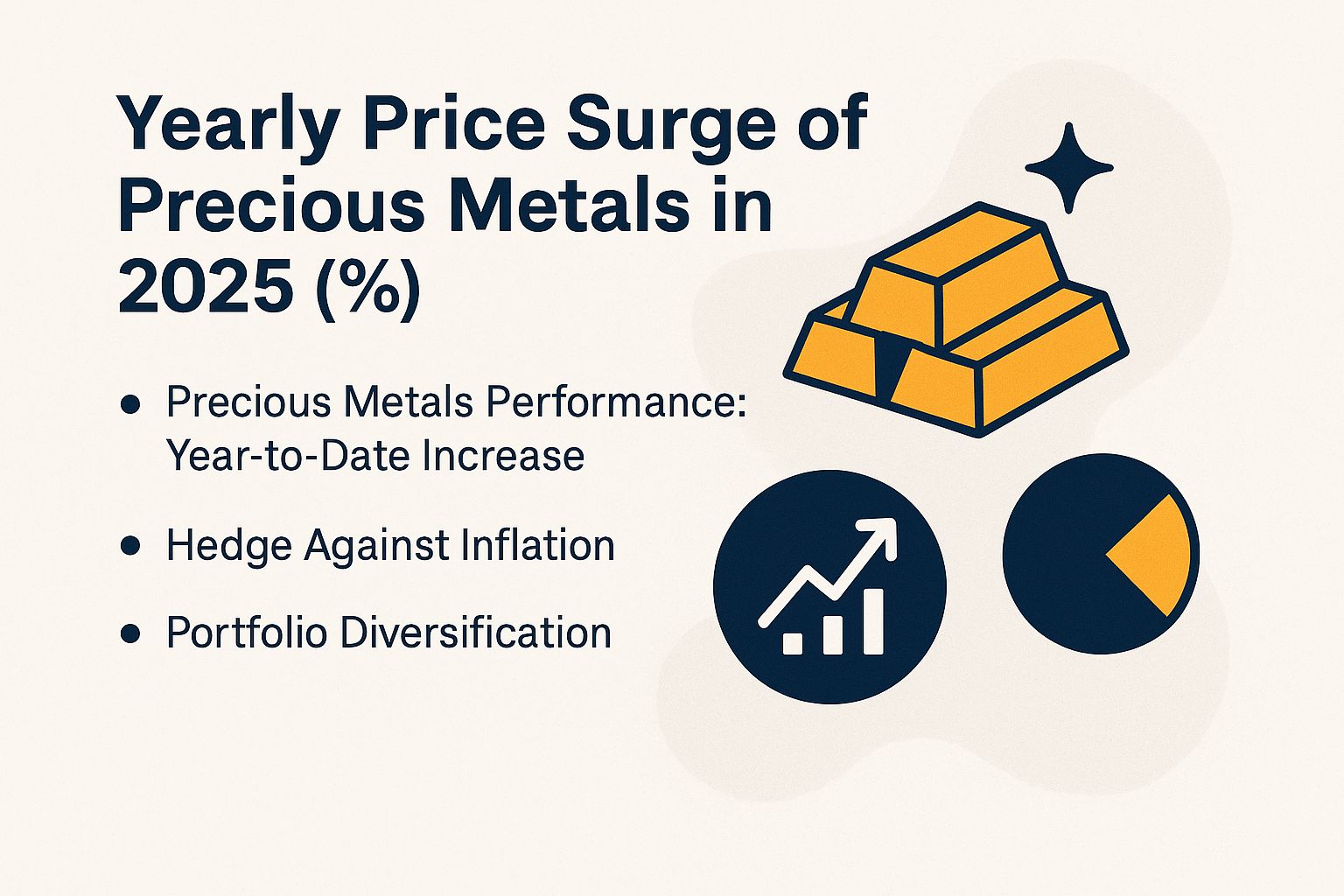
Precious Metals Performance: Year-to-Date Increase
Key Highlights:
- Platinum: Skyrocketing 82.5% – don’t miss out!
- Silver: Climbing 78.0% with huge potential.
- Gold: Solid 56.0% rise – a safe bet for growth.
These projections show why now is the time to act on precious metals.
(function() { setTimeout(function() { var bars = document.querySelectorAll(‘[class*=”animated-bar-8u8hrln8″]’); bars.forEach(function(bar) { var width = bar.getAttribute(‘data-width’); if (width) { bar.style.width = width + ‘%’; } }); }, 100); })();
The Yearly Price Surge of Precious Metals in 2025 (%) data shows huge year-to-date jumps in silver, gold, and platinum values. Investor interest is booming amid global economic ups and downs in places like Greece, Argentina, Turkey, Nigeria, and Puerto Rico.
These jumps prove precious metals are top safe-haven picks during inflation, geopolitical issues, and supply problems. They echo past trends where gold protected against falling currencies.
You can tap into this through various ETFs.
Precious Metals Performance metrics track the year-to-date increase. This is the percentage rise since January 2025.
Gains hit record levels from central bank buys, industrial needs, and trader bets. Big names like Warren Buffett, Kevin O’Leary, and Ray Dalio back these trends. Rising energy costs and mining hurdles push prices higher. Gold and silver ETFs see massive cash inflows.
- Silver: With a staggering 78.0% increase, silver’s performance stands out due to its dual role as both a precious and industrial metal. Widely used in solar panels, electronics, and medical applications, silver benefits from the green energy transition and technological advancements. Its volatility, however, stems from supply constraints in major producers like Mexico and Peru, making it a high-reward option for diversified portfolios. Exposure can be gained through the iShares Silver Trust (SLV) or other silver ETF options.
- Gold: Recording a solid 56.0% year-to-date surge, gold remains the traditional benchmark for stability. Central banks, including those in China and India, have ramped up reserves, while retail investors seek refuge from stock market fluctuations. Gold’s price resilience is bolstered by its cultural significance in jewelry and as a store of value, though it lags slightly behind silver and platinum in this surge due to its more mature market. Key investment vehicles include the SPDR Gold Trust (GLD) and iShares Gold Trust (IAU).
- Platinum: Leading with an impressive 82.5% increase, platinum’s rally is fueled by automotive sector recovery, particularly in catalytic converters for emission control. South African mining strikes and Russian export restrictions have tightened supply, exacerbating the price jump. As a rarer metal than gold, platinum’s industrial applications in hydrogen fuel cells also position it for future growth in sustainable technologies.
These numbers scream a hot trend! Precious metals are crushing traditional investments in 2025, with platinum and silver leading the charge.
Watch out for diversification risks-big surges can mean corrections ahead.
This bull market is roaring due to economic shifts. Allocate now for long-term wealth protection. Data from Yahoo Finance. For physical buys, try Bullion Vault for safe storage.
Firms like Franco-Nevada, Royal Gold, and Wheaton Precious Metals draw huge sector buzz.
Hedge Against Inflation
- Historical edge: 4.5% above CPI over 50 years (World Gold Council).
- 1970s stagflation: 7.2% returns vs. 10%+ CPI (Vanguard).
- Crisis protection: Held 80% value in Greece/Argentina hyperinflation (IMF).
- Easy access: SPDR Gold Trust (GLD) ETF.
- Real gain: $10K to $12.5K (2020-2023), beating 7% inflation.
Portfolio Diversification
Put 5-10% of your portfolio into gold funds.
This hedges against risks, and rebalance yearly to keep things balanced.
Add 5-10% gold to your stock and bond mix. It cuts overall risk by 20%, as shown in a 2022 JPMorgan and Morgan Stanley report.
Gold doesn’t move with stocks much (low correlation means it zigzags differently), boosting diversification. Even big names like Warren Buffett and Kevin O’Leary back this approach!
Ray Dalio’s Bridgewater Associates created the all-weather portfolio.
It puts 7.5% in gold and has delivered 7.5% yearly returns since 1971, with just 10% ups and downs (volatility). Their studies prove it works through all market weather!
- Rebalance quarterly for gold ETFs.
- Annual full review.
- Use dollar-cost averaging monthly.
If you’re big on tech stocks, try this. In 2022’s crash, putting 8% into silver via iShares Silver Trust (SLV) ETF paid off – silver rose 3% as Nasdaq dropped 33%!
It moves opposite to stocks (countercyclical), saving your portfolio.
Picture a $100,000 portfolio with 8% in SLV. It had 12% less drop (drawdown means the biggest loss dip) than all-stocks, saving you $15,000 extra!
Talk to a trusted financial advisor before jumping in. Don’t risk it alone!
Key Risks Leading to Losses
Precious metals seem steady, but watch out!
In 2011, prices swung 30% (volatility), leading to big losses if you don’t handle it right.
Don’t let volatility catch you off guard!
Price Volatility and Market Fluctuations
- Gold: Rose 40% in 2020 pandemic chaos, then corrected 10%.
- Silver: Dropped 35% in 2013 from industrial shifts.
- Silver in 2021: Swung over 20% due to Turkey’s currency crisis and exports.
Track ups and downs (volatility) live with Yahoo Finance’s VIX or SLV’s beta (how much it swings vs. market, usually 1.5-2.0).
Tweak your holdings if it tops 30% – act fast!
Vanguard’s studies back this – it cuts volatility by 70%! Your returns stay safe from industry or world event shakes.
Don’t miss potential bigger wins in stocks!
Opportunity Costs Compared to Other Assets
From 2010-2020, gold averaged just 2.5% yearly returns. Compare that to S&P 500’s 13.9% – you miss big gains (opportunity cost) in booming stock markets!
Look at NVIDIA – it soared over 10,000% in that decade! Gold holders missed this tech boom entirely.
Stick to CFA Institute advice: Keep gold at 5-15% of your portfolio.
It diversifies without overdoing one area.
Rebalance yearly, review quarterly.
Use Vanguard’s free Portfolio Analyzer – it checks past results (like S&P 500 from Morningstar) vs. future guesses from Monte Carlo simulations (random scenario modeling).
Vanguard research shows this boosts returns by 1-2% yearly. Stay balanced through wild markets!
Fees can eat away at your profits – be vigilant!
Transaction and Storage Fees
Watch fees for buying and storing metals. They can eat into profits – shop for low-cost options!
Physical gold storage incurs annual fees typically ranging from 0.5% to 1% through providers such as Bullion Vault or BullionVault, which could amount to approximately $500 per year on a $50,000 holding.
Want to cut costs? Try gold exchange-traded funds (ETFs). These funds eliminate the need for physical storage.
Take the SPDR Gold Shares (GLD) ETF. It tracks gold prices closely with just a 0.40% expense ratio. That saves you about 0.6% yearly on a $50,000 investment-around $300!
Trade GLD commission-free on trusted brokers like Fidelity or Vanguard. These are SIPC-insured for your protection. Skip the 2-5% spreads from physical buys that eat into profits. A 2023 World Gold Council study shows GLD beat physical gold by 1-2% after fees over five years-jump in now!
For optimal liquidity, trades should be executed during standard market hours through these platforms, which generally feature tight bid-ask spreads of less than 0.1%.
Ways to Invest in Precious Metals
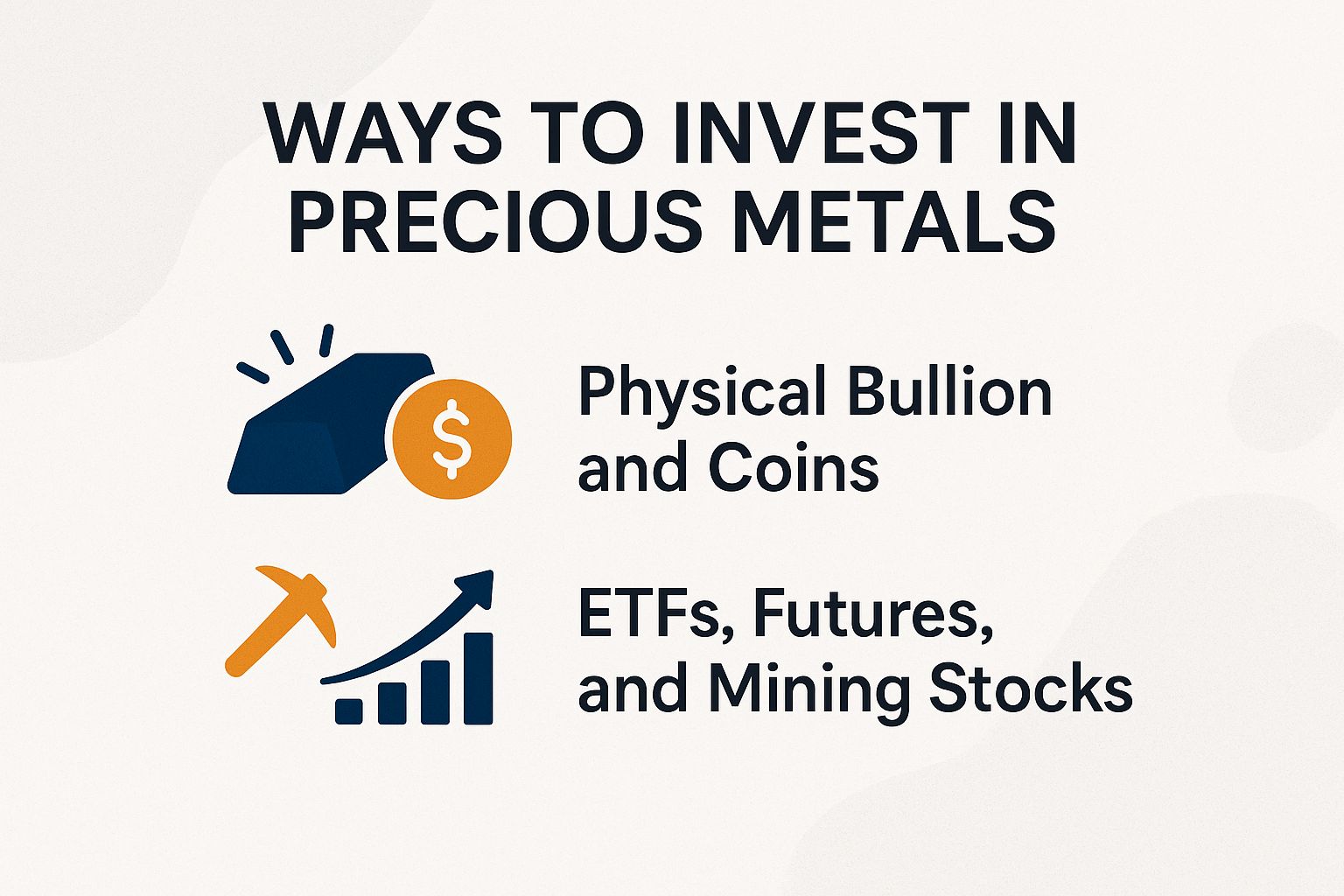
Investors may gain exposure to gold and silver through direct ownership or by utilizing various financial instruments. Exchange-traded funds (ETFs), such as the SPDR Gold Trust (GLD), which manages approximately $60 billion in assets, offer a straightforward and accessible means of entry into these markets.
Physical Bullion and Coins
Acquiring American Eagle gold coins from reputable dealers such as APMEX begins at approximately $2,400 per ounce. This method provides direct ownership; however, it necessitates secure storage arrangements.
To ensure a secure purchase, adhere to the following outlined procedures:
- Check the dealer on the Better Business Bureau (BBB) site for ratings and reviews. It takes just 5-10 minutes and cuts scam risks-FTC reports over 1,000 complaints yearly!
- Consider fractional ownership options through platforms like BullionVault if the cost of full coins is prohibitive. This service requires a minimum deposit of $10, incurs a 0.5% fee, and offers global insurance coverage.
- Utilize allocated storage vaults, such as those provided by Brinks or Loomis, which carry an annual fee of 0.12%. Delivery to these facilities can be arranged within 1 to 2 weeks.
A frequent oversight is the omission of assay certificates, which authenticate the coins in accordance with United States Mint standards. It is imperative to request these documents to prevent the acquisition of counterfeit items.
ETFs, Futures, and Mining Stocks
The SPDR Gold Trust (GLD) gives you gold price exposure via a physically backed ETF. With a low 0.40% expense ratio since 2004, it skips all the hassles of owning physical gold.
Compare GLD and SLV: Gold stays stable, but silver is 25% more volatile per World Gold Council data. If you love risk, go for SLV!
Both ETFs can be established efficiently through brokerage platforms such as Robinhood, typically in under five minutes, by searching for the relevant ticker symbol, reviewing applicable fees, and submitting a purchase order.
For strategic portfolio diversification, it is advisable to allocate 5-10% of assets to these instruments as a safeguard against inflation.
Factors Influencing Price Changes
Gold prices jumped 25% in 2022 due to global tensions-exciting times!
Silver works as money and in industry, with 50% used in solar panels. Its price ties to tech breakthroughs.
Want to forecast trends in precious metals like gold and silver? Investors should evaluate key factors weekly using sites like Yahoo Finance. This takes just 30 to 60 minutes.
- Watch the U.S. dollar’s strength using the DXY index. The DXY (a measure of the dollar against other currencies) moves opposite to gold prices. For example, a 10% dollar rise often drops gold by 15%, based on 2022 data.
- Keep an eye on Federal Reserve interest rate decisions. Rate hikes usually cut gold and silver prices by 8 to 10%, per historical Fed studies. This warns you to be careful with investments.
- Check supply and demand for silver. Mining output fell 5% in 2023, per USGS reports. Don’t ignore uses in electric vehicles, which could boost demand. Cross-check with USGS and Bloomberg for accurate forecasts.
Historical Examples of Losses
In 2011, silver investors lost 30% when prices hit $49 per ounce then crashed fast. This shows how wild precious metals can be-get ready!
Time your buys right to beat this volatility. During crises, wait for big drops after peaks to jump in and catch the rebound. For instance, in Greece’s 2015 crisis, gold fell 20% from sales but bounced back 50% by 2019, per IMF reports.
- In Argentina’s 2001 default, silver beat the peso (which lost 75%) but trailed U.S. stocks by 15% yearly.
- In Turkey’s 2018 lira crisis, gold via Bullion Vault rose 40% against the falling currency.
Act now: Watch IMF alerts for currency risks.
Put 10-15% of your portfolio into precious metals ETFs like SPDR Gold Trust (GLD), iShares Gold Trust (IAU), or iShares Silver Trust (SLV).
Buy 3-6 months after crashes to grab the average 25% rebound-history proves it!
Strategies to Minimize Risks
Try a 60/40 split between stocks, bonds, and gold. Experts like Warren Buffett, Kevin O’Leary, and Ray Dalio suggest this to cap losses at 10% in shaky markets.
- Spread gold bets with royalty firms like Franco-Nevada and Royal Gold. They offer 1.2% dividends and skip mining costs. Put 20% of your metals money here and check quarterly.
- Make extra cash with options (ways to bet on price moves) on GLD or SLV. Sell covered calls for 2% monthly or cash-secured puts if volatility stays under 20%. Use Thinkorswim or Morgan Stanley brokers-they’re free and protected.
- Protect with streaming firms like Wheaton Precious Metals. They take 1% fees from 20+ mines for steady cash. Buy after a 5% dip for 15% better entry and bigger rebounds. This could boost your gains fast!