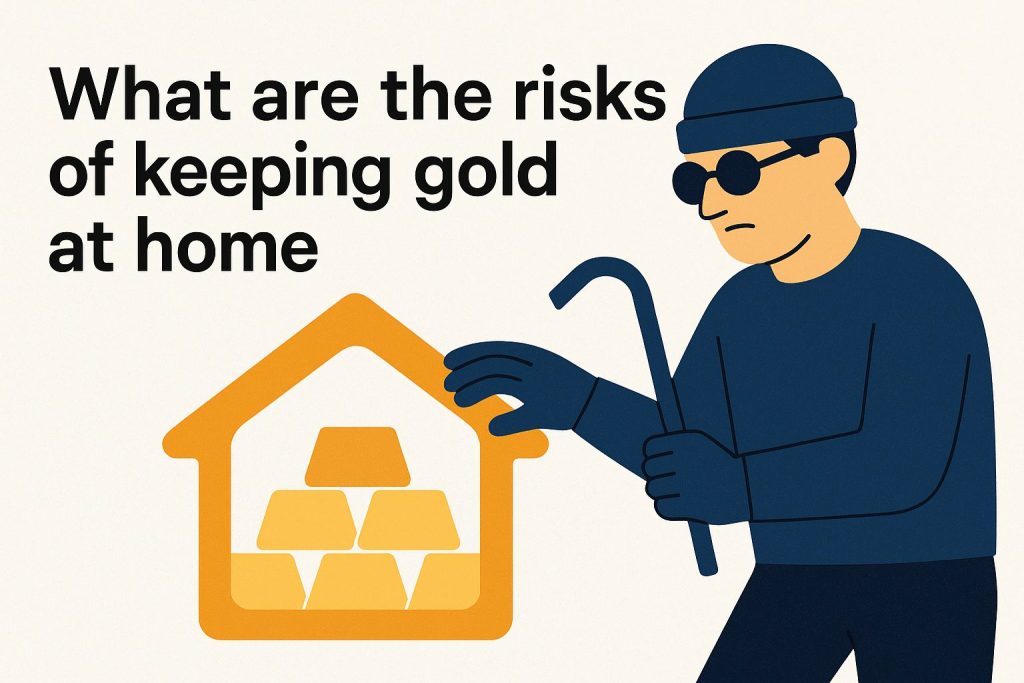
What Are the Risks of Keeping Gold at Home?
Love the ease of keeping gold coins at home? It comes with huge risks you can’t ignore.
Experts Daniel Kenitz and Crystal Rau from Beyond Balanced Financial Planning highlight threats like theft, fires, and weak insurance. Dive in to discover these traps and grab tips to protect your gold now!
Store your silver bars and gold bullion in coin containers or airtight ones. Add silica gel packs to fight humidity and stop tarnish.
Check your metals often. Keep good records of everything.
Theft and Burglary Risks
Storing your precious metals at home invites big dangers like theft and burglary. FBI data shows over 300,000 home break-ins happen each year in the US, often aimed at valuables like your metals.
- Choose hidden spots that thieves won’t guess.
- Install loud security alarms to scare off intruders.
- Set up cameras to watch your home 24/7.
Key Stats on Gold Storage Risks
A troy ounce is the standard unit for weighing gold bullion-different from regular ounces. These numbers highlight why home storage can be risky.
- Annual Burglaries: 300,000+
- Targeting Precious Metals: High Risk
#5zv2f3cb.bar-container { position: relative; overflow: visible!important; } #5zv2f3cb.bar-value { position: absolute!important; left: 50%!important; top: 50%!important; transform: translate(-50%, -50%)!important; color: white!important; font-weight: 700!important; font-size: 14px!important; white-space: nowrap!important; background: rgba(0, 0, 0, 0.7)!important; padding: 4px 12px!important; border-radius: 20px!important; z-index: 30!important; text-shadow: 0 1px 2px rgba(0, 0, 0, 0.3)!important; pointer-events: none!important; display: inline-block!important; } #5zv2f3cb.animated-bar { z-index: 1!important; } @media (max-width: 768px) { #5zv2f3cb { padding: 16px!important; } #5zv2f3cb h2 { font-size: 24px!important; } #5zv2f3cb h3 { font-size: 16px!important; } #5zv2f3cb.bar-label { font-size: 12px!important; } #5zv2f3cb.metric-card { padding: 20px!important; } #5zv2f3cb.bar-value { font-size: 13px!important; padding: 3px 10px!important; } } @media (max-width: 480px) { #5zv2f3cb { padding: 12px!important; } #5zv2f3cb h2 { font-size: 20px!important; } #5zv2f3cb h3 { font-size: 14px!important; } #5zv2f3cb.bar-label { font-size: 11px!important; margin-bottom: 6px!important; } #5zv2f3cb.bar-value { font-size: 12px!important; padding: 2px 8px!important; min-width: 45px!important; text-align: center!important; } #5zv2f3cb.bar-container { height: 36px!important; overflow: visible!important; } }
Gold Home Storage Risks: Key Statistics
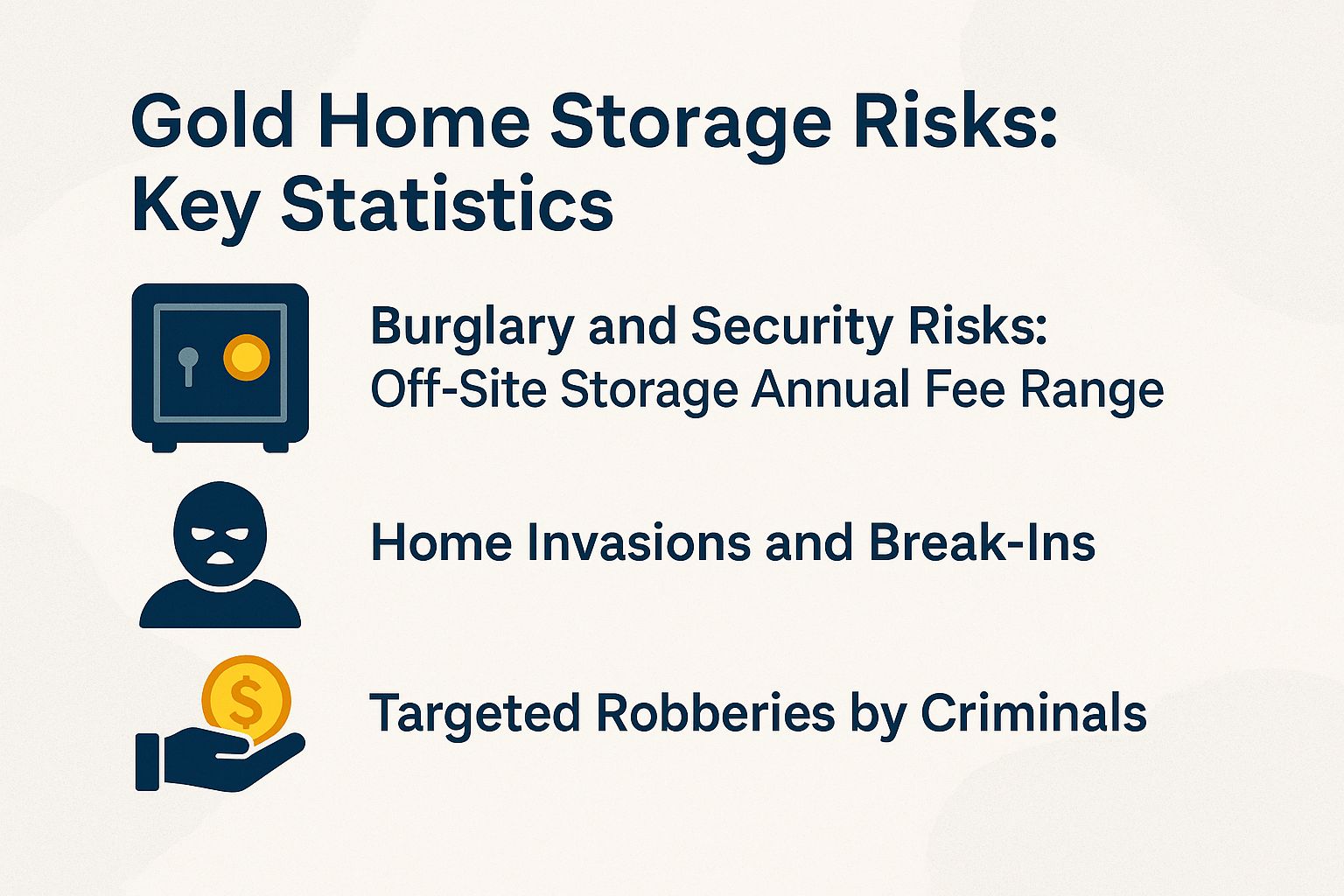
Burglary and Security Risks: Off-Site Storage Annual Fee Range
(function() { setTimeout(function() { var bars = document.querySelectorAll(‘[class*=”animated-bar-5zv2f3cb”]’); bars.forEach(function(bar) { var width = bar.getAttribute(‘data-width’); if (width) { bar.style.width = width + ‘%’; } }); }, 100); })();
To enhance home storage, investors should use a high-quality safe, fireproof safe, waterproof safe, or UL-rated safes with fire resistance and water resistance. A home safe can include a decoy safe for added protection.
Gold Home Storage Risks: Key Statistics underscores the vulnerabilities of keeping precious metals like gold at home, particularly in terms of burglary and security threats. While owning gold offers a hedge against economic uncertainty and serves as an inflation hedge, improper storage can lead to significant losses, including liquidity challenges and legal considerations. This data focuses on the financial implications of alternative secure options like safe deposit box, bullion depository, and third-party vaults, highlighting off-site storage facility and insured storage as safer, cost-effective choices for allocated gold.
Burglary and Security Risks are paramount for gold owners, as home storage exposes assets to theft, fire, or damage without institutional safeguards, including environmental damage and natural disasters like Hurricane Katrina or Hurricane Sandy. Statistics indicate that residential burglaries often target valuables like jewelry and bullion, with recovery rates below 10% in many cases, potentially leading to asset seizure. Home insurance may cover losses under insurance coverage, but deductibles and claim processes can complicate recovery, leaving owners financially strained.
To mitigate these dangers, off-site storage facilities provide professional vaults with advanced security, including 24/7 monitoring, biometric access, and insurance coverage. The off-site storage annual fee range is notably affordable relative to the value of stored gold, a noble metal that has served as a hedge since Franklin Roosevelt’s Executive Order 6102. At the low end, fees average 0.33% of the asset’s value annually, making it accessible for individual gold investment holders with modest amounts. For instance, storing $100,000 worth of gold might cost just $330 per year, far outweighed by potential burglary losses that could exceed thousands or even the full value.
- High End Percentage: Reaching up to 0.5% annually, this tier often includes premium services like segregated storage (where your gold is kept separate and identifiable) or locations in highly secure international vaults. For larger portfolios, say $500,000, the fee caps at $2,500 yearly, still a minimal expense compared to the peace of mind and protection offered.
- These percentages reflect industry standards from reputable providers, ensuring transparency and no hidden costs. Investors benefit from audited inventories and immediate liquidity upon withdrawal, unlike home storage where access might be risky during emergencies.
Choosing off-site storage not only reduces burglary risks-estimated to affect 1 in 36 U.S. homes annually-but also preserves gold’s integrity against environmental hazards. The low fee structure democratizes secure storage, encouraging prudent asset management. Ultimately, these statistics emphasize that the modest cost of professional facilities far surpasses the unpredictable perils of home storage, safeguarding wealth amid economic uncertainties in a volatile world.
Home Invasions and Break-Ins
Home invasions frequently lead to the rapid theft of gold, platinum, and palladium coins and bars from readily accessible locations, as demonstrated in a 2022 incident in California where intruders utilized jamming devices to neutralize security alarms and absconded with $500,000 in precious metals.
FBI data reveals that 60% of residential burglaries involve forced entry through doors or windows, with perpetrators often targeting safes in prominent areas such as master bedrooms. To address these vulnerabilities, implement the following recommended measures:
- Deploy professionally monitored security systems (e.g., ADT, at approximately $30 per month) integrated with motion-activated cameras (e.g., Ring Floodlight Cam, priced at $250) to enable real-time notifications; installation generally requires 2-4 hours.
- Secure valuable assets in discreet locations, such as false wall panels concealed behind artwork.
- Fortify entry points with ANSI Grade 1 deadbolts, while avoiding lower-quality locks that are susceptible to shearing.
In a 2023 case in Texas, footage from a Ring camera documented the intruders, allowing for timely police intervention and preventing the theft of $100,000 in precious metals.
Targeted Robberies by Criminals
Organized criminal groups are increasingly targeting investors in precious metals through reconnaissance efforts. According to a 2023 FBI alert, robberies involving clients of precious metals dealers have risen by 15%, as illustrated by the theft of 50 troy ounces of gold bars from a homeowner in Texas.
Criminals trick people by posing as delivery folks. They also track big buys from places like APMEX and ISA Bullion using public shipping info. Mike Clark from Diamond State Depository suggests smart evasion tricks. His team studied over 200 cases to create them.
Essential countermeasures include:
- Utilizing decoy safes, such as the Diversion Safe Book (available for $15 on Amazon), which can be filled with imitation gold coins to misdirect intruders during a burglary.
- Diversifying acquisition patterns by distributing orders among multiple dealers and opting for privacy-enhanced shipping methods to prevent traceability.
- Implementing advanced home security systems, such as the Nest Cam IQ ($300), which provides real-time notifications through a mobile application; installation requires approximately 30 minutes and involves connecting the device to Wi-Fi and pairing it with a smartphone.
Fire and Natural Disaster Hazards
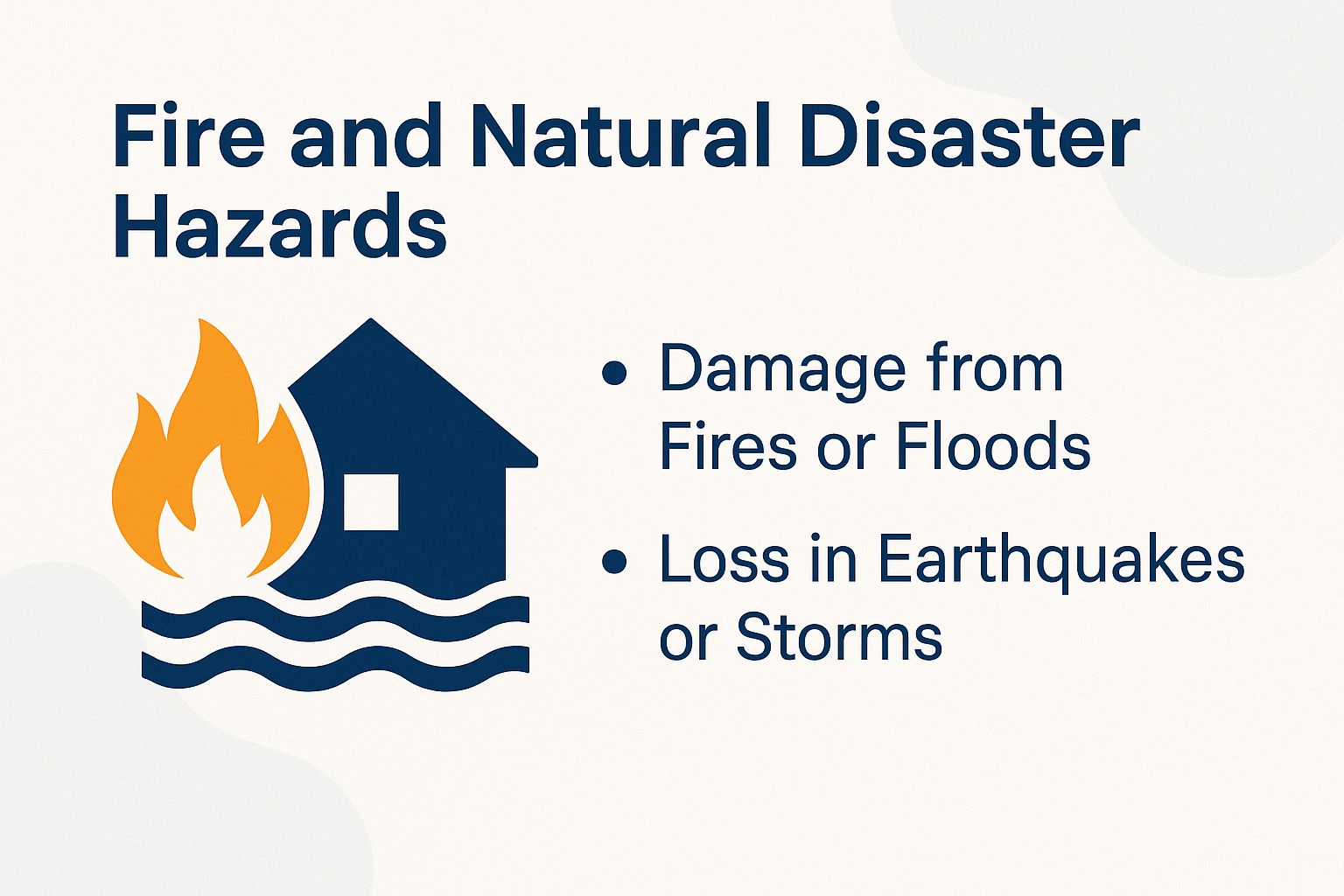
Fires and natural disasters pose substantial risks to precious metals stored in residential settings. According to data from the National Fire Protection Association (NFPA), UL-rated safes fail in 40% of high-heat incidents, resulting in the melting of gold, silver, platinum, and palladium coins and bars with a collective value in the millions.
Notable examples include the widespread losses observed during events such as Hurricane Katrina.
Damage from Fires or Floods
House fires can hit 1,100 degreesF. This heat won’t melt silver, which needs 1,763 degreesF, but it can deform gold bullion that softens above 1,000 degreesF.
Fires also tarnish gold coins. They cause oxidation on silver too. Don’t let this happen to your stash!
After Hurricane Katrina, floodwaters ruined about 30% of precious metals in non-waterproof spots. Protect your investments now before the next storm hits!
Fight back with UL-rated fireproof safes. UL-rated means tested by Underwriters Laboratories for fire resistance. The SentrySafe SFW123GDC costs about $300 and protects for one hour at 1,700 degreesF.
Add waterproof safe bags for water threats. Try Highland Mint pouches for just $10 a pack.
In basements, lift your safes and valuables high. This simple step stops flood damage. Stay one step ahead of the water!
Spend $300 on a good safe today. It could save you over $10,000 – that’s a huge win!
Loss in Earthquakes or Storms
Earthquakes and storms threaten home-stored gold. They can displace or damage your valuables fast.
The USGS notes over 5,000 quakes hit the US each year. Many cause buildings to fail, burying or scattering metals.
Hurricane Sandy in 2012 showed this danger. It wrecked coastal spots and caused big losses.
Quakes often collapse attics, crushing coin containers. Storms scatter loose metals with high winds.
This boosts loss risk by 50% from falling shelves, per FEMA. A 2018 NASA study praises bolted steel for surviving big quakes over magnitude 7.0. Magnitude measures quake strength. Secure yours before disaster strikes!
To mitigate these risks, implement the following recommended measures:
- Bolt your metals in UL-certified safes from Paragon Lock & Safe ($400). They’re tested for quakes under UL 827. These steps keep your gold safe and sound!
- Skip flood-prone basements. Choose mid-level closets with wall anchors instead. These steps keep your gold safe and sound!
- Use airtight containers with silica gel packs ($5 each) to control moisture. Check quarterly after any event. These steps keep your gold safe and sound!
Loss or Misplacement Issues

Storing gold bullion at home can lead to big money losses if you place it wrong. Insurance claims show 10% of cases happen from forgetting where you hid it or throwing it away by mistake, costing about $5,000 each time.
Don’t let this happen to you-act now to protect your wealth!
Accidental Disposal or Forgetting Locations
Families often lose or toss gold bars hidden in spots like junk drawers.
A 2021 survey from Beyond Balanced Financial Planning in Midland, Texas, found 15% of clients lost 1- to 5-ounce items during moves.
This happens when boxes of coins or bars get mistaken for trash during cleanups, leading to $2,000 losses on average. Experts like Daniel Kenitz and Crystal Rau suggest using detailed checklists to avoid this-start today!
To effectively safeguard these assets, consider the following structured procedures:
- Keep digital records with apps like Evernote (free version with location tagging).
- Use airtight, labeled containers like Stack-On organizers ($20 at stores).
- Do yearly audits in just one hour: check spots, update lists, and ditch junk drawers.
Theft by Trusted Individuals
Trusted family or staff can steal gold without you knowing.
One case handled by experts in Midland, Texas, saw a relative take 10 coins worth $25,000 from a home safe-protect yours before it’s too late!
Betrayal like this destroys family trust. A 2018 study shows family fights make people 35% more suspicious of lies.
Fight back with these smart steps:
- Use combo locks on rated safes like floor models ($150 install via SafeTech). Limit access to trusted people only.
- Keep encrypted inventory in apps like Bitwarden. Share only with approved advisors.
- Set up cameras like Wyze Cam v3 ($35) for round-the-clock watch, as expert Mike Clark suggests.
FBI data shows homes with several people face 20% higher theft risks. Smart safes from SentrySafe fix this with logs that track every entry-get one now to stay safe!
Insurance and Financial Complications
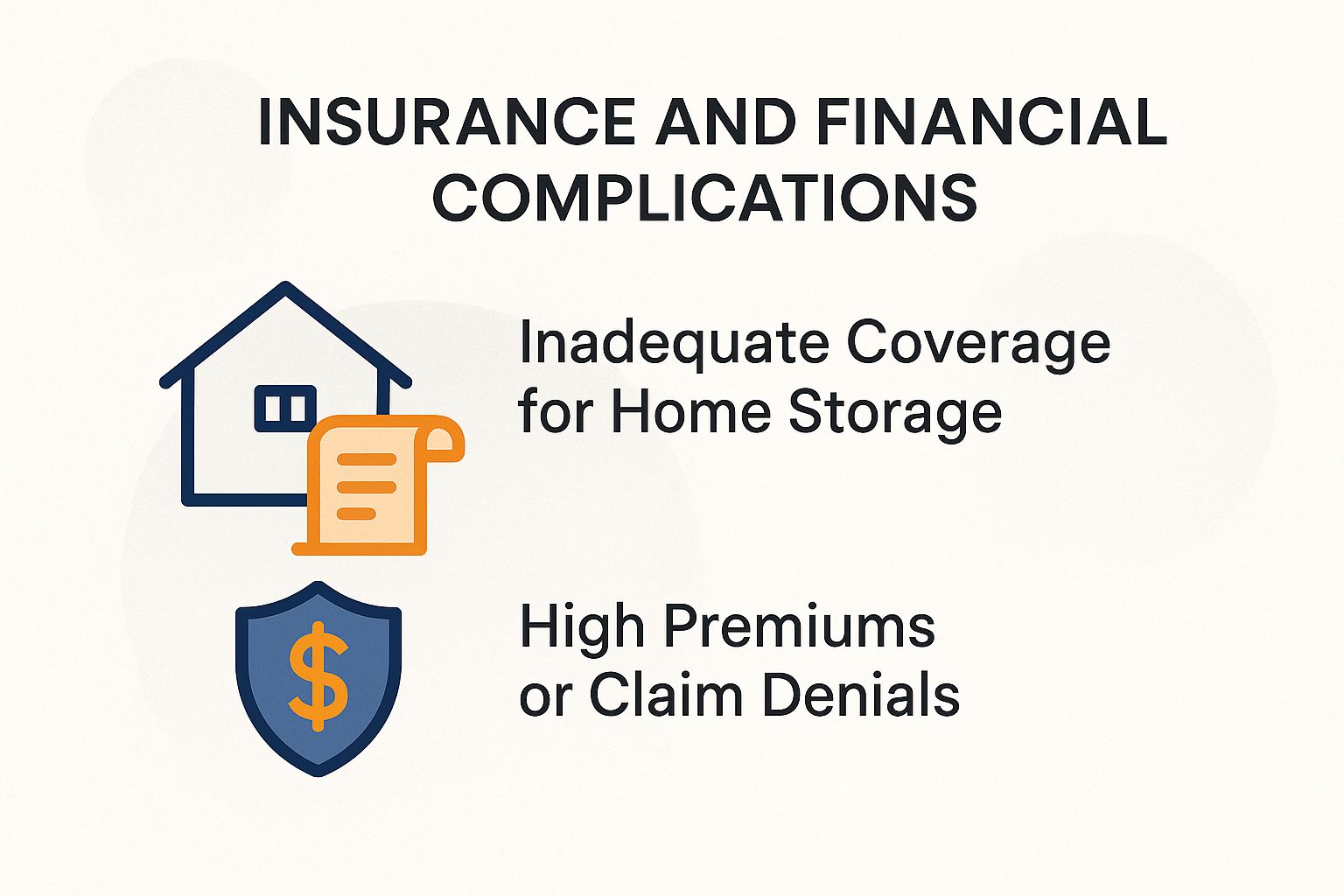
Keeping gold at home leaves you open to insurance shortfalls.
Home policies cover just $1,000 to $5,000 for valuables, leading to over $50,000 in personal losses each year from uncovered claims. Time to check your policy!
Inadequate Coverage for Home Storage
Home insurance caps precious metals at $2,500, too low for over 100 ounces. ISA Bullion says 25% of people underinsure their home-stored gold and silver.
These limits leave big holes, especially for business gold or silver stocks often not covered at all. Don’t risk it-upgrade your coverage today!
Here’s how to fix these insurance gaps:
- Get a rider for valuables
- Consult an agent.
- Obtain specialized riders from insurers such as State Farm, which provide approximately $100 annually for an additional $50,000 in coverage for valuables.
- Conduct annual appraisals through reputable services like APMEX, at a cost of about $50, to ensure precise valuation.
- Consider safe deposit boxes as an alternative storage option, available at banks for around $20 per month.
Policyholders should review their coverage annually to prevent redundant premiums. Adequate insurance can reduce potential claim costs by up to 80%, as reported in a 2022 study by the Insurance Information Institute.
High Premiums or Claim Denials
Act now to avoid disaster! 30% of stolen gold claims get denied over missing storage info. This can spike your premiums by $500 a year on pricey home policies.
Denials often stem from poor records on where items are stored or their value. This follows rules from the National Association of Insurance Commissioners (NAIC). Their Model Regulation 940 demands clear details for risky items like gold.
To address these risks, the following steps are recommended:
- Keep detailed records using apps like Sortly. It’s free and tracks serial numbers and photos. Good records help avoid premium hikes. State Farm often skips extra fees with solid proof.
- Store in pro vaults like Diamond State Depository. It costs just $0.50 per ounce monthly and includes full insurance for peace of mind.
- Mitigate liquidity concerns by selecting allocated gold options from providers like BullionVault, which facilitate rapid sales.
Picture this: A $100,000 claim gets denied at first. But switching to secure vault storage flips the script! Full coverage comes back, all thanks to NAIC rules.
Physical and Health Dangers
The handling of substantial gold bars poses a significant risk of physical strain. For context, one troy ounce measures 31.1 grams, while a standard 400-ounce bar weighs approximately 25 pounds.
The Occupational Safety and Health Administration (OSHA) reports that 20% of injuries sustained in residential settings result from the mishandling of valuables.
Injury During Handling or Emergencies
Grab ten 10-pound silver bars without good grips? 15% of collectors end up with back injuries, per studies. Fires or storms like Katrina and Sandy make it way worse.
To address these hazards, implement ergonomic practices supported by Centers for Disease Control and Prevention (CDC) data, which indicate that lifting-related injuries incur medical expenses exceeding $1,000 annually.
- Use padded holders and nitrile gloves ($10/pack). They stop cuts from sharp edges and make handling safer.
- Get a waist-high safe like Liberty ($500). It cuts bending and lifting by 40%, following OSHA safety rules.
- Check monthly with silica gel packs ($5/pack) in sealed boxes. This keeps humidity in check to avoid tarnish and mold.
Incorporate dehumidifiers for sustained protection, which offer a substantial return on investment by minimizing expensive damages and associated health concerns.
Legal and Family Disputes
Legal disputes concerning gold stored at home occur in approximately 10% of estates, reminiscent of the asset seizures mandated by Executive Order 6102 issued by President Franklin D. Roosevelt in 1933. These conflicts often complicate the inheritance process, particularly in periods of economic instability.
Today, fights over platinum and palladium bars are rising. People love them to beat inflation as costs soar. Heirs often battle in probate court over who owns what.
Forget to report these on taxes? The IRS hits you with penalties. Use Form 1040, Schedule D to list them properly.
To address these risks, the following measures are recommended:
- Write a will to clearly assign your precious metals to secure storage, like the Delaware Depository. Get help from a lawyer for about $500.
- Set up joint custody to protect against government seizures.
- Check IRS Publication 544 on reporting precious metals. This helps avoid fines for not declaring them properly.
Picture this: A 2022 California case saved $200,000 in gold from a family fight and auction.
They used a simple legal transfer to secure storage, offering strong protections just like in 1933. Act now to safeguard your assets!