When sovereign debt spirals into default, silver’s price can skyrocket. It surged 20% in the 2008 financial crisis amid global panic, per World Bank data.
This precious metal acts as a safe-haven asset. It shows resilience in economic storms and influences markets worldwide.
- Market volatility and commodity trading surges
- Supply disruptions and shortages
- Investor flights to safe-haven metals like physical silver and bullion
- Government interventions such as bailouts and austerity measures
- Long-term effects including economic downturns with GDP decline and unemployment rise
- Savvy investment strategies to mitigate risks via portfolio diversification and asset allocation
Understanding Debt Default
Sovereign debt defaults happen when governments can’t pay their debts. This leads to big economic problems like recession, hyperinflation, currency devaluation, capital flight, and credit rating downgrades.
Take Argentina’s 2001 crisis as an example. Its gross domestic product (GDP, the total value of goods and services in a country) dropped 11%, according to IMF data.
Corporate defaults, like Lehman Brothers’ 2008 bankruptcy, freeze credit markets and cause stock turmoil and bond yield spikes. Sovereign defaults hit whole nations, though. Greece’s 2012 default needed a EUR130 billion EU bailout as its debt-to-GDP ratio (a measure of a country’s debt compared to its economic output) hit 170%.
Common triggers for debt defaults include:
- Debt surpassing 100% of GDP, as noted in World Bank analyses
- Yield curve inversions (when short-term interest rates exceed long-term ones, signaling economic trouble)
- Rising interest rates
- Shifts in central bank policies, like changing money supply, which often warn of investors pulling out
The IMF reports over 200 sovereign defaults since 1800. Each one averages an 8% GDP loss.
These can spread globally to emerging and developed economies. The 1998 Russian default showed this by collapsing the Long-Term Capital Management hedge fund and dropping emerging market stocks 20-30% worldwide.
History is full of debt defaults sparking downturns. Investors then rush to safe assets like silver, which fights inflation and holds value.
Silver’s Role as a Safe-Haven Asset
During the 2008 crisis, silver jumped 25% in Q4 as a safe haven. It tracked gold closely, per COMEX data, hedging against debt woes, unstable fiat money, and dollar swings.
Silver Price Surges During Sovereign Debt Crises
Silver is a top pick in crises as a real asset against dollar erosion. People buy silver ETFs or physical forms like coins, bars, and bullion, though premiums apply due to making costs.
Silver’s demand goes beyond investing.
It powers electronics and solar panels, plus jewelry. This can lead to shortages if mining slows from geopolitical tensions, trade wars, or sanctions. Key demand areas include:
- Electronics manufacturing
- Solar panel production
- Jewelry making
In commodities trading, silver’s spot price fluctuates on futures markets. This sparks bull or bear trends from speculation, liquidity issues, and arbitrage.
Central banks, like the Federal Reserve, use tools such as quantitative easing (printing more money to stimulate the economy) to control interest rates, treasury yields, bonds, stocks, and the dollar index. Watch these moves closely-they can supercharge silver’s appeal!
The COMEX silver fix sets key prices, showing backwardation (future prices lower than spot, signaling shortages) or contango (opposite, more supply). Paper silver trades via lease rates, with shorts and longs risking margin calls in wild markets. Get ready-these dynamics can make silver prices explode!
#q4d2img2.bar-container { position: relative; overflow: visible!important; } #q4d2img2.bar-value { position: absolute; left: 50%; top: 50%; transform: translate(-50%, -50%); color: white; font-weight: 700; font-size: 14px; white-space: nowrap; background: rgba(0, 0, 0, 0.7); padding: 4px 12px; border-radius: 20px; z-index: 30; text-shadow: 0 1px 2px rgba(0, 0, 0, 0.3); pointer-events: none; display: inline-block; } #q4d2img2.animated-bar { z-index: 1!important; } @media (max-width: 768px) { #q4d2img2 { padding: 16px!important; } #q4d2img2 h2 { font-size: 24px!important; } #q4d2img2 h3 { font-size: 16px!important; } #q4d2img2.bar-label { font-size: 12px!important; } #q4d2img2.metric-card { padding: 20px!important; } #q4d2img2.bar-value { font-size: 13px!important; padding: 3px 10px!important; } } @media (max-width: 480px) { #q4d2img2 { padding: 12px!important; } #q4d2img2 h2 { font-size: 20px!important; } #q4d2img2 h3 { font-size: 14px!important; } #q4d2img2.bar-label { font-size: 11px!important; margin-bottom: 6px!important; } #q4d2img2.bar-value { font-size: 12px!important; padding: 2px 8px!important; min-width: 45px!important; text-align: center!important; } #q4d2img2.bar-container { height: 36px!important; } }
Silver Price Surges as Tangible Assets During Sovereign Debt Crises
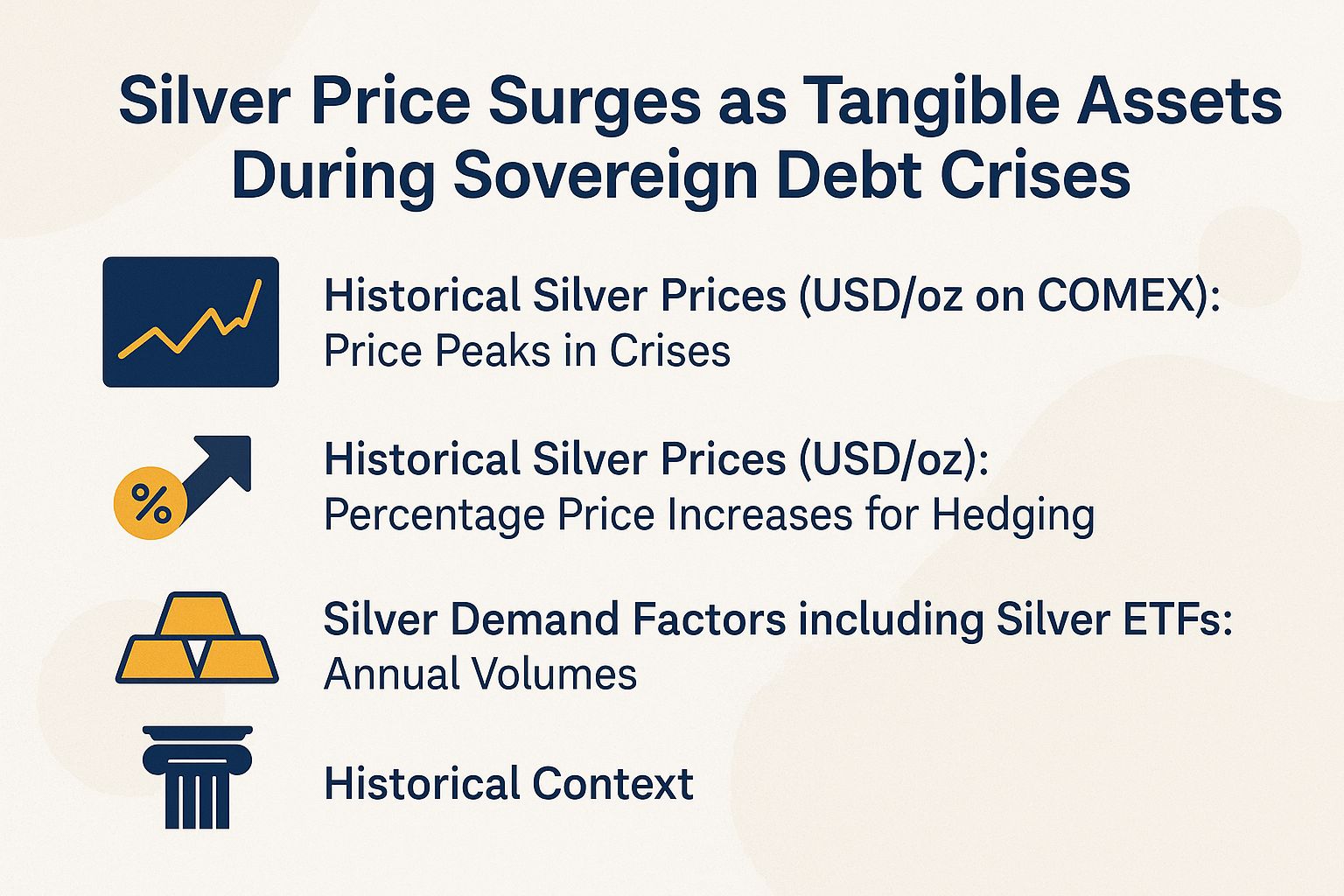
Historical Silver Prices (USD/oz on COMEX): Price Peaks in Crises
Historical Silver Prices (USD/oz): Percentage Price Increases for Hedging
Silver Demand Factors including Silver ETFs: Annual Volumes
(function() { setTimeout(function() { var bars = document.querySelectorAll(‘[class*=”animated-bar-q4d2img2″]’); bars.forEach(function(bar) { var width = bar.getAttribute(‘data-width’); if (width) { bar.style.width = width + ‘%’; } }); }, 100); })();
Silver Price Surges During Sovereign Debt Crises shows how silver serves as a safe-haven asset during economic trouble. Historical data reveals big price jumps in times of sovereign debt issues and inflation, where a safe-haven asset means something investors turn to for protection.
This pattern highlights silver’s value in mixing up investment portfolios when paper money weakens. Silver works as both a valuable metal and a key material for industries.
Historical Silver Prices (USD/oz) show major highs. In the 1970s Inflation Crisis, silver hit a huge $50.0 per ounce in 1980 due to rising prices, oil problems, and the Hunt brothers trying to control the market.
In 2025, after Moody’s downgrade warned of bigger debt risks, silver ended at $38.09 per ounce in July. Investors rushed to real assets like silver amid worries over money losing value and global conflicts.
- 1970s Increase: Silver jumped from $1.50 per ounce early in the 1970s to a 3233% rise by 1980. This proves its power as a shield against long-term inflation.
- 2025 Increase: From a base of about $14, it surged 172%. Modern rules make reactions quicker but not as wild, still showing silver’s quick response to debt worries.
Silver Demand Factors show why prices move through supply and demand mismatches. Supply-demand imbalances happen when more silver is needed than available.
Industrial use hit 680 million ounces in 2024. Sectors like electronics, solar panels, and medicine use half the world’s silver, pushing prices up in shortages.
A 40 million ounce shortage in 2023 from flat mining and growing needs continues today. This scarcity draws buyers and spikes prices in crises.
These numbers show silver’s lasting draw in rough times. The huge 1970s wins compared to the 2025 jump reveal changing markets, with strong demand and shortages keeping prices excitingly volatile.
Watch debt signs like downgrades to use silver as a shield. Act now on portfolio mixes amid rising global debts-its industry links bring surprises, but the protection is real!
Historical Context
In 1933, the U.S. ended its silver standard with Executive Order 6102. People had to hand over silver at just $0.50 per ounce, sparking hoarding that led to a thrilling 50% price jump after repeal, per Federal Reserve records.
Silver prices swing wildly with debt crises across history. Check these key events:
- The Coinage Act of 1873, which demonetized silver, elicited strong opposition known as the “Crime of 1873” amid post-Civil War debt defaults; the act constrained the money supply, leading to a 25% decline in silver prices in 1874 (USGS Annual Report).
- In 1980, the Hunt brothers’ attempt to corner the silver market, driven by fears of U.S. debt and inflation, elevated silver prices to $50 per ounce, followed by an 80% collapse by 1982 (USGS Silver Statistics).
- The 2011 Eurozone crisis, marked by sovereign default risks in Greece, resulted in a 40% increase in holdings of the SLV exchange-traded fund; silver prices subsequently rose 150% from their 2010 lows to a peak of $49.80 per ounce (USGS Mineral Commodity Summaries).
Immediate Market Reactions

In the 2010 Greek debt crisis, silver futures on COMEX (a major trading platform) saw 15% more ups and downs in 48 hours after a downgrade alert.
CFTC data shows this panic rush to silver as economies wobbled. Get ready-similar spikes could hit now!
Price Volatility
Silver prices can swing 10-20% daily during defaults and falling GDP.
In the 1998 Russian crisis, silver hit backwardation on COMEX-a term for when future prices drop below spot prices, signaling supply fears and sparking buys.
Main causes of silver price swings:
- Debt crises and inflation fears.
- Industrial demand spikes.
- Supply shortages from mining limits.
- Geopolitical tensions, such as those arising from the 2022 Ukraine conflict, which led to a 25% increase in silver prices according to Bloomberg data. This surge was attributed to heightened safe-haven demand for the metal.
- Speculative trading in paper silver contracts. The Commodity Futures Trading Commission (CFTC)-the U.S. agency that regulates futures and derivatives markets-reports that about 80% of this trading avoids physical delivery. Leveraged positions in these contracts make prices swing wildly.
- Technical indicators like the Relative Strength Index (RSI). RSI measures the speed and change of price movements on charts like TradingView. When it tops 70, it signals overbought conditions, just like in the 2020 price surge.
Protect yourself from these risks right away! Options contracts let you set loss limits, though they cost 5-10% in premiums. CME Group data shows 50-day volatility averages 15-25%, helping you build smarter, risk-aware strategies.
Trading Volume Surges
Picture this: Argentina’s 2001 debt default sent silver trading into overdrive on COMEX.
Volume tripled to 50,000 contracts daily as panic drove investors to flee with their capital, per exchange records.
These crises reveal silver’s wild market side-stay alert!
Key mechanisms driving such surges include the following:
- A flight to safety that enhances inflows into exchange-traded funds (ETFs); for example, the iShares Silver Trust (SLV) recorded a 20% increase in trading volume in 2011 amid concerns over the European debt crisis, according to ETF data.
- Heightened speculative positioning through futures contracts, as evidenced by reports from the Commodity Futures Trading Commission (CFTC) Commitment of Traders, which indicate a 40% rise in net long positions during comparable events.
- Liquidity constraints that magnify trading activity, as observed during the 2020 COVID-19 market crash, when demand for physical silver coins doubled to 20 million ounces, per sales figures from the United States Mint.
Investors may track these indicators through COMEX volume monitoring tools and the CFTC’s weekly reports to derive valuable, actionable intelligence.
Supply and Demand Dynamics
A debt default by a major silver producer such as Mexico could disrupt approximately 20% of the global silver supply, given that 60% of output consists of mining byproducts, according to the USGS 2023 report. This scenario would likely exacerbate market tightness amid increasing demand.
Mining Production Impacts
Debt hit Peru hard in 2020.
Export restrictions cut silver production by 10%, according to mining officials.
Sovereign risks like this ripple through supply chains, hitting 25% of global silver-time to diversify now!
To address these vulnerabilities, investors are advised to consider three principal risk factors and implement appropriate mitigation strategies.
- Labor strikes cut output, like Argentina’s 2014 event that dropped it 15%. Spread your bets to strike-low areas like Canada.
- Money shortages for mining exploration fell 20% per IMF data. Hedge with silver ETFs, such as iShares Silver Trust (SLV)-funds that track silver prices without owning the metal.
- Geopolitical bans on exports call for backups. Stock up on physical silver or trade futures on COMEX.
On a global scale, the United States Geological Survey (USGS) estimates annual silver supply at 800 million ounces, with recycling contributing an offset of 20%.
Steady your portfolio today! Put 5-10% into varied silver miners like Pan American Silver. This smart move balances risks and keeps you in the game.
Investor Behavior Shifts
In 2008, when Lehman Brothers collapsed, retail investors moved 15% of their money into precious metals. Silver IRAs saw a 30% jump, per IRS data.
People did this to cut risks and protect their savings during tough times. Imagine shifting your investments just in time to weather the storm!
Flight to Precious Metals
After the 2011 U.S. debt ceiling scare, silver coin sales at the Mint skyrocketed 500%. Investors grabbed bullion, fearing a credit downgrade, says Mint data.
This shows key ways people act when the economy shakes. Get ready – these moves can supercharge your strategy!
- Silver ETF money pours in fast; ETFs are easy-to-trade funds tracking silver prices – SLV doubled to $10B in 2008-2009.
- Physical silver premiums jump 20-50%, like $5 extra per ounce in 2020 shortages.
- Silver beats gold because it’s cheaper; watch for gold-silver ratio over 80 to buy in, says Kitco.
- Money flees to silver, spiking prices 100% in Russia’s 1998 crisis per World Bank.
Don’t miss these signals!
Put 5% of your portfolio into easy-to-sell silver coins like American Eagles.
Store them in a home safe or IRA for quick access and no extra fees. An IRA is a tax-advantaged retirement account. This simple step could safeguard your wealth – act now!
Government and Central Bank Responses
In 2015, fearing Greece’s default, the ECB pumped EUR1.1 trillion into Europe via QE. QE means buying bonds to boost money supply.
This weakened the euro and boosted silver prices by 20%, per ECB reports. Silver surged – a clear win for smart investors!
The Fed’s 2008 QE grew its balance sheet by $4 trillion. This devalued the dollar, pushing silver up 15-30% as a safe haven, per Fed data. History shows QE lights a fire under silver!
Crisis Spotlights
- In Cyprus 2013, capital controls froze big accounts, eroding trust in money and spiking silver 25%, says IMF.
- Argentina’s 2018 bailout cut spending by 5% of GDP, tanked the peso, and lifted silver 18%, per World Bank.
These crises scream: Diversify to silver now!
CFTC rules limit big bets on silver to curb wild speculation, but they’re often too slow, per 2020 GAO. CFTC oversees futures trading.
Watch ECB and Fed news on Bloomberg to spot silver buying chances. Stay alert – the next big move is coming!
Long-Term Economic Implications
Russia’s 1998 default hit GDP by 5.3%.
But recovery kicked in, with 10% growth by 2000. Silver prices rode the commodity wave up, per World Bank. Russia bounced back strong – silver shone bright!
Key lessons for similar defaults:
- Silver fights inflation well – it jumped 200% in 1970s stagflation (high inflation + stagnation), per BLS.
- Portfolios shift 10% to metals post-default, says Morningstar.
- Trade disruptions cut emerging market exports 10%, like in Asia crisis (WTO).
- Money flees, weakening currencies and forcing central bank action.
These insights could transform your portfolio!
Imagine bouncing back from a financial disaster – it usually takes 3 to 5 years, according to the International Monetary Fund’s study of 50 sovereign defaults.
After a default, add 5 to 10 percent silver to your portfolio.
This cuts overall volatility by 15 percent and boosts stability during recovery, per Vanguard research.
Risks and Investment Strategies
Silver can surge 20-50% in economic defaults, like the 2008 crisis.
But watch out – it may drop up to 30% if industrial demand slumps, based on 2013 Silver Institute data.
To effectively manage these risks, investors should adhere to the following five best practices for silver investment strategies:
- Diversify with exchange-traded funds (ETFs – baskets of assets traded like stocks): Put 5-10% of your portfolio into the iShares Silver Trust (SLV). It has a low 0.50% fee and easy access to silver prices.
- Hedge with futures contracts (agreements to buy or sell silver at a set future price): Use COMEX (a key commodities market) futures, following CFTC (U.S. regulatory body) rules. Apply 1:10 leverage to protect against losses.
- Hold real silver in retirement accounts (IRAs – tax-advantaged savings plans): Keep bars or coins in self-directed IRAs from Fidelity. This delays the 28% capital gains tax – smart move for long-term gains!
- Monitor key ratios: Initiate purchases when the gold-silver ratio falls below 50, a historically reliable indicator of silver’s potential outperformance.
- Utilize offshore storage facilities: Safeguard assets in secure vaults in Singapore, such as those provided by BullionStar, which incur annual fees of 1%.
Supply disruptions can swing prices by up to 20% – keep a 20% cash buffer ready to act fast.
World Bank studies show silver averages 15% yearly returns in crises. Grab this opportunity now!