Imagine a financial house of cards built on IOUs for silver. It suddenly faces a shortfall of the real metal.
Physical supply strains against overwhelming paper claims. COMEX warehouse data shows ratios exceeding 100:1, putting the silver market on the brink of upheaval.
This article dives into paper silver mechanics, exhaustion triggers, price volatility, liquidity crunches, economic impacts, history, and investor strategies. Get ready for some eye-opening insights!
Understanding Paper Silver
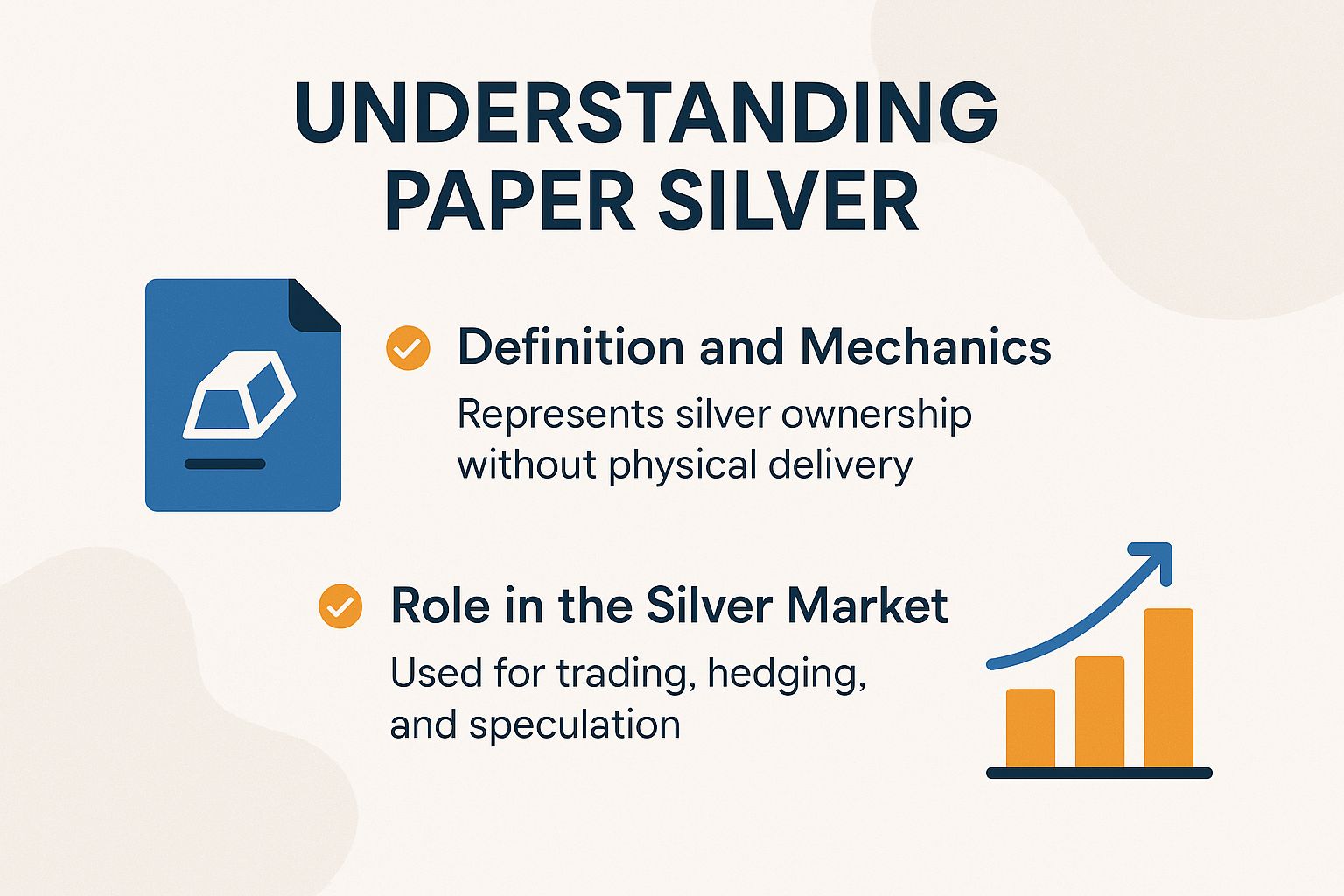
Paper silver means promises to deliver silver without holding the actual metal. It happens through financial tools like futures contracts on the COMEX exchange, a major trading platform.
Definition and Mechanics
Each contract represents 5,000 ounces of silver, though physical delivery occurs infrequently.
The underlying mechanics involve margin trading and daily settlements processed through the CME Group’s clearinghouse.
Main parts of paper silver include:
- futures contracts,
- exchange-traded funds (ETFs),
- and leasing arrangements.
In the futures market, the SI contract trades at about $25 per ounce. It requires a 20% margin, so traders post around $5,000 per contract for leveraged bets.
ETFs, such as SLV, embody paper claims on silver and, according to its 2023 prospectus, hold approximately 500 million ounces in unallocated silver.
Silver leasing, conducted through the London Bullion Market Association (LBMA), provides annual rates of 1-2%, allowing financial institutions to lend these claims multiple times over.
Settlement in paper silver transactions predominantly occurs via cash offsets rather than physical delivery.
The process can be outlined as follows:
- the buyer posts the required margin,
- followed by daily mark-to-market adjustments,
- culminating in approximately 95% of contracts settling in cash.
Physical delivery remains rare and is governed by CME Rule 7.10, which includes provisions for defaults under force majeure clauses.
Paper silver comes with big risks. Watch out for these:
- Rehypothecation: Lenders reuse the same claims over and over, creating a house of cards.
- Over-leveraging: A 2019 Bank of International Settlements report warns of up to 50 times more claims than actual silver-disaster waiting to happen!
Role in the Silver Market
Paper silver dominates the silver market’s pricing. It happens on big exchanges like COMEX and LBMA, with daily trades hitting $30 billion that swing the spot price wildly.
Notably, paper silver accounts for 90% of transactions without physical backing, according to the 2021 World Silver Survey published by the Silver Institute.
This paper market fulfills several critical functions:
- Price discovery: COMEX futures contracts settle 80% of global benchmarks, facilitating the establishment of market prices.
- Hedging: Mining companies, such as Pan American Silver, utilize these instruments to secure 20% of their output against price fluctuations.
- Speculation: This is exemplified by JPMorgan’s short positions, which exceeded 100 million ounces as reported in 2022 CFTC filings.
Shocking allegations of market manipulation won’t go away. Lawsuits from GATA accuse big players of crushing prices with fake short sales.
Whistleblower Andrew Maguire’s 2008 testimony exposed engineered drops-could this be happening now?
Studies show paper trading crushes real silver prices by 20-30% in shortages, per GFMS data. This hides the true supply crunch-time to wake up to the real story!
Current Market Imbalances
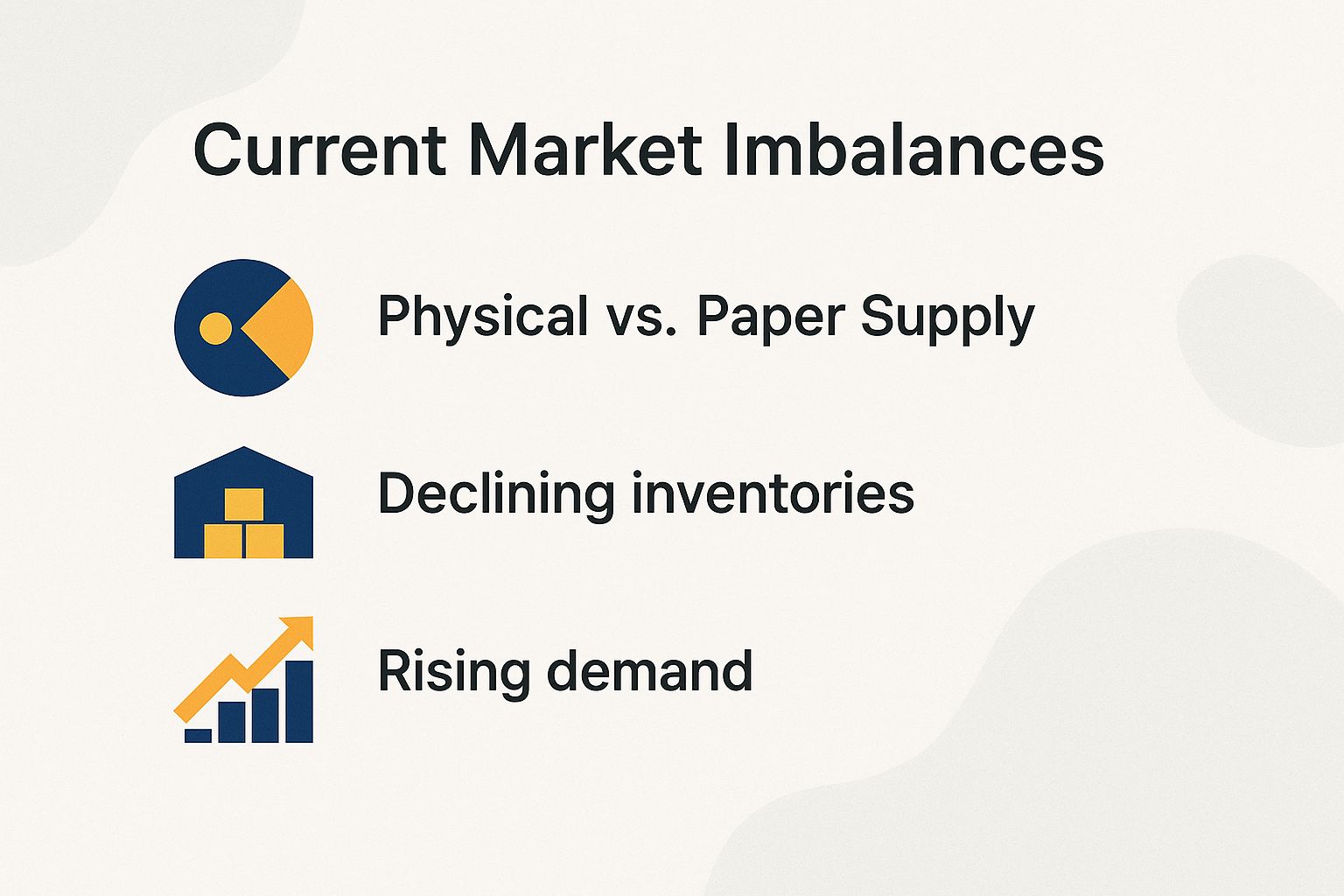
Silver faces big imbalances right now. An annual deficit of 200 million ounces hits hard, per the 2023 Silver Institute survey.
Paper claims on COMEX dwarf physical supply at a 250:1 ratio. This worsens shortages as demand surges for solar panels and electronics.
Physical vs. Paper Supply
Physical silver totals about 3.5 billion ounces in above-ground stocks, says the CPM Group 2023 estimate. But paper silver swamps it, with over 800 million ounces just in COMEX futures.
This imbalance creates huge risks. A sudden rush for physical delivery could force defaults on short positions, like JPMorgan’s 150 million ounces in 2022.
Physical and paper silver markets differ hugely. Paper allows risky fractional reserves up to 100:1, ramping up dangers.
| Aspect | Physical Silver | Paper Silver |
|---|---|---|
| Form | Actual bars/coins | Derivatives/futures |
| Annual Supply | 1.2 billion oz | N/A (leveraged) |
| Verification | LBMA audits | Unallocated storage |
| Leverage/Risk | Low liquidity risk | 500x leverage; high manipulation per CFTC |
| Deficit Impact | 184M oz shortage (2022) | Rehypothecation issues per 2020 SEC study |
Don’t wait-act now to dodge these risks!
- Push for full audits of silver inventories.
- Focus on physical silver for real ownership.
- This cuts your exposure to wild paper market swings.
The Massive Gap: Paper Silver vs Real Physical Silver Markets

Paper Silver to Physical Silver Market Size Ratio
Paper silver refers to silver traded on exchanges without physical delivery, like futures contracts. The market dwarfs physical silver by a 250:1 ratio-grab physical silver now before prices spike!
(function() { setTimeout(function() { var bars = document.querySelectorAll(‘[class*=”animated-bar-l4m4h7cg”]’); bars.forEach(function(bar) { var width = bar.getAttribute(‘data-width’); if (width) { bar.style.width = width + ‘%’; } }); }, 100); })();
Paper Silver vs Physical Silver Market Disparity shows a huge gap in the silver market. Financial derivatives far outnumber the actual physical metal.
This gap reveals weaknesses in global silver trading and pricing. It worries investors about real supply and demand.
The core metric reveals a paper silver to physical silver ratio of 250:1, meaning for every ounce of physical silver available, there are 250 ounces represented in paper contracts like futures, ETFs, and options. Paper silver refers to financial instruments that allow trading without owning the metal, enabling high-volume speculation on platforms like COMEX. In contrast, physical silver is the tangible bullion held in vaults or by investors, limited by mining output, recycling, and industrial use.
- Pricing Chaos Ahead: This crazy 250:1 ratio twists prices wildly. Paper trades cause quick ups and downs that ignore real silver shortages-imagine a squeeze hitting solar or jewelry makers hard!
- Big Risks for Traders: Stick to paper silver? You risk exchanges failing to deliver real metal in a crisis. Remember the 1980 Hunt Brothers mess-ratios like this spark wild swings and government crackdowns!
- Manipulation Alert: Big players might crush prices by shorting paper contracts. This keeps silver cheap for factories but caps profits for you holding the real thing-unlike gold’s safer 100:1 ratio.
Fix this mess! Demand clearer reports from exchanges and caps on paper trades to match real stockpiles.
Smart move for you: Grab physical silver to dodge paper market pitfalls. That 250:1 ratio screams for changes-don’t get caught in the next big shock!
Triggers for Running Out
What could spark a paper silver crunch? A 20% jump in COMEX delivery demands, like the 2021 Reddit push, plus snags like the 2022 Suez blockage that slowed 10% of shipments from Peru and Mexico.
Watch these triggers:
- Industrial Boom: Solar panels gobbled 20% more silver in 2023 (Silver Institute). This could create a 50-100 million ounce gap as tech and green energy demand explodes!
- Panic Buying Rush: ETFs saw 50 million ounces poured in during Q1 2020 (World Silver Survey). ETFs are funds that track silver prices without you holding the metal. In shaky times, this could worsen shortages by 30-60 million ounces-get ready!
- Geopolitical events: Russia’s 2022 invasion disrupted 5% of global silver supply (USGS Mineral Commodity Summaries), posing risks of 40-80 million ounce interruptions to exports.
- Regulatory investigations: Probes by the Commodity Futures Trading Commission (CFTC) into short positions could compel covering, with an estimated impact of 60-120 million ounces based on precedents from 2021.
- Force majeure events in mining: The 2014 Peasquito strike reduced output by 10% (Newmont reports), potentially leading to global deficits of 70-150 million ounces if such incidents become widespread.
Keep an eye on USGS reports. Spot these signs early and stay ahead of the silver storm!
Immediate Market Reactions

A paper silver shortage? It’d echo the 1980 Hunt Brothers chaos.
Picture silver prices rocketing 300% on COMEX in just weeks-pure thrill and terror!
Short sellers scramble to cover, and liquidity vanishes fast.
Price Surges and Volatility
CME Group data backs this-volatility can triple in squeezes. Buckle up for the ride! Prices could skyrocket, shaking the market to its core-exciting times for silver watchers!
A potential silver shortage could propel prices from $25 per ounce to $50 per ounce within a matter of days, as demonstrated by the 2011 rally from $20 to $50 amid concerns over the Eurozone crisis. During that period, the CBOE silver volatility index (GVZ) surged by 40%, according to exchange data, while prices decisively broke through the $30 resistance level on COMEX charts.
Key factors driving such a price jump include short covering.
This happens when investors buy back silver they borrowed to sell, adding urgent demand. GATA models estimate this could add 100 million ounces.
Volatility often causes Bollinger Bands-chart lines that show price swings-to widen to twice normal size. This mirrors the 1980 spike when silver’s fear gauge, like the VIX, hit 80%. Get ready for similar excitement now!
Watch key signals like the Relative Strength Index (RSI). This measures buying momentum; over 70 signals overbought conditions that spark rapid price climbs. In the 2008 financial crisis, for instance, silver prices doubled within three months amid severe liquidity constraints.
To handle risks, try options trading. Calls on the iShares Silver Trust (SLV) ETF give you big gains on upside moves with less cash upfront, even at a 20% premium. A 2018 study in the Journal of Futures Markets examines these precious metals squeezes, underscoring vulnerabilities in supply chains.
Liquidity Crises
Liquidity crises are typically evidenced by the COMEX’s failure to deliver on 10-20% of contracts, a situation reminiscent of the 1979-1980 silver squeeze. During that period, eligible stocks declined by 50%, compelling cash settlements and causing bid-ask spreads to expand from $0.10 to $2 per ounce, as documented in archived CME reports.
These events are frequently intensified by three critical issues:
- Inventory depletion, which arises when stocks fall below 100 million ounces; this can be addressed through LBMA borrowing to facilitate rapid access to global vaults.
- Clearinghouse strain raises margin requirements to 50%. The CME did this in 2020 during pandemic chaos. Traders then posted extra collateral like T-bills.
- Trading halts, similar to those implemented during the 2011 flash crash, which may suspend market operations for several hours to mitigate panic.
Such crises slash daily trading volumes by 70%, per Bloomberg data. A 2022 Federal Reserve study spotlights the HSBC’s 2015 default scare. Lease rates spiked to 5% back then.
Economic Ripple Effects
A silver shortage hits the economy hard with 5-10% inflation jumps in electronics and renewables.
Silver goes into 50% of industrial uses, says the Silver Institute (2023). This could break supply chains, just like the 1970s oil crisis. The Fed stepped in with tight money policies then-watch for it again!
Key impacts encompass the following:
- Increased inflationary pressures, evidenced by a 15% rise in solar panel costs per IRENA analyses, which may impede the advancement of renewable energy initiatives.
- Currency market instability, characterized by a potential 5% depreciation of the U.S. dollar in response to heightened demand for precious metals as a hedging mechanism.
- Monetary policy adjustments, such as the expansion of quantitative easing programs comparable to the $4 trillion initiative implemented in 2008 to restore market equilibrium.
- Trade disruptions worsen with tariffs, speeding up BRICS-led moves away from the dollar. Act fast to protect your investments!
A 2021 IMF paper warns of big risks from commodity shocks. It compares to Mexico’s 1980s silver crisis, which shrank GDP by 13%. Don’t let this happen unchecked!
Impacts on Industries and Investors
Industries such as solar energy, which consume approximately 120 million ounces of silver annually, are experiencing cost increases of 20-30%. Meanwhile, investors in SLV exchange-traded funds (ETFs) have realized gains of up to 50%, though they face risks related to redemption.
The 2023 CPM Group report breaks it down. Silver disrupts production but boosts portfolios with diversification. Expect 15% yearly returns since 2020-exciting times for smart investors!
Electronics manufacturers, requiring around 300 million ounces of silver per year according to 2022 United States Geological Survey (USGS) data, are grappling with delays in 5G chip production due to supply shortages. To address this, companies can implement scalable recycling programs, which, through initiatives from the Silver Institute, can enhance supply by 10%.
In a notable example, Tesla’s 2021 decision to transition to silver-free batteries for electric vehicles reduced costs by 15% and effectively mitigated associated supply risks.
For investors, mining companies such as Wheaton Precious Metals have achieved stock appreciation of 40%, while retail investment vehicles like the PSLV ETF provide exposure without the redemption vulnerabilities inherent in paper silver products.
Jewelry demand similarly declines by 10% when silver prices exceed $40 per ounce, a pattern consistent with trends observed by the World Gold Council, thereby necessitating the adoption of diversified sourcing strategies.
Historical Precedents
Historical precedents, such as the 1980 Hunt brothers’ silver squeeze, illustrate the extreme volatility of silver prices. In this episode, prices escalated from $6 to $50 per ounce, as the brothers amassed approximately 200 million ounces, ultimately prompting revisions to COMEX regulations. This event is thoroughly documented in the Commodity Futures Trading Commission’s (CFTC) investigative report and the Gold Anti-Trust Action Committee’s (GATA) archival examination of market manipulation patterns.
Additional cases further underscore the volatility inherent in the silver market. During the 1980 crisis, prices surged by more than 700% due to the Hunt brothers’ aggressive hoarding, which precipitated defaults on 10 million contracts and the implementation of COMEX position limits, as analyzed in Paul Sarnoff’s seminal work, *The Great Silver Bubble*.
The 2011 price rally, driven by apprehensions surrounding Eurozone debt, propelled silver values upward by 150% to $50 per ounce, resulting in CFTC investigations into short positions held by major banks, though no substantial regulatory reforms were enacted.
In 2008, whistleblower Andrew Maguire brought to light manipulative short-selling activities by JPMorgan Chase, which culminated in a $920 million antitrust settlement in 2020.
A 2015 article in the *Economic History Review* by Erb and Harvey highlights these persistent patterns of market disruption, emphasizing the necessity for more rigorous reporting requirements and position limits to prevent future squeezes.
Potential Long-Term Outcomes
Potential long-term outcomes may include hyperinflation propelling the price of silver to $100 per ounce as an inflation hedge, comparable to the commodity price surges experienced in Weimar Germany. Additionally, dedollarization efforts through BRICS initiatives could accelerate a 20% shift in global trade by 2030, as indicated by a 2023 RAND Corporation study on the role of precious metals in currency crises.
Experts have outlined four potential scenarios for the future of silver.
- Market Reform (50% probability): The implementation of position limits by the Commodity Futures Trading Commission (CFTC) could reduce short positions by 30%, thereby mitigating volatility in alignment with the World Bank’s forecasts of 3-4% global inflation through 2025.
- Systemic Crisis: A financial collapse could foster the development of barter economies, with silver serving as a form of currency, akin to the hyperinflation in Zimbabwe in 2008, where inflation rates reached 89.7 sextillion percent and prompted citizens to exchange precious metals for essential goods.
- Technological Integration: Blockchain tokenization, modeled after Pax Gold, facilitates fractional ownership of silver on platforms such as Ethereum.
- Geopolitical Realignment: Central banks may accumulate up to 100 million ounces of silver in their reserves to hedge against dedollarization driven by BRICS initiatives.
Strategies for Mitigation
Mitigation strategies for silver market risks involve investors allocating 5-10% of their portfolios to physical silver bars through reputable dealers such as APMEX. Concurrently, regulatory bodies like the Commodity Futures Trading Commission (CFTC) should implement stricter delivery requirements, as outlined in their 2022 review prompted by advocacy from the Gold Anti-Trust Action Committee (GATA). These measures could potentially limit short positions to 10% of open interest, thereby preventing market squeezes.
To further address these risks, the following five actionable strategies are recommended:
- Diversify your holdings now! Put 50% of your investments into physical silver. Add 30% to silver mining companies via exchange-traded funds (ETFs)-these are like stock funds that track mining performance-such as SIL. Use 20% for silver-backed assets like SIVR, which holds actual silver. Expect around 15% yearly returns on your physical silver for exciting growth.
- Push for stronger rules now! Support antitrust probes by the Commodity Futures Trading Commission (CFTC), the U.S. agency that regulates futures markets. See how it worked in 2020 when JPMorgan paid $920 million for spoofing-placing fake orders to trick the market and manipulate prices.
- Jump into mining investments! Fund smaller, up-and-coming mining companies. Spend up to $50 million on projects to boost output by 20%. This draws from reports by the United States Geological Survey (USGS), a key U.S. agency tracking mineral resources.
- Shape big bank decisions! Urge central banks to stock up on silver for their reserves. Follow China’s bold move of grabbing 50 tons in 2023 to secure their future.
- Boost recycling for a greener future! Target 25% of silver from reuse programs. This fits the European Union’s Green Deal, a plan to make Europe climate-neutral by 2050 through sustainable practices.
- Learn from India’s smart strategy! In 2021, India limited silver imports and steadied prices by 12% amid wild global swings. Act on this example to protect your investments today.