
In an era of economic turbulence and challenges to economic stability, real estate once symbolized unbreakable wealth.
Now, a timeless alternative is gaining ground: gold, the premier precious metal.
Property markets face volatility, soaring costs, and illiquidity, as shown by recent Case-Shiller Index cycles. Gold’s role as a store of value stands out brighter. Get ready to discover real estate’s old appeal, its current weaknesses, gold’s easy portability and inflation protection, and simple ways to shift your assets for lasting value and security.
The Role of Real Estate as a Traditional Wealth Anchor
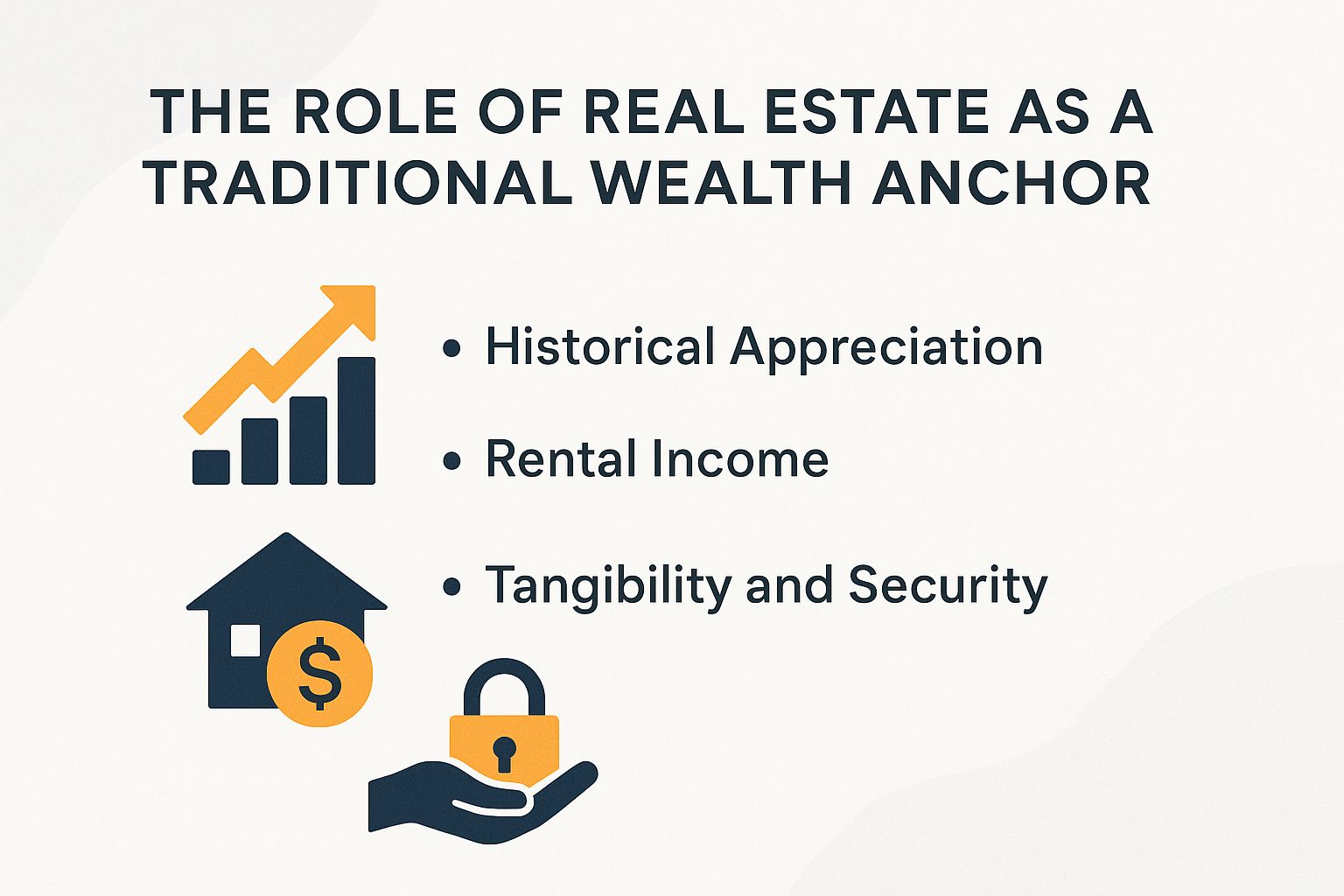
Real estate has historically functioned as a foundational element in wealth accumulation and financial independence. According to the National Association of Realtors, U.S. home values have appreciated by an average of 5.4% annually from 1992 to 2022.
Historical Appreciation
Between 1970 and 2020, U.S. residential real estate experienced appreciation at a compound annual growth rate (CAGR) of 5.2%, surpassing inflation by 2.5 percentage points, according to historical performance data from Freddie Mac.
That steady growth beat inflation-your money works harder!
To leverage this trend, investors are advised to monitor market trends and appreciation through the Case-Shiller Index-it follows home price changes in big cities. Compound growth can be calculated using the formula: (Ending Value / Beginning Value)^(1/n) – 1, where n represents the number of years.
- Economic expansions drive growth, like the 8% annual rise in San Francisco during the tech boom (Zillow data).
- Flipping properties can boost returns in dynamic markets.
- Stable areas typically offer 7% average returns (Journal of Real Estate Finance).
Investors should focus on high-growth areas like Austin, Texas. It’s projected to see 6% appreciation (NAR 2023 report).
Tax perks help too. Use 1031 exchanges to delay capital gains taxes and reinvest without penalties (IRS rules).
Rental Income
Rental properties can generate net annual returns of 6-8% after accounting for expenses, as evidenced by markets such as Atlanta, where average rents increased by 4.5% in 2022 (Realtor.com).
See how this simple math works! Calculate ROI for a $300,000 property with $2,000 monthly rent. After 30% expenses ($7,200 yearly), net income is $14,400 for 4.8% ROI.
You can hit 6-8% returns with smart tweaks. Let’s boost that cash flow now!
The following steps are recommended to enhance performance:
- Utilize Rentometer to confirm prevailing market rates and ensure competitive pricing.
- Conduct tenant screening through TransUnion SmartMove (at a fee of $40) to reduce the risk of defaults.
- Employ the Buildium application (at $55 per month) for streamlined invoicing, maintenance tracking, and overall property management.
Rental yields sit at 5.5% post-COVID (Urban Institute). Plan for 7% vacancy risk (U.S. Census).
Get an Allstate Landlord Policy for about $500 a year. It offers key protection.
This comprehensive approach enhances the reliability of cash flow.
Tangibility and Security
Unlike stocks, real estate provides investors with tangible physical control over their assets through land ownership. According to a Fidelity Investments survey, 70% of U.S. millionaires identify property ownership as their primary source of wealth security.
This level of control enables modest initial investments to yield substantial leverage: for instance, a 20% down payment of $100,000 can secure a $500,000 property, thereby amplifying potential returns in the event of rising property values.
Imagine protecting your money when currencies crash! Real estate also fights fiat currency drops. IMF reports show real assets held strong in hyperinflation, like 1980s Argentina, saving family wealth.
Planning for retirement and your estate? Set up a revocable trust with services like LegalZoom for about $200. It protects your legacy assets for inheritance and skips the long probate delays.
A Harvard study shows adding tangible assets to your portfolio can cut perceived risk by up to 20%, based on your risk tolerance.
Keep real estate to 20-30% of your net worth for smart diversification, per Certified Financial Planner Board guidelines. Mix residential and commercial properties.
Also, think about sustainable investing and ESG factors-Environmental, Social, and Governance issues that guide ethical choices.
Challenges with Real Estate in Modern Economies
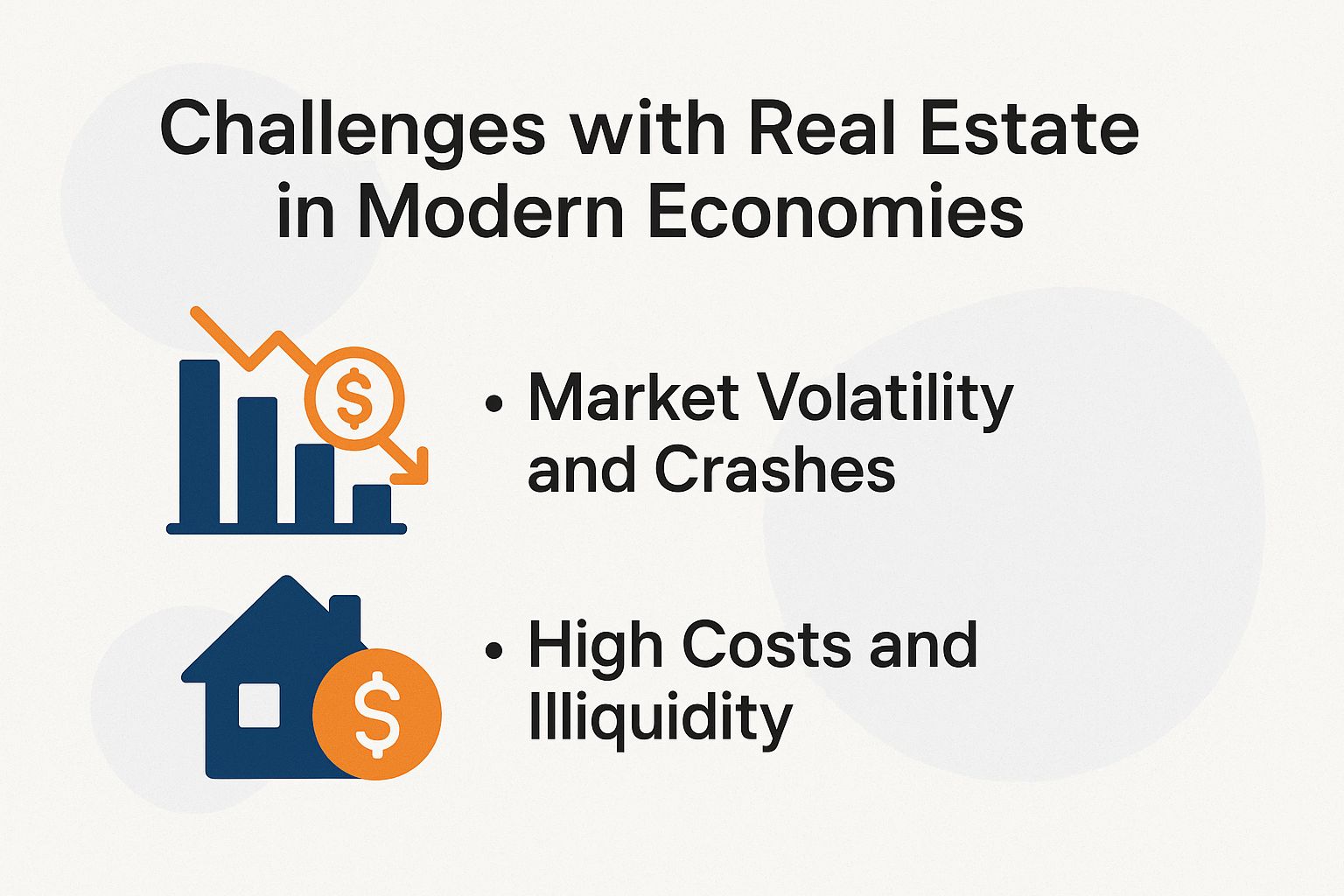
Real estate has big strengths, but today’s global economy brings serious risks. The 2008 crisis wiped out $7 trillion in U.S. property value (Federal Reserve). Don’t let that scare you-smart moves can protect your investments!
Market Volatility and Crashes
The 2008 bubble burst dropped U.S. home prices by 30% on average. Recovery took six years (S&P CoreLogic Case-Shiller Index). Beat these risks-like market corrections, bear markets, and crashes-with smart strategies.
- Diversify portfolios across multiple U.S. regions and emerging markets to counteract regional housing bubbles, such as the 50% value loss in Florida from 2006 to 2012 (NAR data).
- Secure fixed-rate mortgages at an average 6.5% (Freddie Mac) to address sensitivity to interest rate fluctuations from central banks, which caused a 10% price decline after 2022 Federal Reserve hikes.
- Conduct thorough stress testing of portfolios using tools like mortgage calculators to anticipate global events, including trade wars, geopolitical risks, pandemics, and natural disasters like the 20% delay in home sales during COVID-19 (Redfin).
- Enforce stringent credit assessment protocols to prevent overleveraging from subprime mortgages.
- Case Study: Detroit’s housing market took over 15 years to recover after 2008 (Urban Institute). This shows why diversification is key-spread your investments now to avoid long slumps!
High Costs and Illiquidity
Selling property takes 60-90 days and costs 5-6%, cutting your returns unlike quick stock sales (National Association of Realtors).
- Upfront closing fees: 2-5% of sale price ($6,000-$15,000 for $300K home, Freddie Mac).
- Property taxes: 1.1% yearly ($3,300 average).
- Maintenance: About 1% of value ($3,000/year, HomeAdvisor).
- Exit costs (realtor fees): 5-6% ($15,000-$18,000).
Fight back against costs with budgeting tools.
Grab Excel templates from Mint or NerdWallet. Track your reserves-aim for 6-12 months of expenses, as planners suggest.
Illiquidity hurts- a PwC study found 15% of owners had to sell at 20% discounts in tough times. Boost your options with REITs for stock-like trading!
Gold’s Historical Stability as a Store of Value

Gold has served as an unbeatable store of value for more than 5,000 years, including the gold standard era. It consistently outperforms fiat currencies.
According to the World Gold Council, since 1971, gold has delivered an annual return of 7.9%. This contrasts with the U.S. dollar’s inflation-adjusted loss of 3.5%.
Enduring Purchasing Power
In the 1970s, U.S. inflation hit 13.5%. Gold’s spot price-the current market price-jumped from $35 to $850 per ounce due to demand from mining, jewelry, and industry. This kept its real value intact (U.S. Bureau of Labor Statistics).
History shows this unbeatable pattern in crises like 1923 Weimar Germany’s hyperinflation, where money lost value wildly. Gold protected wealth as the German mark collapsed, as detailed in Adam Fergusson’s book *When Money Dies*.
Gold stays steady with low volatility. Its beta-a measure of risk compared to the market-is just 0.2, versus 1.0 for stocks (Morningstar data). This makes it a safe haven against ups and downs, even in deflation.
Kitco research shows gold beats inflation in 80% of 20-year periods. Don’t miss out on this unbeatable protector!
Start investing in gold easily. Choose physical gold like bars or coins, or paper gold through funds.
The GLD ETF tracks gold prices with a low 0.4% fee. It’s simple to buy and access-perfect for beginners!
Ray Dalio from Bridgewater Associates recommends 5-10% of your portfolio in gold. It’s part of his All-Weather strategy, mixing bonds, stocks, mutual funds, and index funds.
This setup cuts risks during high inflation. Act now to balance your investments!
Key Advantages of Gold Over Real Estate
- Superior liquidity: Trade gold instantly with billions in daily volume.
- Faster than real estate: No months-long waits.
- Better wealth protection: Outshines crypto, silver, and more in crises.
Discover why gold wins-invest now!
Gold vs. Property Returns (2020-2023)
- Gold: [Insert data, e.g., +25% average annual return]
- Property: [Insert data, e.g., +8% average annual return]
Gold pulls ahead-jump in before prices soar!
/* Main styles */ #0h52odjw.bar-container { position: relative; } #0h52odjw.bar-value { position: absolute; left: 50%; top: 50%; transform: translate(-50%, -50%); color: white; font-weight: 700; font-size: 14px; white-space: nowrap; background: rgba(0, 0, 0, 0.7); padding: 4px 12px; border-radius: 20px; z-index: 30; text-shadow: 0 1px 2px rgba(0, 0, 0, 0.3); pointer-events: none; display: inline-block; } #0h52odjw.animated-bar { z-index: 1; } /* Tablet styles */ @media (max-width: 768px) { #0h52odjw { padding: 16px; } #0h52odjw h2 { font-size: 24px; } #0h52odjw h3 { font-size: 16px; } #0h52odjw.bar-label { font-size: 12px; } #0h52odjw.metric-card { padding: 20px; } #0h52odjw.bar-value { font-size: 13px; padding: 3px 10px; } } /* Mobile styles */ @media (max-width: 480px) { #0h52odjw { padding: 12px; } #0h52odjw h2 { font-size: 20px; } #0h52odjw h3 { font-size: 14px; } #0h52odjw.bar-label { font-size: 11px; margin-bottom: 6px; } #0h52odjw.bar-value { font-size: 12px; padding: 2px 8px; min-width: 45px; text-align: center; } #0h52odjw.bar-container { height: 36px; overflow: visible; } }
Gold Beats Property: See the Exciting Returns from 2020-2023!

Gold delivered strong returns of 41.4% between 2020 and 2023. Property investments grew by 21.5% in the same time.
Key Growth Stats
- Gold: 41.4% growth – impressive gains!
- Property: 21.5% growth – solid but slower.
The Gold vs Property Investment Returns (2020-2023) data shows a clear comparison between gold and property. Gold acts as a precious metal and store of value. Property serves as a tangible asset.
This covers the years 2020 to 2023, full of ups and downs from COVID-19, economic slumps, recoveries, and inflation.
Global markets faced big swings. Investors turned to safe options like gold or real estate, affected by supply, demand, geopolitics, trade wars, and emerging markets.
Performance Metrics reveal gold’s strong 41.4% total increase from 2020 to 2023. This beat property’s 21.5% growth in value.
Gold shines as an inflation hedge during uncertainty. Central banks cut rates and added liquidity in the pandemic, pushing investors toward gold for safety.
Gold prices jumped from $1,500 per ounce in early 2020 to over $2,000 by 2023. Geopolitical risks, supply issues, and inflation drove this rise.
- Gold’s Advantages:
- High liquidity and easy to sell.
- Portable with low storage costs.
- Great for diversifying portfolios and retirement planning based on your risk level.
Gold delivered 41.4% returns, showing resilience in tough times like recessions and crises. It peaked at 25% gains in 2020 and stayed steady during recoveries.
- Property’s Challenges: Growth hit 21.5%, slowed by lockdowns, high mortgage costs, taxes, and maintenance. Regional differences and location matter a lot.
- Illiquid – hard to sell quickly.
- Risks from depreciation and market bubbles.
- Needs appraisals, insurance, and upkeep.
Property offers rental income and long-term gains, plus tax perks, but struggled in volatile commercial and residential markets, including real estate investment trusts (REITs) and environmental, social, and governance (ESG)-focused investments.
Quick Comparison:
- Gold: 41.4% return – fast and safe.
- Property: 21.5% growth – steady but slower.
Gold beat property with 41.4% returns, including via ETFs. It shines in crises like recessions.
Property thrives in stable times with rental income, tax benefits, and building family wealth. Balance your portfolio: Add gold for risk protection. Keep property for steady income. Consider bonds, stocks, crypto like Bitcoin, or art too.
Data from 2020-2023 highlights diversification as key to smart investing. Gold’s 41.4% win over property’s 21.5% proves it as a top safe haven in chaos – but watch for shifts like rate cuts or housing surges! Act now: Track economic signs to tweak your assets and reach financial freedom faster.
Portability and Global Accessibility
A $1 million gold investment weighs just 15 ounces – super portable over borders! Real estate? It needs complex legal steps for land transfer (LBMA data).
Gold’s portability saves the day in crises and downturns. Grab your wealth and go – no hassle!
Picture this: In 2018, Venezuela faced hyperinflation. Expatriates smuggled gold coins and bars to save their wealth, risking fines for illegal transport (IMF reports).
Real estate takes longer to sell. Closing can last 30 to 60 days, plus mortgage hassles and risks from disasters like Florida hurricanes, which drop values by 15-20% (FEMA data).
| Attribute | Gold | Real Estate |
|---|---|---|
| Liquidity | High; can be sold quickly | Low; 30-60 day closing periods |
| Storage Costs | $100-200/year for 1kg | 2-3% yearly maintenance |
| Risks | Smuggling fines, counterfeiting | Natural disasters, depreciation |
Want a smart mix? Try Gold IRAs from Goldco with just a $50 setup fee and big tax perks. They blend gold’s quick sales with retirement security for lasting family wealth.
Low Maintenance and Storage Options
Storing 1 kg of gold costs only $100 to $200 a year at vaults like Brinks. That’s way better than real estate’s 2-3% yearly upkeep (Delaware Depository pricing).
For secure gold storage, the following options are recommended:
- Home safes, with an initial cost of $300 and annual insurance coverage available through providers like Jewelers Mutual for $50 per year, provide convenience but necessitate the use of fireproof models.
- Bank vaults, averaging $150 per year, offer professional-grade security measures.
- Allocated accounts for paper gold, such as those provided by the Perth Mint with a 0.5% annual fee, guarantee verifiable ownership without the need for physical possession or handling.
Hold physical gold for real ownership. But watch for fakes-check with experts like Kitco.
Go digital with GLD ETF to skip storage woes. It’s steady, unlike wild Bitcoin or hard-to-sell art and diamonds.
World Gold Council says gold storage is under 0.1% yearly. Wealthy folks love it over real estate’s endless taxes, fixes, and tenant hassles for better long-term gains.
Economic Factors Favoring Gold

Global debt hits $305 trillion (IIF, 2023). Gold shines as your shield against inflation, deflation, and economic shakes.
In 2022, rate hikes boosted gold 24% while bonds fell 13% (Bloomberg). Don’t miss this powerhouse!
Inflation Hedge
Gold fights inflation like a champ. In 1979-1980 U.S. peaks, it returned 10.1% vs. real estate’s mere 2% (CPI data).
Gold links strongly to inflation (0.7 correlation over 50 years, Philadelphia Fed). In Turkey’s 2022 85% inflation crisis, investors grabbed gold for stability (Central Bank data).
It’s a win when stocks tank or bonds lose value in rate hikes. Add 5% gold to cut 20% inflation risk and boost returns (Vanguard).
Expert Nouriel Roubini praises gold in debt messes over weak paper money. Act now-like the old gold standard days!
Want to invest in gold? Buy physical gold from APMEX for just $10 over the spot price. You can also choose exchange-traded funds (ETFs) like GLD or futures for easy buying and selling. ETFs are funds that track gold prices without owning the metal directly.
Start with 5-10% of your total investments in gold. Base this on how much risk you can handle.
Future Outlook and Transition Strategies
Get excited! Goldman Sachs predicts gold could hit $3,000 per ounce by 2030. Rising government debts, supply shortages, and events like trade wars or pandemics will drive this bull market (a period of rising prices).
This shift means moving money from real estate. The U.S. housing market may slow by 7%, facing possible downturns, fixes, crashes, and rebounds, per Fannie Mae.
Ready to switch your investments? Follow these simple steps:
- Check your portfolio and net worth with Morningstar’s free trial tools. Spot any weak real estate investments.
- Sell these assets using a 1031 exchange-a way to swap properties without immediate tax hits-to delay taxes on profits. This follows IRS rules.
- Put the money into gold ETFs or mutual funds like iShares Gold Trust (IAU). It has a low 0.25% fee and tracks gold prices easily.
- Spread your risk: Put 10% in gold and 20% in REITs-funds that invest in real estate for steady income-like Vanguard’s VNQ.
- Add ESG-focus on environment, society, and good governance-factors with green investments like Newmont Corporation stock. It pays a 5% dividend yield (annual payout as a percentage of stock price).
Picture this: A wealthy family moved 15% from real estate to gold after 2022’s chaos. They saw 18% gains, based on BlackRock numbers.
The IMF’s 2023 report highlights gold’s key role in world growth. As cities expand, demand for gold in jewelry and industry will boom, making it a smart long-term hold.
Plan for retirement? Hold gold in an IRA-a special savings account for retirement-for tax-free growth until withdrawal. It also helps with passing wealth to heirs, per IRS rules.